
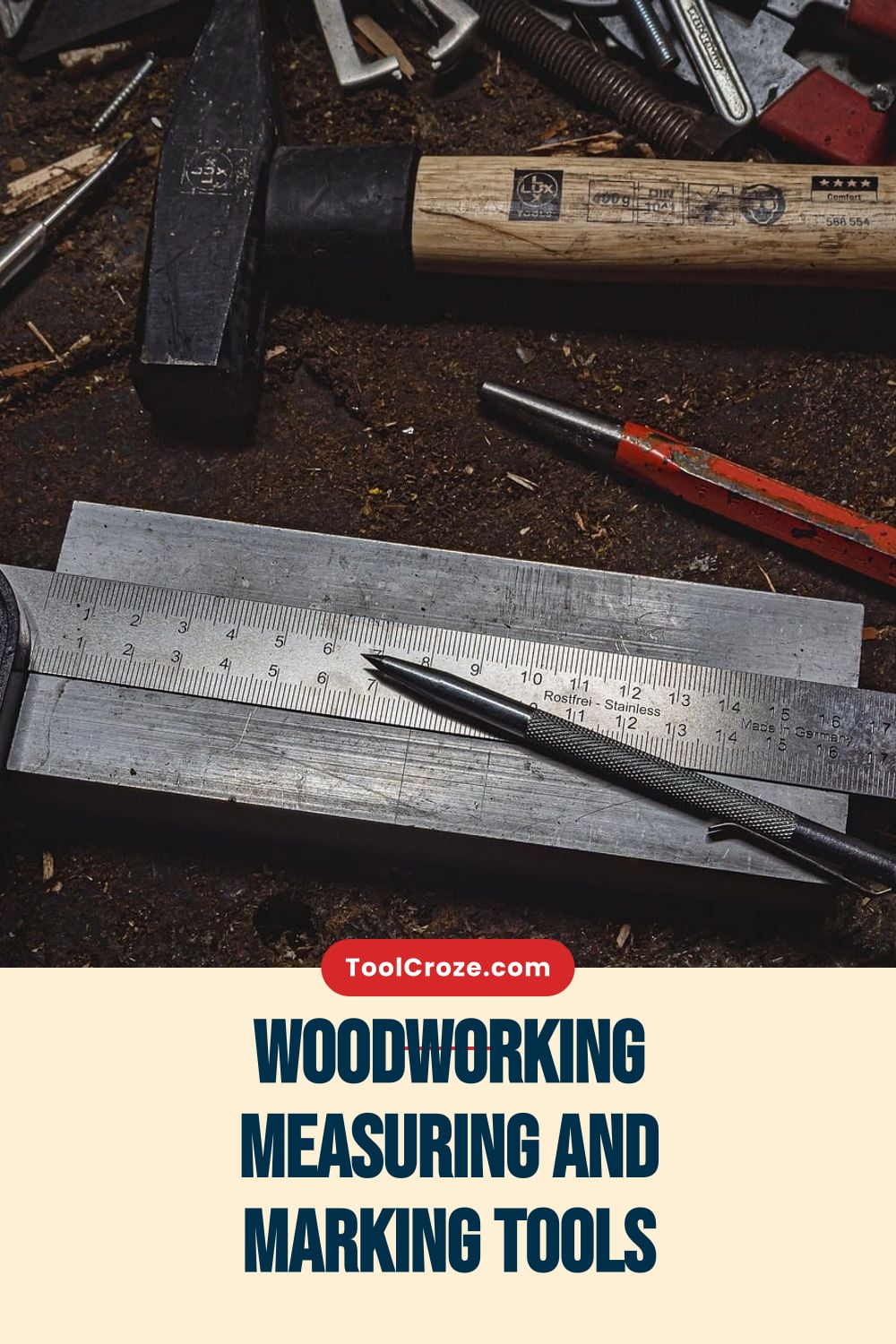
Measuring and marking tool turn lumber into a structure that fit together perfectly. If you do these steps incorrectly, your lumber wont fit together properly. The difference between professional lumber work versus the work of a weekend warrior is typically in the trustworthiness of the line that are drawn, and from what reference those lines are taken.
Once you understand each of these tool, you will no longer have to guess at where certain cut should be made on your lumber. These tool are not very extensive, as a few of the correct tool will allow you to complete ninety percent of your projects. Each of the following tool will earn its keep in the workshop every single time that it is use.
Essential Tools for Measuring and Marking
1. Combination Square
The first tool to learn is the combination square. This tool has three job to fulfill that make it a necessary tool in every toolbox. The adjustable blade allow for the marking of either 90 degree or 45 degree angle.
Should the blade be fully extend from the stock, you can use it as a try square or depth gauge. The scribed rule on the best model allows for the direct marking of line without having to use any additional tool. The repeatability of the combination square is one of the most important feature of the tool.
Should you set the blade to any given measurement, flipping the tool end for end or rotating the tool will still allow for the sighting of that same line. This is critical for task like making a set of identical drawer or table leg of the same length. The combination square should be treated gentle; any dent will affect its accuracy.
This is one of the reason that the best woodworker have a second combination square.
2. Marking Gauge
Next is the marking gauge. This tool allow for line to be drawn that are parallel to the edge of the piece of lumber.
The cutter on the marking gauge will create a line that is thin and crisp, rather than the smearing line that could be created by a pencil. The traditional marking gauge use a pin, while the modern tool use a thin knife blade. You should pull the marking gauge rather than push when marking line; this will ensure that the line remain even with the edge of the lumber being marked.
The marking gauge will become the first tool that you reach for rather than any other tool in the shop. The marking gauge is the tool that will allow for clean dovetails and tenon to be cut.
3. Tape Measure

The humble tape measure deserve a place in the workshop, but only due to an understanding of the limitation of the tape measure.
The hook on the tape measure is used to allow for inside measurement to have the same reading as outside measurement. This is created by the fact that the hook on the tape measure move a precise fraction of an inch. However, if you use the tape measure improperly, the measurement will not be accurate.
Instead of using the hook on the tape measure, many woodworker will simply but the tape case against a piece of lumber and use the length of the case instead. This make more sense for rough work; the hook on a fine shop tape measure should be ignored. When marking workpiece with the tape measure, the hook should be used.
Tape measure will allow for lumber to be broken down and for measurement to be passed from one part of a shop to another. It is recommended to have a dedicated tape measure for rough work.
4. Engineer’s Square
The engineer’s square is used for workpiece that are more intricate than those that are marked with the combination square.
The engineer’s square has a blade that is fixed to the square to 90 degree, and is typically a shorter tool. The best engineer’s square are made from a single piece of steel so that the angle of the tool cannot shift. These tool are used for sighting the edge of a workpiece to ensure that they are properly square to the remaining surface of the lumber.
The engineer’s square has another use; if you hold the tool up to a strong light, any gap between the blade and the workpiece will be immediately obvious. This tool will be found in the apron pocket of any woodworker; it is so frequently use. The small tool in the apron will have a bigger impact on the workshop than the largest tool in the toolbox.
5. Striking Knife
Next is the striking knife. This tool deserve more respect than it typically recieve when marking lumber. A sharp striking knife will leave a line that is thinner than that made by a pencil, and that will sever the wood fiber rather than crushing the fibers.
Japanese kiridashi and European marking knife are two brand of striking knife that work well. When using a striking knife, it should be against a straight edge or the flat face of a square. If the knife is slightly tilt, the line that is created will have a trough that will allow for the edge of the chisel to be guided or that of the saw to be guided into the marked line.
The striking knife will allow for much cleaner joinery than would be made with the pencil alone.
6. Calipers

Calipers are used when tolerance are very precise. Whether digital, dial, or vernier calipers, these tool will allow for the measurement of the distance between two point in the workshop.
The calipers are used to measure the thickness of stock after it has been planed, and for checking if tenon will fit into mortises. Digital calipers are convenient, but the dial calipers do not need battery to function. When using calipers, you must be able to recognize when a thousandth of an inch is important as compared to when a thousandth of an inch is not.
Thousandths of an inch are critical for table leg, but not for dado cut. Calipers allow for measurement to be made from story stick or other physical reference instead of having to remember all of the length of the various piece of lumber in the shop. This is typically not as smart as simply using physical reference to make measurement in the workshop.
7. Center Finder
The center finder may seem like an unnecessary tool, but it is one that will come in handy the first time that you need to mark the center of a piece of lumber. The best finder have two leg that allow them to straddle the workpiece while allowing a pointer to mark the center of the workpiece. A center finder can be purchased, or you can make a center finder from a combination square and a scrap piece of wood.
Either of these solution will save time when finding the center of a workpiece, and the ability to find the center will prevent error caused by incorrect math. These tool will be used in a specific sequence when sawing and cutting lumber to specific dimension. The tape measure will be used to break down the lumber; the combination square will mark the initial line; the marking gauge will make the offset; the striking knife will mark the critical line; and the calipers will ensure that the thickness of each piece is correct.
8. Pencil

Each tool will be used in this manner so that the accuracy of the work will be maintain from start to finish. The last tool to discuss is the humble pencil. Any pencil can be used to make marking on lumber, but a mechanical pencil with 0.5 millimeter lead or a wooden pencil with a sharpened chisel point will allow for the marking of the most accurate line.
The chisel point allow for the flat side of the pencil to be against a straight edge of the workpiece; this will allow for the marking to be even. Both type of pencil will be needed; the fine-point pencil will be used for the most precise work, and the carpenter’s pencil will be used to write note or mark lumber for more rough work. Learning to properly use each of the tool will allow for an understanding of the way in which the piece should fit.
The accuracy of each marking will provide a level of satisfaction in the woodworker that is hard to find in any other endeavor. The best woodworker are not those who have the most extensive collection of workshop tool; the best woodworker are those who have trained their eye and their muscle to account for the error that are made in the wood itself. These tool are not particularly expensive; each of them can be purchased once.
Each of these tool should be bought, chosen well, and learn in their proper use. Each of these tool will allow the future project of each woodworker to have a flat appearance, to fit well, and to have a clean appearance. The difference between good woodwork versus great woodwork typically lies in the accuracy of the mark made before the sawdust begins to fly.
If the mark are made correctly, the rest of the workshop will follow accordingly.
