
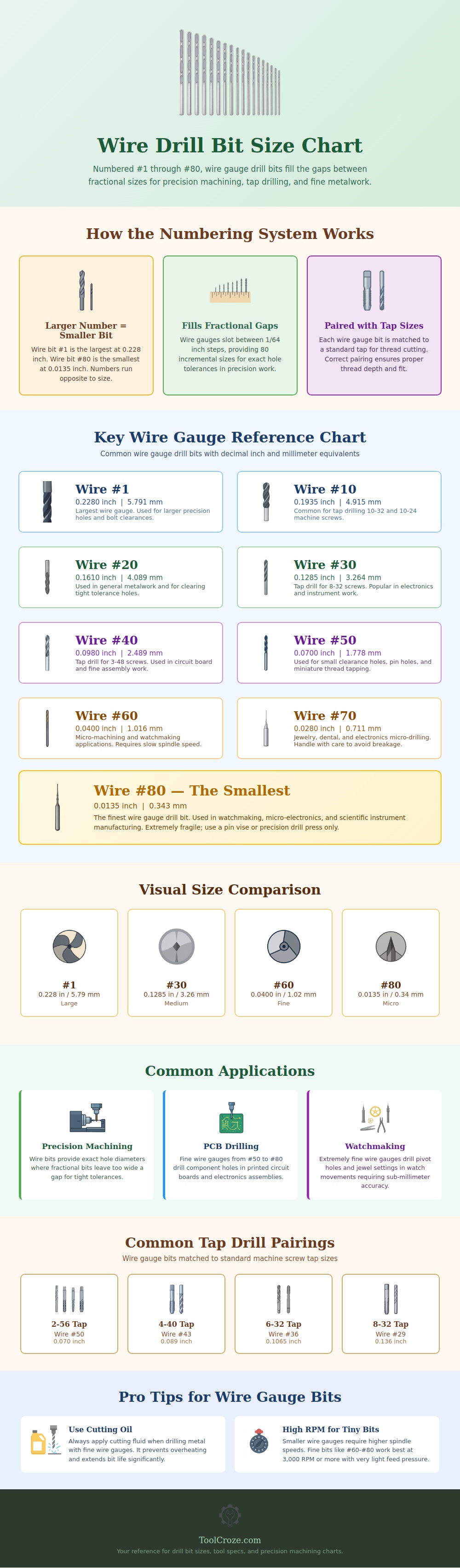
Find the right drill for data rating is important, because it must match with the used wire. Chart of drill sizes help about that work. They are useful for production and making.
The charts list sizes in various measure systems. Between them are fraction, metric, number wire ratings and letter drill sizes. Good drill size chart also shows decimal matches for fast looking.
How to Choose the Right Drill Size
So it points decimal inches for fraction, wire, letter and metric drills until 2 inches of diameter.
Many sizing systems exist, but they are not interchangeable. Fraction drills start at 1/64 inch and grow by means of 1/64-inch steps. They reach around 1 (1/2 inch), later walks according to 1/32 inch.
Letter drills go of A until Z. Number varieties of #107 (0,0019 inch) until #1 (0,228 inch). The ASME B94.11M-standard about twist drills defines number sizes of 1 until 97, although after #80 they rarely usetas. Those number sizes base on the 19th-century British Stumpet Steely Wire Rating, but are not identical.
For instance, #7 drill has 0,201 inch, while 13/64-peco is 0,2031 inch.
In almost all other lands you most commonly use metric drill sizes. American designs usually ask for others. In United Kingdom the standards about replace of gauge and letter sizes by means of metric came out in 1959.
Sources note, that ratings and letters no any more are pushed British standards. For rough guess you can compare screw with drill, for check the radial diameter. Calipers are more exact.
Choose right twist drill are hardly, so index, plate or caliper help. If the instructions point 1/4 inch, make 1/4-inch hole with that size. Some use 3/4- or 7/8-inch drills for many works, for keep hole sizes samgrandaj.
If you choose something less than a bit above 1/8 inch, alright order several, because little drills easy break.
