
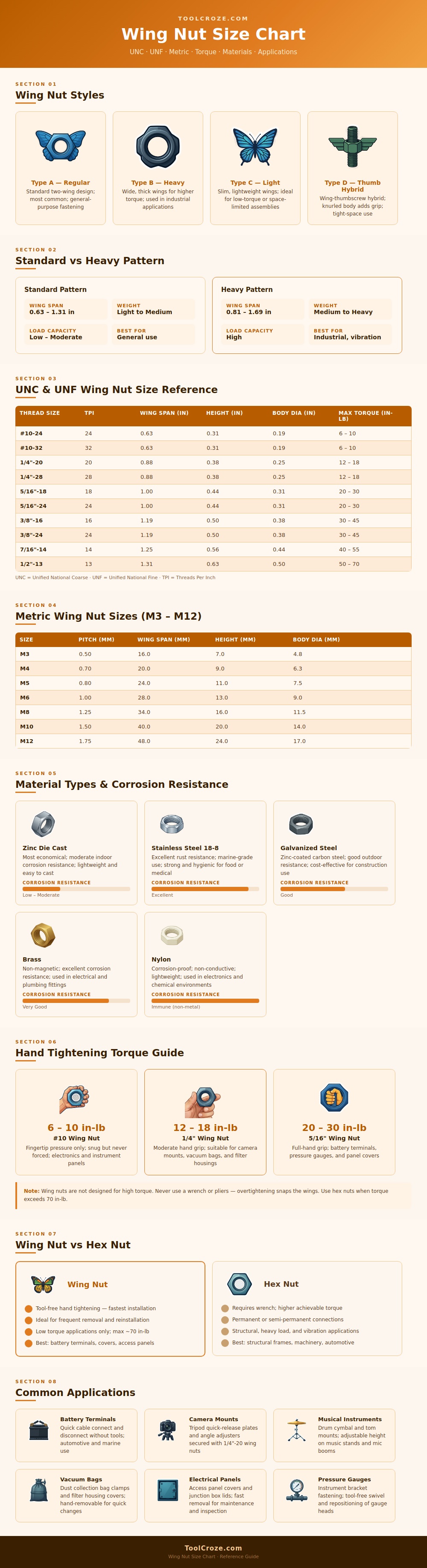
Wing nuts offer solution to a particular issue: They can be tightened/loosened by hand, making them handy if you’re on your own or in hard-to-reach places. Also, you’ll know in seconds if it’s the proper size or not. Is it tight? Do the wings lasts?
To select the proper wing nut, first realize there are multiple types, each designed for various uses and amounts of torque. There are four variations in total, and industrial styles is usually beefier then the two wing models. These include hybrids like knurled bodies plus wings.
How to Choose the Right Wing Nut
For general around-the-house and lighter shop use, go with the standard model; heavy-duty versions are the ones with thicker, wider wings designed to spread loads for heavier use. Heavy-duty versions includes both thicker and wider wings to spread the load. When you need lighter weight and tighter clearances, use lightweight model. Use the hybrid model when you can’t grasp things easy with fingers. The knurled body provide extra traction in tight spaces.
The main difference between a standard and heavy pattern are their capacity to resist abuse without being damaged. If you apply excessive force, it can bend the wings out of shape or strip threads. For brackets and cover adjustments that aren’t frequently adjusted, a standard pattern will be sufficient. Outdoor equipment or machinery subject to movement or temperature swings need something heavier to keep things tight. Why? Because if you’re going to use a light wing nut where a heavy one belongs, then the hardware gets damaged or the joint comes loose. Because if you’re going to go heavy when something should of be standard, then the hardware gets damaged or the joint comes loose.
Safe torque limits is linked to thread size and fit. Larger coarse threads accept a little bit of damage and even some dirt during installation. Smaller fine threads provides a little extra holding power for precision applications. The chart above details this relationship and lays it out so that you can avoid any guess work when matching height, wing span and thread size. It also displays hand tightening torque range based off real world experience. This helps you avoid the common error of over-tightening and breaking your wings.
More than you’d think, the longevity of your wing nut is dictated by material selection. A good, low-cost performer indoors is zinc plated steel. But the minute moisture is involved, go with stainless (or even better, brass) to get what you pay for. For a little more money, the nylon models does away with corrosion all together and provide electrical insulation as well. That’s important in chemical environments or around electronics. The correct material ensure the fastener stays functioning and doesn’t freeze in place after a season or two.
The applications generaly fall into two categories: one where they allow for faster tool-free fastening, and one where frequent access is required. Drum hardware, electrical panel covers, battery terminals, camera mounts all appreciate a quick on/off with no wrench required. In every instance the wing nut offers convenience over maximum clamping force. And that is exactly why it works.
So what’s the practical application? It’s easy. Respect the torque limits for hand tightening. Match the material and style to the environment. Have a variety on-hand because who knows when you might need a size or two? Do all that and the fastener is doing its job, not being the weak link in assembly.
