
The pain of having a worn-down chef’s knife is familiar, probably even to you. It has transformed from surgical instrument into a blunt-edged wedge. Tomato time! You aim to cut, and the blade squashes instead, spattering red all over the cutting board.
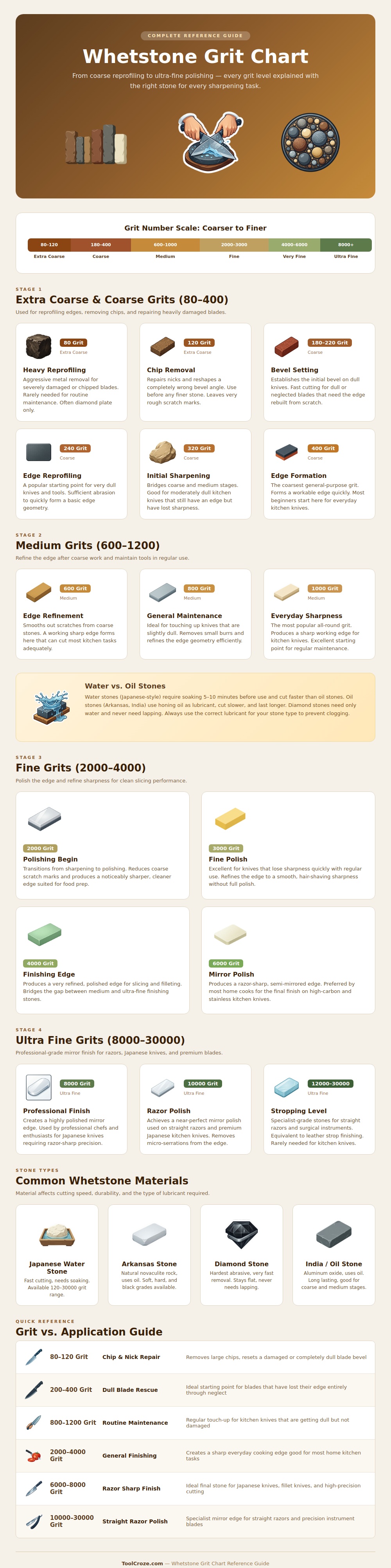
It’s actualy simple to remedy, though the lingo can get you stuck. Sharpening-stone grit ratings is a secret code at times, like some alien alphabet, but they’re just like sandpaper, designed to smooth things down. While the visual guide above shows the entire range from mirror polish to aggressive grinding, all but most high-end home cook probably doesn’t require everything on it.
How to Pick the Right Sharpening Stone
The very coarse stones (the lowest numbers) is for knives with really severe damage, like big chunks missing or a knife that’s hit something hard enough to be jagged. They will shave down the angle pretty fast, though at the expense of creating lots of scratch marks in the metal. That’s bad, you don’t want these deep grooves which will cause the knife to catch on whatever you’re cutting instead of gliding smoothly across it. But… you can’t just use one of those either.
A thousand-grit stone is seen as a top-of-the-line all-around stone because this is where most of the action occur: the medium grits. After removing any ugly scratches caused by rougher stones, you’ll be left with a true-to-shape, truly sharp edge suitable for everyday chores. Believe me, you don’t need a finer grit to achieve a sharper edge; many people believe otherwise. A “sharp” edge isn’t always smooth; it is an edge that has been cleaned up at the top. Polishing a dull knife on a fine stone will only result in a smooth yet dull knife. That’s why you’ve got to do the hard stuff first.
Above 2000 grit, however, your aim shifts from being sharp to being slick. Now you’re refining the microscopic teeth along the edge where you’re not taking away much, if anything, but smoothing things out. Why does this matter? Because polishing an edge means less resistance as it cut through the cell walls of vegetable (and people!). It works, but it’s slow work.
Think about your stone. What kind of stone will you be working with? Popular ones used in this process includes water stones, which cut quickly. But because they break down a little bit while sharpening, the surface doesn’t get gunked up and it stays nice and fresh. The downside: They need more attention (less long lasting) and run slower than oil stones. Oil stones last longer (requiring less care), but again run slow and can gum up unless you can control the oil thickness. Diamond plates are somewhere in middle. They provide aggressive cutting power and need no liquid medium.
Typically, the coarser side of a two sided stone more than suffice for your kitchen drawer, with perhaps 90 percent of what you need in the rough-to-medium range. Reserve the extra-fine stuff for something special, like an expensive Japanese blade that requires a mirror shine. Don’t worry about chasing perfection on your daily paring knife.
Consistency is the key; if you’re sharpening a bit at a time, you’ll stay somewhere around the middle. If you let one go so far that it doesn’t cut through anything then it’s all the way back to the other end of the spectrum. Maintain your tools, and next time that tomato won’t squash when you squeeze it.
