
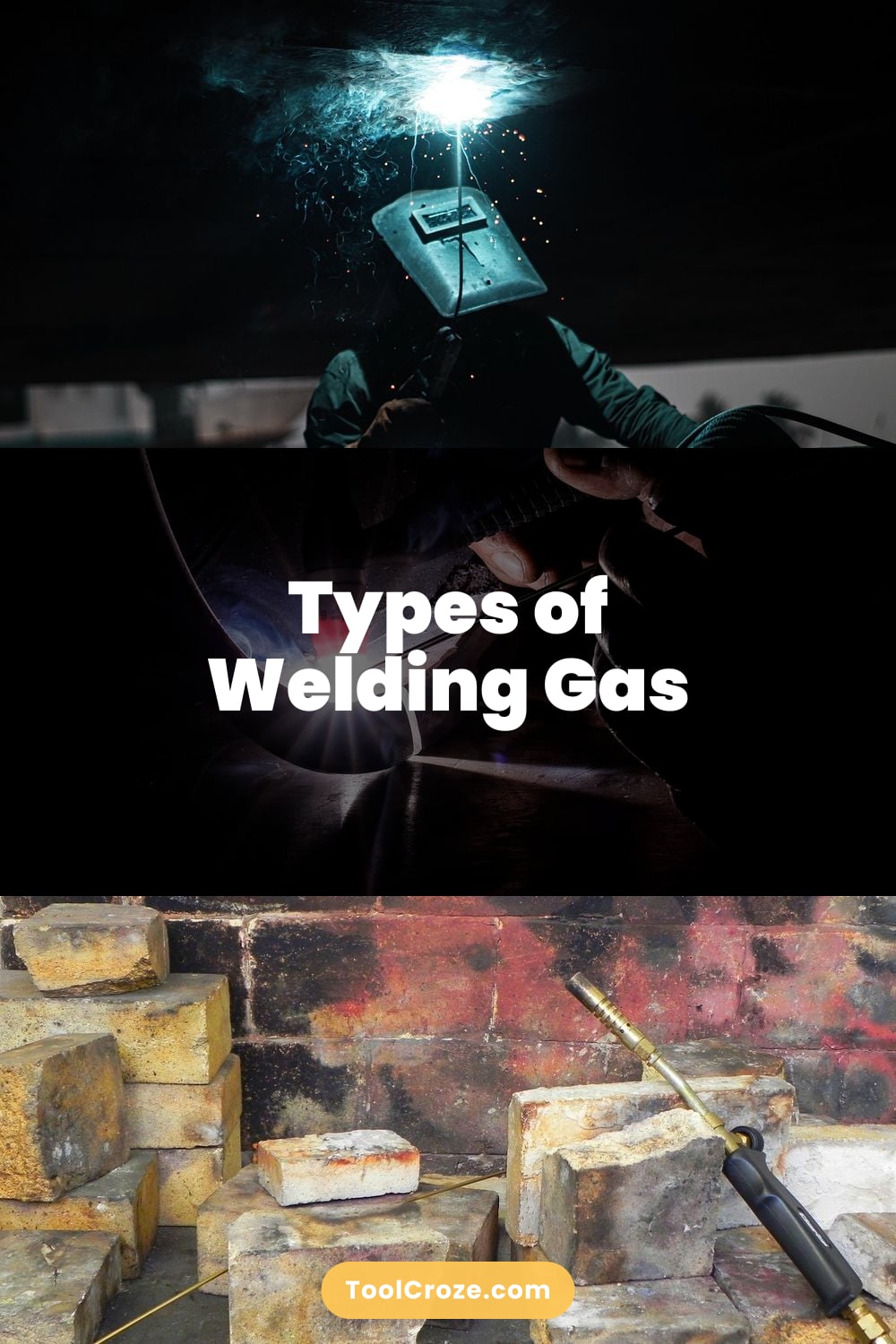
Welding without using a correct shielding gas is like trying to paint a masterpiece but using wrong brush. Argon’s inert nature means it do not react with the metal. Argon produces shiny weld without much oxidation.
Argon is also heavier then air so it will settle over the weld. Argon will provide decent coverage. If you use the wrong shielding gas, you are wasting your time, your materials and you’re money.
On the other hand, using the correct shielding gas will allow your work to flow good. Many beginner focus on the voltage and the wire speed. However, beginners often ignore shielding gas.
There are different types of metal and welding processes. Each metal or process will require a specific shielding gas blend to create the proper atmosphere around the weld pool. Gases can create specific environments for welds that will allow metals to clean up better or with deeper penetration but will create more spatter.
There are also a few gases specifically for welding thick aluminum or exotic stainless steel. You dont need a chemistry degree to understand what each shielding gas will do within the welding arc. Once you understand the uses of each gas, you will know when and why to use the shielding gas.
There are several main type of shielding gases that every welder will encounter throughout their welding career and there is a distinct reason for each use of the specific shielding gas at specific times. Argon gas is one of the most common gases used for TIG welding and MIG welding as well. Argon is an inert gas so it will not react with the metal.
If you use argon for shielding, your weld pool will remain calm and your welds will have less oxidation. Argon gas is also heavier than air so it will settle on the weld. Argon will provide decent coverage of your weld.
Argon is used for welding aluminum as well as thin stainless steel with TIG welding. Argon provides a calm arc that has excellent wetting action on the weld pool. For thicker metal, argon will not provide as much heat penetration.
You may have to use higher amperage settings so that argon can penetrate the thicker metal but this can result in the metal distort.
Common Types of Shielding Gas for Welding
1. Carbon Dioxide
Carbon dioxide gas is another shielding gas that will allow the weld to have better penetration. Carbon dioxide is an active gas because it will react with the metal.
Carbon dioxide will create a weld pool with deeper penetration that will allow it to work better with carbon steels. MIG welders will use straight carbon dioxide shielding gas so the cost is low and because it can better weld thick metal plates. However, the downside to using carbon dioxide is that there will be more weld spatter.
This will require welders to spend more time on grinding the weld. The weld will have convex bead and a darker oxide layer. For fabrications of steel, welders may prefer using carbon dioxide gas to get the job done at a faster rate.
Argon and carbon dioxide mix gases will provide the benefits from each gas. For MIG welding on mild steel, the most common blend will be 75% argon and 25% carbon dioxide. This blend of gas will allow welders to have good penetration, less spatter and a smoother arc than using pure carbon dioxide.
Argon will help to provide the calm arc while the carbon dioxide will create better fusion at the weld toes. This specific 75% and 25% blend is used as the default for several specific reasons. This argon and carbon dioxide blend will work with 16 gauge metal for auto body repair as well as half-inch metal plates.
This is the best gas for welders to have as their only shielding gas because they will not waste as much time fixing weld defect. However, if the metal is very thin it can burn through the metal because of the reactivity of the carbon dioxide. Helium gas conduct heat much better than argon so when used in mixing with argon it will allow the welding of thicker aluminum plates.
2. Helium
Helium and argon mix is used for both MIG and TIG welding. When using helium, more heat is provided to the metal base so thicker aluminum section will melt better and allow fusion without increasing the amperage to the welding machine. Helium blends will cost more money than argon gas blends.
For this reason, helium is reserved for production environment and projects where the quality of the weld is more important than cost. Helium has a softer arc but also allows the weld to penetrate better. For aluminum welds that are thicker than 1/8” inch, once welders use helium the weld will be better and they will not want to use argon gas again.
Oxygen gas is used in a few specialized welding blends called tri-mix blends. For these blends, the percentage of oxygen will be between 1% and 5%. If using argon and carbon dioxide gas blends as well as adding oxygen, the added oxygen will allow for better stability of the arc as well as better wetting of carbon steels and low-alloy steels.
This will cause the weld pool to flow into the corners of the weld. This will eliminate the cold lap defect that would show up in the weld if it were welded at high speeds using MIG welding. Welders will never use pure oxygen gas because it will oxidize the metal when exposed to the welding flame.
However, using the blend of argon, carbon dioxide and a small percentage of oxygen will allow welders to produce better welds. MIG welders will use the tri-mix blend to greatly increase the speed at which they can weld without losing quality of the weld. However, there are some tradeoffs that must be made with these welding blends.
The cost will be higher for the welder and the flow rate of oxygen must be controlled so that there is not too much oxygen within the weld. Nitrogen gas will serve two main purpose in the welding world. First, when used with stainless steel, nitrogen will help to balance the metal’s structure so that there is no brittle phase within the weld that can crack under stress.
3. Oxygen
Second, nitrogen can function as both a shielding gas and a cutting gas in laser and plasma cutting applications. This is because nitrogen will create clean edge in the cut metal and will not cause oxidation of the cut edges. Most welders will not use nitrogen gas.
It is not necessary for welders in beginner or even intermediate level. Nitrogen will only be used by welders working with exotic stainless steel or for performing a back-purge on welds. The cost of nitrogen gas is low but the situation that require the use of nitrogen will typically involve high-stakes metal fabrication projects.
4. Nitrogen
For flux-cored welding, pure carbon dioxide gas will be used. Self-shielded welding wire are designed to use carbon dioxide gas so that the flux coating on the welding wire will function appropriately. Switching from carbon dioxide to argon gas will destabilize the arc and ruin the metals mechanical properties produced by the self-shielded wire.
This is a non-negotiable welding gas for flux-cored welding wire. Welding newcomer may struggle with this welding process. They may spend many hours with welders trying to set the MIG welding machine settings for flux-cored welding wire to work with argon gas.
The solution is to simply use a cylinder of carbon dioxide gas. The carbon dioxide is not only used to shield the weld but also participates in the chemical reaction of the welding arc. Even though there are many electric welding processes today, acetylene gas is still the dominant shielding gas for oxy-fuel welding and oxy-fuel cutting processes.
Acetylene will burn with oxygen to create a flame hot enough to melt any metal found in a welding shop. A neutral flame will be created with acetylene and oxygen that provides welders with control over the welding process whether they are welding thin sheet metal or brazing two different metal. The downside of using acetylene gas is that oxy-fuel welding requires more safety protocol around the welding setup than any other welding process.
Acetylene gas is unstable when under pressure so it is transported and handled with care. However, for repair job that require welders to carry their welding machine to locations such as a tractor that is broken down in a field, using an oxy-acetylene welding rig is the best solution to the welding problem. Each of the shielding gases discussed can solve a specific welding problem that the other gases cannot solve as effectively.
The trick to using shielding gases is to use the correct shielding gas for each specific type of metal, welding process, and quality of weld requirement. If welders develop the habit of choosing the correct shielding gas for each process, their welds will improve and their work will no longer fight with them. When you start your welding machine, take a second to think about which shielding gas you will use.
This could be the difference between spending an hour grinding your weld or walking away from your welding project with pride over your work. Each shielding gas does not only protect the weld but also shape what happens within the weld puddle.
