
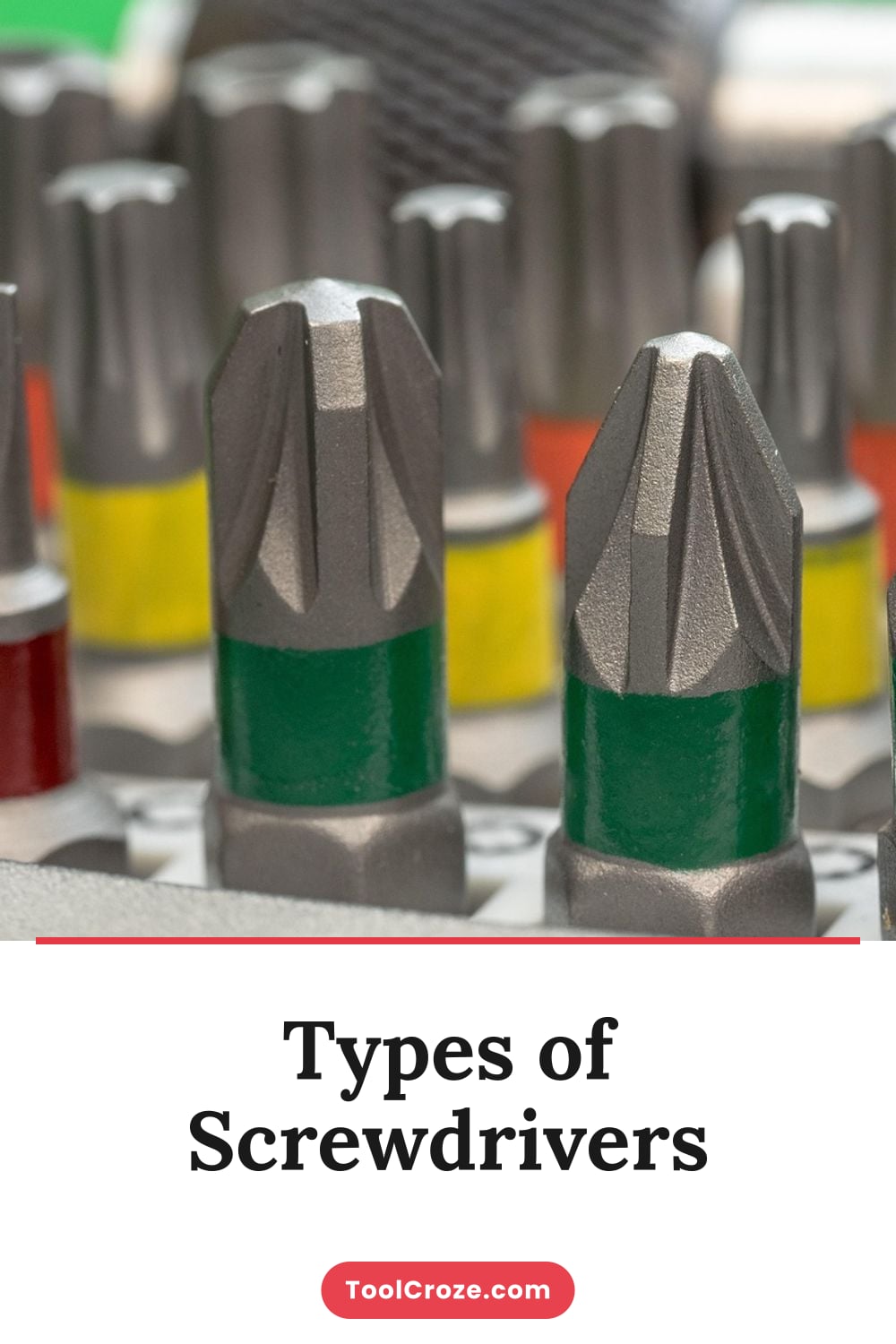
A screwdriver is a tool that many peoples do not notice until a screwdriver becomes necessary for some task. Frequently, a person will simply take a screwdriver from a drawer, insert the screwdriver into a screw head, and hope that the screwdriver will function for the task. The screwdriver works most of the time, but it also fails some of the time.
When a screwdriver fails, the screwdriver slip from the screw head, the screw head begins to strip, and a person becomes frustrated for ten minutes while metal shavings fall from the project. By understanding the different types of screwdrivers, however, a person can change that moment of frustration into one of competence. By understanding which screwdriver belong in a person’s hand and why, people will find that they’re projects are completed at a faster rate, with fewer damaged materials, and with fewer instances of the need to purchase replacement screws for each project that is completed every weekend.
The differences between screwdrivers is a simple idea: each screwdriver is made to fit within a recess of a screw. If a person understands how the screwdrivers are made and for what types of screw designs they are purchased, a person can save themselves the frustration and damage that come from using the wrong type of screwdriver. The screwdrivers that this article will discuss include the classic screwdrivers as well as the specialized screwdrivers that were made to solve certain problems that could arise in specific situations.
For each of these screwdrivers, there will be a description of when it is useful, when it is disappointing to use, and what trick or tip for each screwdriver will allow for the best performance of that specific screwdriver. The first screwdriver that a person should learn about is the flathead screwdriver. The flathead screwdriver is the oldest type of screwdriver.
Common Types of Screwdrivers You Should Know
1. Flathead Screwdriver
A person uses the flathead screwdriver for installing screws that have a straight slot along their sides. The flathead screwdriver tends to slip from those slots if too much force is used when screwing the screwdriver in. Because of this potential for the screwdriver to become lodged into the material to be screwed into, flathead screwdrivers are often stored in a toolbox where they may be accessed later for other tasks.
For instance, people often use flathead screwdrivers to pry open paint cans, to fix old cabinet hinges, or to turn electrical terminal screws that have not been updated to newer electrical designs. For these tasks, the blade of the screwdriver should be the same width as the slot for the screw head. Using a screwdriver with a blade that is too narrow will damage the screw head and the material.
Using a screwdriver with a blade that is too wide will also damage the material around the screw. Using a flathead screwdriver with an appropriately sized blade will allow for the screwdriver to fit into the screw head without damaging it or the material into which it is being screwed. The Phillips screwdriver was created in the 1930s and was made with the intention of solving the problems that were caused by flathead screwdrivers.
2. Phillips Screwdriver
The Phillips screwdriver features a recessed area in the screw that features a cross shape, which ensures that the screwdriver will not slip within the screw head. The Phillips screwdriver was often used on the automobile assembly lines due to the fact that workers were able to drive the screws more quickly with the Phillips screwdriver, as well as caused less damage to the materials while performing the task. The design of the Phillips screwdriver, however, features a weakness: each of the four wings of the Phillips screwdriver are slightly tapered.
If too much force is applied to the screwdriver while it is being turned, the screwdriver will “cam out” of the screw head. While this feature was a protection for the machinery within the assembly lines, the tendency of the Phillips screwdriver to cam out of the screw head when too much force is applied means that those using that screwdriver may feel as if they are fighting against the screwdriver. Phillips screwdrivers are most often used in general household tasks, in the assembly of furniture, and in products that come in flat-pack boxes.
A person will want to have two or three size of Phillips screwdriver in their toolbox, as there is no such thing as a universal Phillips screwdriver tip; a number two Phillips screwdriver tip is common in most cases, however. Next is the Pozidriv screwdriver. The Pozidriv screwdriver is another relative of the Phillips screwdriver, as they both feature the same cross shape.
3. Pozidriv Screwdriver

However, there are four smaller ribs between the main arms of the Pozidriv screwdriver. These four ribs allow more torque to be applied to the screw without the Pozidriv screwdriver camming out of the screw head. European cabinetmakers and electricians adopted Pozidriv screwdrivers decades ago.
For instance, if someone stripped a Phillips screw within a cabinet hinge, but the replacement screw has a different-looking cross shape, that replacement screw is a Pozidriv screw. Pozidriv and Phillips screwdrivers are not interchangeable. Using a Phillips screwdriver on a Pozidriv screw will damage the screw.
Pozidriv screws have four smaller markings on the screw head that are used to differentiate between Pozidriv and Phillips screwdrivers. However, if someone has both types of screwdrivers in their toolbox, they will be able to recognize which type of screw is which by looking at the markings for those screws. Another type of screwdriver is the square drive screwdriver, also known as the Robertson screwdriver.
4. Square Drive (Robertson) Screwdriver
A Canadian inventor invented this screwdriver. It features a recess in the screw that is in the shape of a square. When the Robertson screwdriver is inserted into this recessed area, the screwdriver tends to remain attached to the screw.
Canadian construction workers have often used this screwdriver since the early 1900s. For instance, square drive screws are required to be used in decks for the screwdriver to grip the board that is being screwed into the deck. The problem with Robertson screws, however, is that they are not often available in hardware stores. In most regions of the country, for instance, if someone goes into a store, they will have to search for Robertson screws since Phillips screws are more common.
However, once they switch to Robertson screws for a project, they will feel good about the performance of the screwdriver and the fact that it will not slip on the project. Another type of screwdriver is the Torx screwdriver, which features a six-pointed star-shaped recess within the screw head. The Torx screwdriver is used in situations where the screwdriver may be exposed to a lot of vibration, such as on a car or in outdoor furniture.
5. Torx Screwdriver
It is also used on televisions. The reason why a six-pointed star is used instead of a four-pointed star is due to the fact that stripping the Torx screw is rare even with the use of a ratchet. Additionally, security versions of the Torx screwdriver have a small post in the center of the screw head that will prevent ordinary screwdriver bits from being used in that screw head.
This is often used as a means of securing electronics against unauthorized opening of the product. The only downside to the Torx screwdriver is that a specific screwdriver bit is needed for each size of Torx screw. For instance, the Phillips screwdriver tip that is the number two size will not work with a Torx screw of a different size.
Therefore, if someone possesses a set of Torx screwdrivers, they will find that many of the products that they encounter feature Torx screws. Another type of screwdriver is the hex screwdriver, also known as an Allen key. The Allen key is used to tighten or loosen screws that have a hexagonal recess in their heads.
6. Hex Screwdriver (Allen Key)

Bicycles often use Allen keys since the number of fasteners on a bicycle are required to be able to take up as little space as possible while still being able to exert a great deal of force on those screws. Additionally, there are ball-end Allen keys. The ball-end Allen keys are used for providing access to a screw head at an angle; this prevents the user from bruising their knuckles.
However, the ball ends wear much more fast than the flat end of the Allen key. Additionally, the ball end may strip if too much force is used when turning the Allen key at an angle. For tightening a screw head with a ball-end Allen key, however, the mechanic will switch to the straight end of the screwdriver.
This is a detail that separates a professional mechanic from a poor repair job. Another screwdriver that is relatively less common is the clutch head screwdriver. The clutch head screwdriver has a bow-tie shaped slot in the screw head where the screwdriver is inserted.
7. Clutch Head Screwdriver
The clutch head screwdriver is often found on older mobile homes, on electrical panels, and on certain vending machines. The shape of the clutch head screwdriver was made with the intention of being tamper-proof; flathead and Phillips screwdrivers will not fit into the clutch head screw slot. The clutch head screwdriver will fit into the slot and turn without problems.
These types of screws can also be encountered when restoring old products or when attempting to open an object that the manufacturer of that product did not want to be opened by a common consumer. Finally, there are other, even more exotic screwdrivers, such as the tri-wing screwdriver, as well as the spanner screwdriver or the pentalobe screwdriver. Manufacturers of those electronics use these screwdrivers in consumer electronics because they do not want consumers to disassemble those products.
8. Exotic Specialty Screwdrivers
For example, the tri-wing screwdriver features three blades and is often used for guarding the internal components of game consoles or aircraft. The spanner screwdriver and the pentalobe screwdriver have five points instead of four; the pentalobe screwdriver became famous when the manufacturer of a certain phone began to use these screws to seal their products. These screwdrivers will only be needed by those who desire to repair their own gadgets.
However, if they are ever needed, no other screwdriver will work for these products. Thus, there are specialized problems for which there exist specialized tools. When choosing screwdrivers, there is no need to own all of the different types.
A few screwdrivers that are chosen specifically for their abilities will handle ninety-five percent of the tasks that a person will encounter. The other five percent of tasks that a person may encounter will be an incentive to purchase one or more additional screwdrivers that will make each project more satisfying for the owner of those tools. In either case, projects will go more smoothly with screwdrivers.
Additionally, the need to damage materials will dissapear. Finally, a person will look forward to hearing the sound that is made when the screwdriver is properly fitted to the screw head. Despite being a very humble tool, the screwdriver is one of the few tools in the world that does not get replaced by some new and smart tool.
