
Hammers are the original multitools. Hammers have been around for a very long time. Before people started carrying Swiss Army knives in there pockets, humans used rocks that were tied to sticks to perform the task of hammering.
Ancient humans utilized these types of rock hammers to crack open nuts, to shape wood, and to drive stakes into the ground. These basic tool have developed into many different types of specialized tools that solve a specific problem in an elegant way. Once a person figures out the use for a specific tool, they start to recognize that tool in other contexts and begin to use it for those other contexts as well.
The right hammer tool will make a challenging job feel almost pleasurable to perform. However, if a person selects the wrong hammer tool, they may end up with bent nails, a bruised thumb, and frustration at the way that they are fighting against the hammer tool instead of working with it. While most people have at least one battered claw hammer tool in their toolbox, it is unlikely that one claw hammer will be sufficient for all of the job that a person performs.
By understanding the different types of hammers that are available to a typical toolbox, a person can ensure that they have the proper tool for the job that they are performing. The different types of hammers range from the essential tools to more specialized tools, and we will discuss them in order of the frequency with which they are used. The claw hammer is the tool that most people think of when they hear the word “hammer.” A claw hammer has a flat tool face on one end of the tool and a claw on the other end of the tool.
Common Types of Hammers to Use
1. Claw Hammer
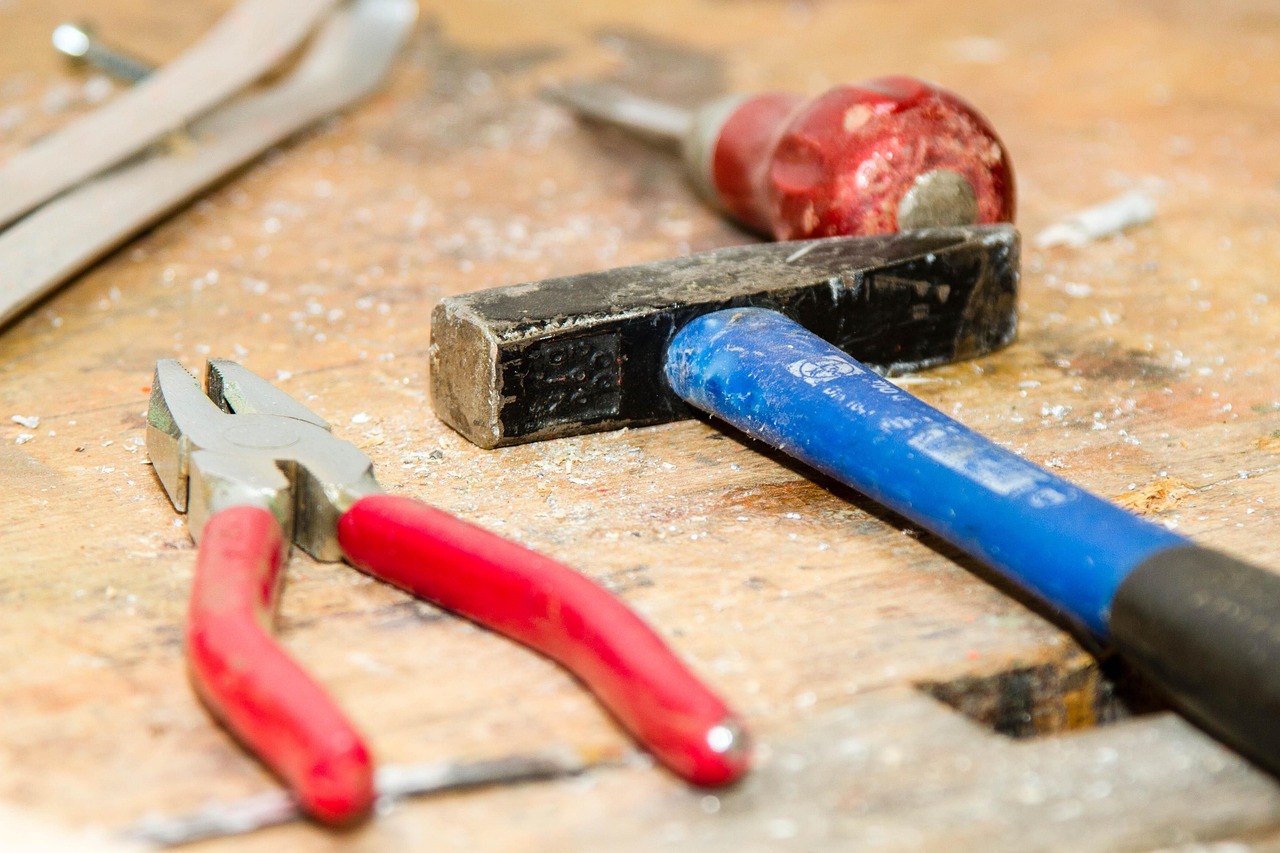
The claw end of the tool is used to pull nails out of an object. A 16-ounce claw hammer with a wooden handle is one of the most popular types of claw hammers to use on jobs sites because it has a good amount of weight for driving nails in twice and it is still light enough to use all day long. The curved claw of the tool offers more leverage when removing large nails while the straight claw of the tool acts like a pry bar when performing demolition tasks.
Today, many claw hammers have handles made of fiberglass or steel so that they are less likely to split during use. Many claw hammers also have rubber grips so that they reduce the amount of friction between the person using the claw hammer and the tool. A slightly convex face on a good claw hammer will allow the nail to stay in place when tapped on the face of the tool.
When first learning to use a claw hammer, it may feel like an individual tool to use, but eventually it will begin to feel as if it is an extension of the persons arm.
2. Framing Hammer
A framing hammer has a larger head than a regular hammer. Builders use framing hammers to hammer nails into wooden structures.
The weight of a framing hammer ranges from 20 to 32 ounces. Because the handle of a framing hammer is longer than a regular hammer, it allows a builder to swing the hammer faster and to apply more force when they strike a nail into a piece of wood. The flat face of the framing hammer is typically textured in such a way that a builder will not hit the nail with a glancing blow; it will hit the wood.
Some framing hammers have a magnetic nail starter so that when a person is hammering nails into high places with a ladder, they can start the nail with one hand while they use the other hand to stabilize the board on which they are working. Additionally, many framing hammers have a hook on the end of their handle so that they can hang from a wooden joist while they use both of their hands for another task. Framing hammers can become very heavy so care must be taken when swinging the framing hammer.
The heavy weight of a framing hammer can hit a persons thumbnail if they are not careful with each swing. However, with experience with a framing hammer, it will become effortless to drive nails into wooden structures to build walls.
3. Ball Peen Hammer
A ball-peen hammer has a rounded ball on one end of the tool and a flat face on the other end of the tool.
A ball-peen hammer looks more like a tool that belongs in the workshop of a machinist than a carpenters toolbox. A ball-peen hammer tool is used to shape metal objects. The design of the ball end of the hammer tool comes from the time when blacksmiths used ball-peen hammers to shape metal into different curves.
Today, mechanics utilize ball-peen hammers. The ball end of the hammer hardens the metal object by applying enough force so that the metal changes shape. A claw hammer tool cannot accomplish this type of task.
A ball-peen hammer tool can weigh between four ounces which is used for delicate tasks and three pounds which is the weight of the heaviest ball-peen hammers used for more robust metalwork. If a person has attempted to use a tack hammer to remove a rivet, they will understand the advantage of using a ball-peen hammer tool for such tasks.
4. Brick Hammer
A brick hammer tool is an indispensable tool for masons and bricklayers.
One side of a brick hammer has a square striking face while the other side has a blade that is sharp like a chisel. A brick hammer isnt used to hammer nails into wood. Instead, the chisel blade allows these individuals to split bricks and blocks of concrete.
With the proper amount of force, a skilled mason will be able to cut a piece of brick with two well-placed strikes from a brick hammer so that the two cut edges of the brick will require little or no mortar to adhere to the surrounding brick. The balance of a brick hammer is located at the point where a persons thumb rests. It takes some practice to master the skill to use a brick hammer effectively.
When first utilizing a brick hammer, the first few bricks may be split in a frustrating manner. However, eventually the skill becomes second nature and a person that utilizes a brick hammer expertly will seem skilled to others in the trade.
5. Sledgehammer
A sledgehammer is a very heavy tool that is used for demolishing tasks.
The head of a sledgehammer tool can weigh between two and twenty pounds. The sledgehammer is used for demolition tasks, driving stakes into the ground, splitting logs, and any other task that requires the force that is created by swinging such a heavy tool. The long handle of the sledgehammer allows a person to create more force when they swing the sledgehammer with their strength.
A ten pound sledgehammer head that is swung with a full force can have a great deal of energy that is concentrated upon a small area. However, to utilize a sledgehammer properly, a person must have good footing with their body in the proper position and they should utilize it enough to develop fatigue in their shoulder muscles. While the sound of a sledgehammer hitting old concrete can be very satisfying, the next morning after utilizing a sledgehammer could lead to regret if a person finds themselves unable to lift a coffee mug due to tired muscles.
However, for tasks like demolition of old fences or setting fence posts with a sledgehammer no other tool will be as effective.
6. Tack Hammer
While tack hammers may appear small next to the other types of hammers in a toolbox, these small tools are useful for specific tasks. These types of tools typically weigh between five and ten ounces.
In addition, a tack hammer has a narrow flat face and a magnetic slot on the tool. Upholsterers and finish carpenters use tack hammers to drive small, thin brads or tacks into the wood so that they dont smash their fingers. The magnetic tack is used to hold a tack in place in the wood so that the carpenter can place the tack in the proper position.
Then by removing the magnetic tack from the object being worked on, the carpenter can drive the tack into the wood. Some tack hammers also have a claw tool that is sized specifically to remove upholstery tacks. Upholstery tacks are typically smaller and more challenging to remove than regular brads or nails.
7. Dead Blow Hammer
The dead-blow hammer may be the most cleverly designed tool among the types of hammers described in this article. The dead-blow hammer contains a hollow head within which there is a chamber filled with sand or steel shot. When a person swings the dead-blow hammer the steel shot will move to the back of the head as it swings down, and then when the dead-blow hammer makes contact with an object the steel shot will move forward and eliminate almost all of the rebound of the hammer.
Because there is no rebound of the head of a dead-blow hammer, the energy of the dead-blow hammer is transferred to the object being hit. Mechanics use dead-blow hammers to seat parts without damaging the surfaces of those parts. Woodworkers use dead-blow hammers to join wooden parts together with no marks made by the hammer.
Additionally, the face of a dead-blow hammer is softer than other types of hammers and may be made of rubber or nylon to protect the object being hit by the tool. For individuals who have struggled with challenging tasks such as frozen bolts it is unlikely that other tools will be as effective as a dead-blow hammer.
8. Geological Hammer
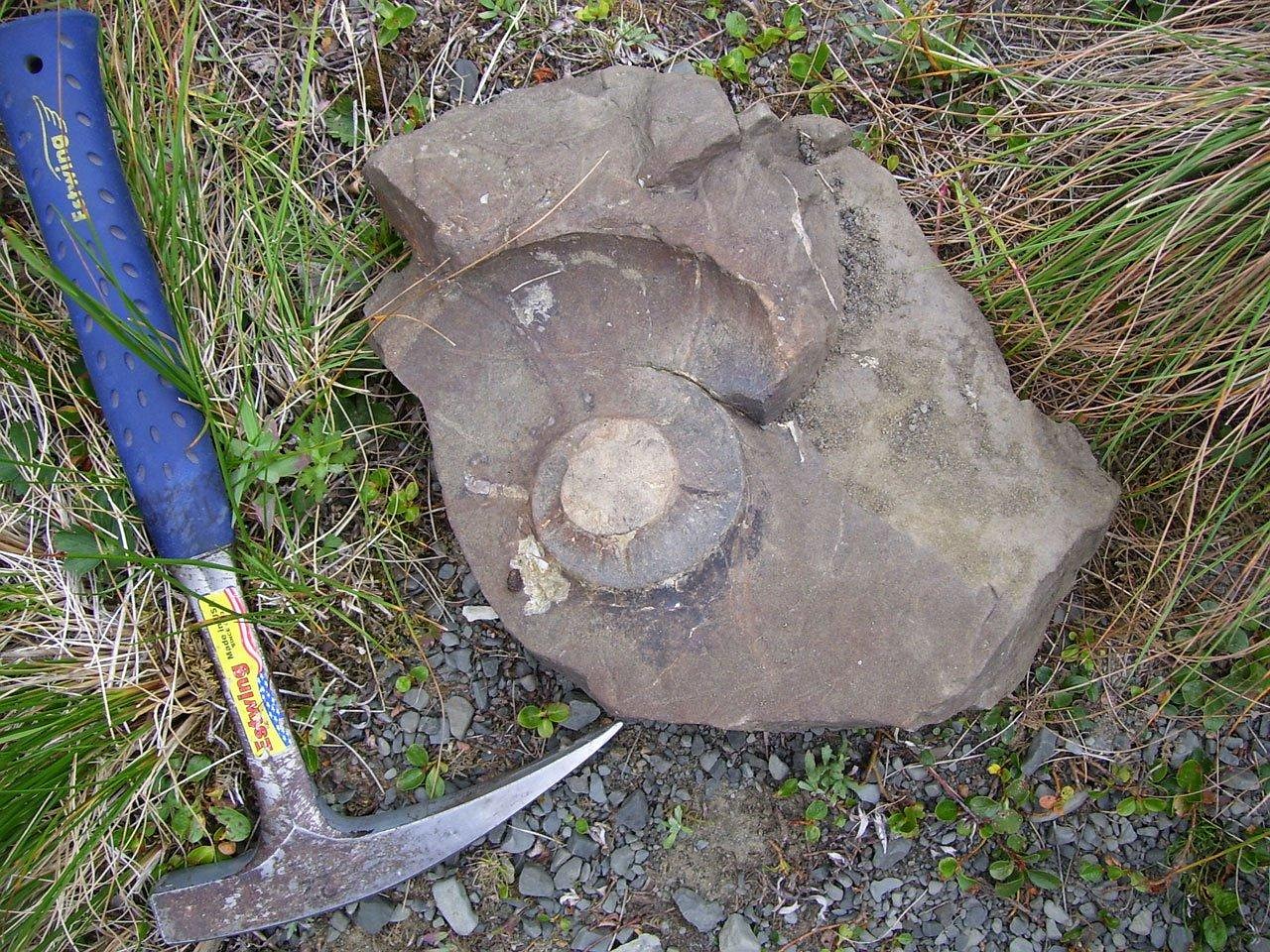
A geological hammer is also referred to as a rock pick.
Geological hammers have one very specific use. The flat side of the geological hammer has a square face while the other end features a sharp pick point. Geologists, paleontologists, and rockhounds use geological hammers to chip away at rocks to reveal minerals or fossils, or to split open stones.
Good geological hammers are made out of high-carbon steel and balance so that the pick point feels like an extension of the wrist of the geologist. These tools are used on geological excursions in which an individual searches the area for interesting rocks and minerals. The geological hammer transforms a hiking trip into an adventure to find the perfect natural mineral to add to a collection.
The correct use of each tool requires an understanding of the job that must be performed before the proper hammer tool is selected. A finish carpenter who utilizes a framing hammer is like using a baseball bat to hit a fly with a bat; it is not an efficient use of the tool. Using a tack hammer to drive sixteen penny nails into a structure is another ridiculous use of a tool.
Understanding how to properly use each hammer tool will make it easier for a person to successfully complete a job that they have been instructed to perform. Before beginning any project that utilizes hammer tools, it is always wise to consider which hammer tool will best serve the individual job. If the appropriate tool is chosen for a job the individual will not only find it easier to complete the job, but they will look forward to performing the job with that tool again.
Amid all the complicated power tools that exist today, there is a degree of satisfaction in solving a job with one of the simplest and most effective tools of all: a hammer.
