
Nail fasteners may seem like a simple component of a construction project or a wooden crafts project, but there are many different things that nails can holds together. From construction job sites to woodworking shops, nails are found in numerous projects. For project success, selecting the correct type of nail is crucial.
If the wrong nail is used in a project, it can fail at the worst time. However, if you use the correct nail, it can stand the test of time without the need for further thought or consideration about the project. There are several different types of nails based off the shape of the nail, the coating applied to the nail, the head of the nail, and the way in which the nail grips or slides through the wood.
Some nails is constructed to allow for the best holding power, but others are manufactured to permit for easy driving into the wood. Additionally, several nail types were specially created to solve a specific problem in a project. The following list details the different types of nails that are used most frequently in completing projects.
The list starts with the most common nails and continues to the more specialized nails for specific tasks.
Most Common Types of Nail Fasteners
1. Common Nails
Common nails are the most common nail type and are used for framing and general carpentry work. Common nails feature a thick shank, a flat head, and a point that features a diamond shape.
Builders prefer using common nails because the flat head resists the nail from being pulled out of the wood by the projects components. Common nails are seen in almost every construction project. However, using common nails can be problematic when attempting to hide the nails in the project.
Because of the thick, flat head, the nails will create a lump on the wooden project. That lump will need to be filled if the project is to be painted or stained. However, when working with rough wood projects, common nails are the best choice for carpentry work.
2. Box Nails
Box nails are thinner version of the common nail. Box nails have a thinner shank with a slightly smaller head. Box nails are used for projects where the wood is thinner because the nail is less likely to split the thinner wood.
However, because box nails do not have the holding power of common nails, they are only used on projects with a lighter load. For interior projects and furniture, box nails are preferred because they leave a smaller hole in the wood, and the nail will bend when it hits a knot in the wood. Additionally, box nails drive faster into the wood because of their thinner shank, an advantage for driving hundreds of these nails in a day.
3. Finish Nails
Finish nails have a very small, round head that sinks just below the woods surface. With their slender shank, finish nails will not split the thin wood components. Finish nails have a small head that provides minimal support for the wood; thus, there is friction between the shank and the wood.
Additionally, the wood may feature a spiral or ringed texture along the shank to allow the finish nail to remain within the wooden project. These nails are seen in cabinetry, trim work, door casings, and other projects where the visual appearance of the wood is important. A supply of finish nails between one inch and two and a half inches will last for most trim projects.
4. Brad Nails
Brad nails are even thinner than finish nails. Brad nails have a long pin-like nail that has almost no head on it. Brad nails are driven with pneumatic nail guns for projects like attaching delicate picture frames or thin wooden veneers.
Because brad nails have no head, they leave no visible mark on the wood. However, because of the lack of head, there is also no resistance to the wood pulling out of the nail. Brad nails are only used in projects where the wood is also planed or glued to the other component.
Brad nails are used for holding all the components in place while the wood glue dries. In this way, brad nails are temporary fasteners for woodworking projects.
5. Ring-shank Nails
Ring-shank nails have a series of sharp ridges or rings that are pressed into the wood as the nail is driven into the wood project.
These rings makes it very difficult to remove the nail from the project, so the nails are used on projects like floor sheathing or wooden decking. The extra grip these nails offer require more effort to drive into the wood. Using ring-shank nails on hardwoods can split the hardwoods due to the force required to drive these nails.
Once the nail is embedded into the hardwood, it will be very difficult to remove the nail with demolition crews. Thus, these nails are used for wooden projects where the nail will not be removed.
6. Spiral-shank Nails
Spiral-shank nails have a spiral design on their shank that allow the nail to work similarly to a wood screw.
Spiral-shank nails are used on projects where the wood will expand and contract, like wooden fencing or cedar shingles. The spiral shank allows the nail to move slightly within the wooden project as the boards expand or contract. The movement of the spiral shank allows the nail to not widen the hole for the wood project.
Spiral-shank nails are available in several sizes and are found in the trucks of construction workers for use on pressure-treated lumber.
7. Cut Nails
Cut nails are among the most old-fashioned nail types and are used by masons who must attach wooden components to concrete or brick structures. Because of the blunt heads on cut nails, the nails will punch through the concrete to the brick or stone structure.
Additionally, cut nails are used on historic restoration projects for wooden structures built in the 18th or 19th century. Because cut nails split the wood more easily than round nails, they are not used for fine carpentry work. Still, using cut nails on stone foundations, for example, will not find another nail type that will perform as well.
8. Duplex Nails
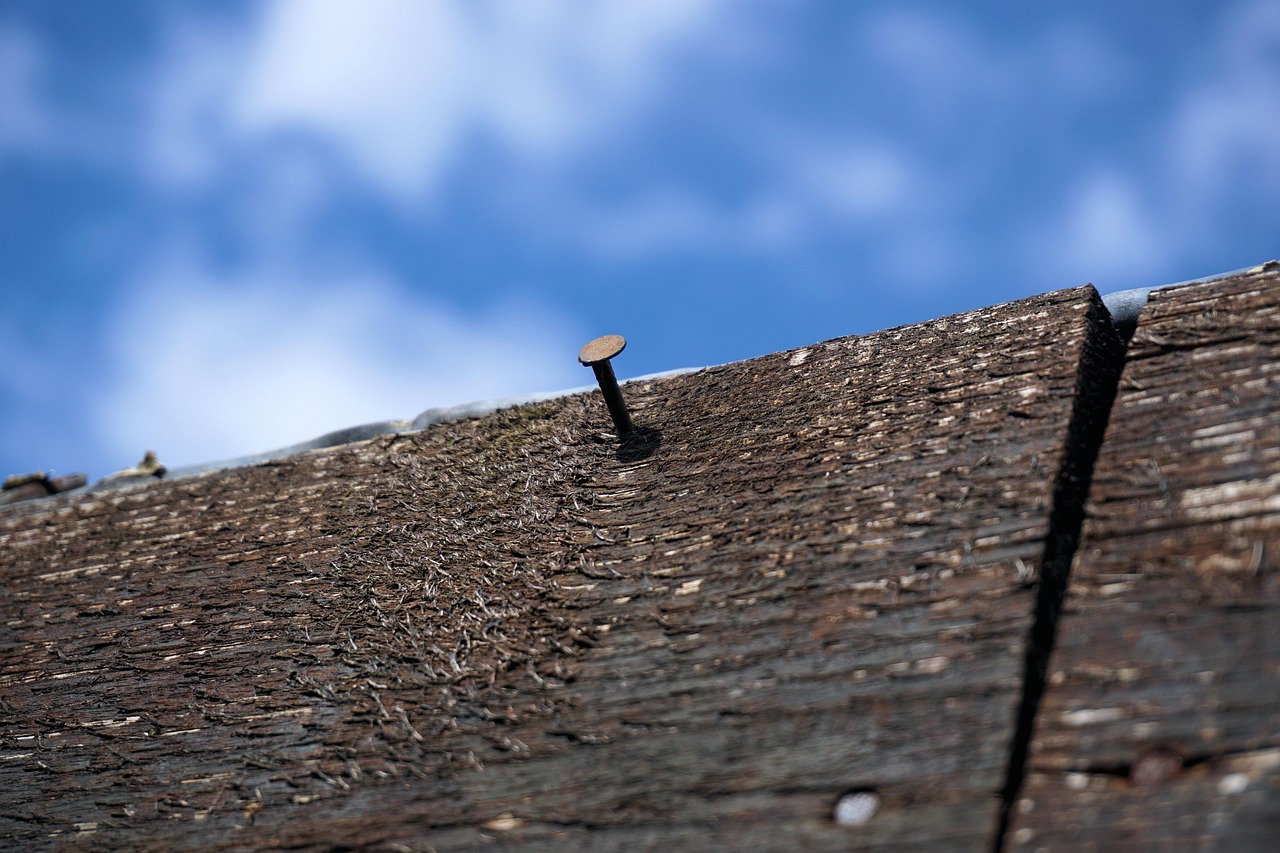
Duplex nails have two heads on the nail, one above the other. This allows the upper head to be grasped with a pry bar or claw hammer to remove the nail. Many contractors use duplex nails for temporary projects such as formwork for concrete, scaffolding, or projects that must be dismantled at a later date.
Though it sacrifices some of the holding power of the nail, contractors prefer the ability to easily remove the nail from the project.
9. Roofing Nails
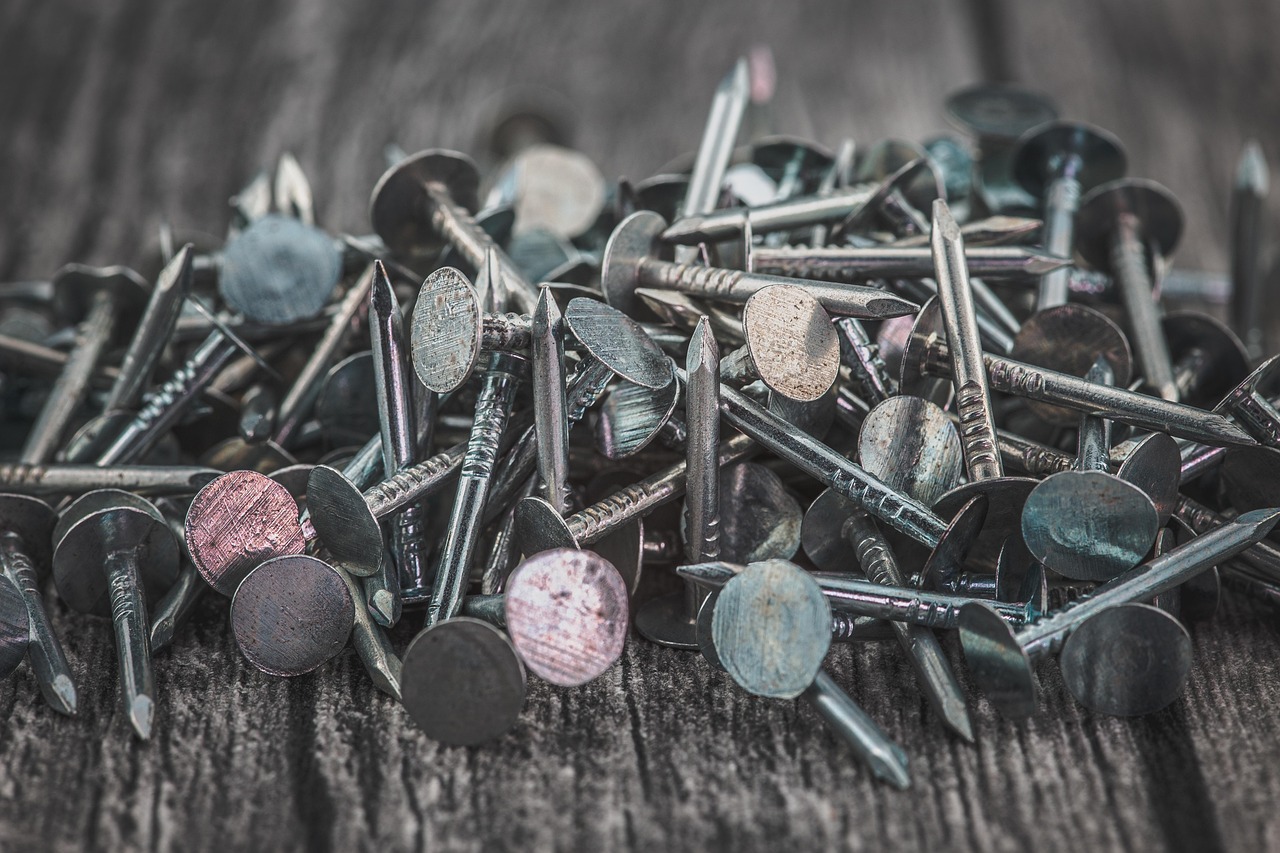
Roofing nails have a wide head with a umbrella shape and a shank that features barbs to hold the asphalt shingles to the roof. The wide head of the roofing nail allows the shingle roof to distribute the force on the roof to the shingle layers so that the shingle will not tear.
Roofing nails have a rust-resistant coating or are made from aluminum or copper for specific roofing projects. Roofing nails come in lengths that penetrate the roof decking by three-quarters of an inch to ensure the nail does not punch through the underside of the roof. Using the wrong length of roofing nail for the wooden project will ruin the roof install project.
10. Casing Nails
Casing nails are in the middle in terms of the size of the head relative to finish nails and common nails. The head of a casing nail is slightly bigger than a finish nail but not as big as a common nail. The shank is thicker than a brad nail.
They are used on projects like door jambs, window casings, and hardwood floor treads. When working on trim projects that use denser woods, a carpenter will use casing nails for their better shear strength.
11. Sinkers
Sinkers are nails with a wax or polymer coating that reduces the effort needed to drive the nail through the wood.
The countersunk head of a sinker allows the nail to be flush with the wooden project. Sinkers are used for framing entire houses. Sinkers are also driven much easier into the wood than other nail types.
They are used for wooden sheathing and subfloors of houses. Though the coating wears over time, sinkers are best for indoor projects only, unless using galvanized versions of these nails.
12. Upholstery Nails
Upholstery nails come in various designs with decorative heads.
Upholstery nails are used for attaching fabric to wooden components of furniture projects. However, most of the time these nails are used for their decorative heads so the furniture will feature visual appeal. These nails have a short shank with barbs to strongly grip the padding within the furniture.
The shank design allows the fabric to not pull out of the wooden projects. Upholstery nails come in various decorative head styles to enhance wooden furniture projects for visual design. The different nail types were created to solve specific problems in wooden projects.
Whether it is a common or brad nail, each nail has its place in a carpenter’s toolbox. Choosing the correct nail will allow the project to be successful. Consider the type of wood, the load that the wooden project will experience, whether it will be exposed to the outside elements, and the visual aspect of the project.
If done correctly, the nail will be invisible when the project is complete. The absence of the appropriate nail type would be glaring and distracting for the viewer. If carpenters and craftsmen choose the correct type of nail for each project component, their projects will remain solid for many generations to come.
