🔧 Torque Spec Calculator
Calculate torque from force & distance, convert between units, and look up fastener torque specs
| Bolt Size | Grade 2 | Grade 5 | Grade 8 | N·m (Gr.5) |
|---|---|---|---|---|
| 1/4" | 5 ft-lb | 8 ft-lb | 12 ft-lb | 11 N·m |
| 5/16" | 9 ft-lb | 17 ft-lb | 24 ft-lb | 23 N·m |
| 3/8" | 15 ft-lb | 30 ft-lb | 45 ft-lb | 41 N·m |
| 7/16" | 25 ft-lb | 50 ft-lb | 70 ft-lb | 68 N·m |
| 1/2" | 35 ft-lb | 75 ft-lb | 110 ft-lb | 102 N·m |
| 9/16" | 55 ft-lb | 110 ft-lb | 155 ft-lb | 149 N·m |
| 5/8" | 75 ft-lb | 150 ft-lb | 220 ft-lb | 203 N·m |
| 3/4" | 130 ft-lb | 270 ft-lb | 375 ft-lb | 366 N·m |
| 7/8" | 215 ft-lb | 395 ft-lb | 605 ft-lb | 536 N·m |
| 1" | 320 ft-lb | 590 ft-lb | 910 ft-lb | 800 N·m |
| Bolt Size | Class 8.8 | Class 10.9 | Class 12.9 | Class 8.8 (ft-lb) |
|---|---|---|---|---|
| M6 | 10 N·m | 14 N·m | 17 N·m | 7 ft-lb |
| M8 | 25 N·m | 35 N·m | 41 N·m | 18 ft-lb |
| M10 | 49 N·m | 69 N·m | 83 N·m | 36 ft-lb |
| M12 | 86 N·m | 120 N·m | 145 N·m | 63 ft-lb |
| M14 | 135 N·m | 190 N·m | 230 N·m | 100 ft-lb |
| M16 | 210 N·m | 295 N·m | 355 N·m | 155 ft-lb |
| M18 | 290 N·m | 410 N·m | 490 N·m | 214 ft-lb |
| M20 | 415 N·m | 580 N·m | 700 N·m | 306 ft-lb |
| Application | Typical Range (ft-lb) | Typical Range (N·m) | Notes |
|---|---|---|---|
| Wheel Lug Nuts | 80–120 ft-lb | 108–163 N·m | Check vehicle manual |
| Spark Plugs | 15–30 ft-lb | 20–41 N·m | Lower for aluminum heads |
| Oil Drain Plug | 20–30 ft-lb | 27–41 N·m | Use new washer |
| Cylinder Head Bolts | 60–90 ft-lb | 81–122 N·m | Multi-step torquing required |
| Brake Caliper Bolts | 35–50 ft-lb | 47–68 N·m | Use thread locker |
| Axle / Hub Nuts | 150–200 ft-lb | 203–271 N·m | Often use cotter pin |
| Wheel Bearing Nuts | 70–100 ft-lb | 95–136 N·m | Back off 1/4 turn if non-locking |
| Transmission Pan | 12–18 ft-lb | 16–24 N·m | Snug, not over-tight |
| Rocker Arm Nuts | 17–23 ft-lb | 23–31 N·m | Set valve clearance after |
| Exhaust Manifold | 20–30 ft-lb | 27–41 N·m | Torque hot if possible |
Torque refers to the application of rotational forces to a fastener. When applying torque to a fastener, the goal is to create secure clamping force without stretching teh metal fastener to its limits. If you apply too little torque to a fastener, it may become loosely.
However, if you apply too much torque, the risk of stripping the threads or break the metal fastener. Proper torque will ensure that a fastener will remain securely in place. The size of the fastener, the grade of the fastener, and whether it is lubricate or not will determine the amount of torque that must be applied.
How to Use Torque to Tighten Bolts
For instance, tire manufacturers may specify the amount of torque that must be applied to the lug nut of a wheel to ensure that it remains attached to the vehicle without warping the hub. In the case of lug nuts, applying too little torque may result in the wheel vibrating loose off the hub. Using too much torque on lug nuts can crack the wheel or the wheel stud.
Torque is calculated by multiplying the amount of force applied to the bolt by the distance from the center of rotation of the fastener. The longer wrench that is used to apply the force to the bolt will increase the amount of torque that is applied to the fastener. Lubrication will change the amount of torque that is required to set a fastener.
If a bolt is dry, it will require more torque to set the fastener as a result of the friction between the two mating metal part. Applying oil or anti-seize compound to the bolt will reduce friction between the parts. With reduced friction comes increased pressure on the threads.
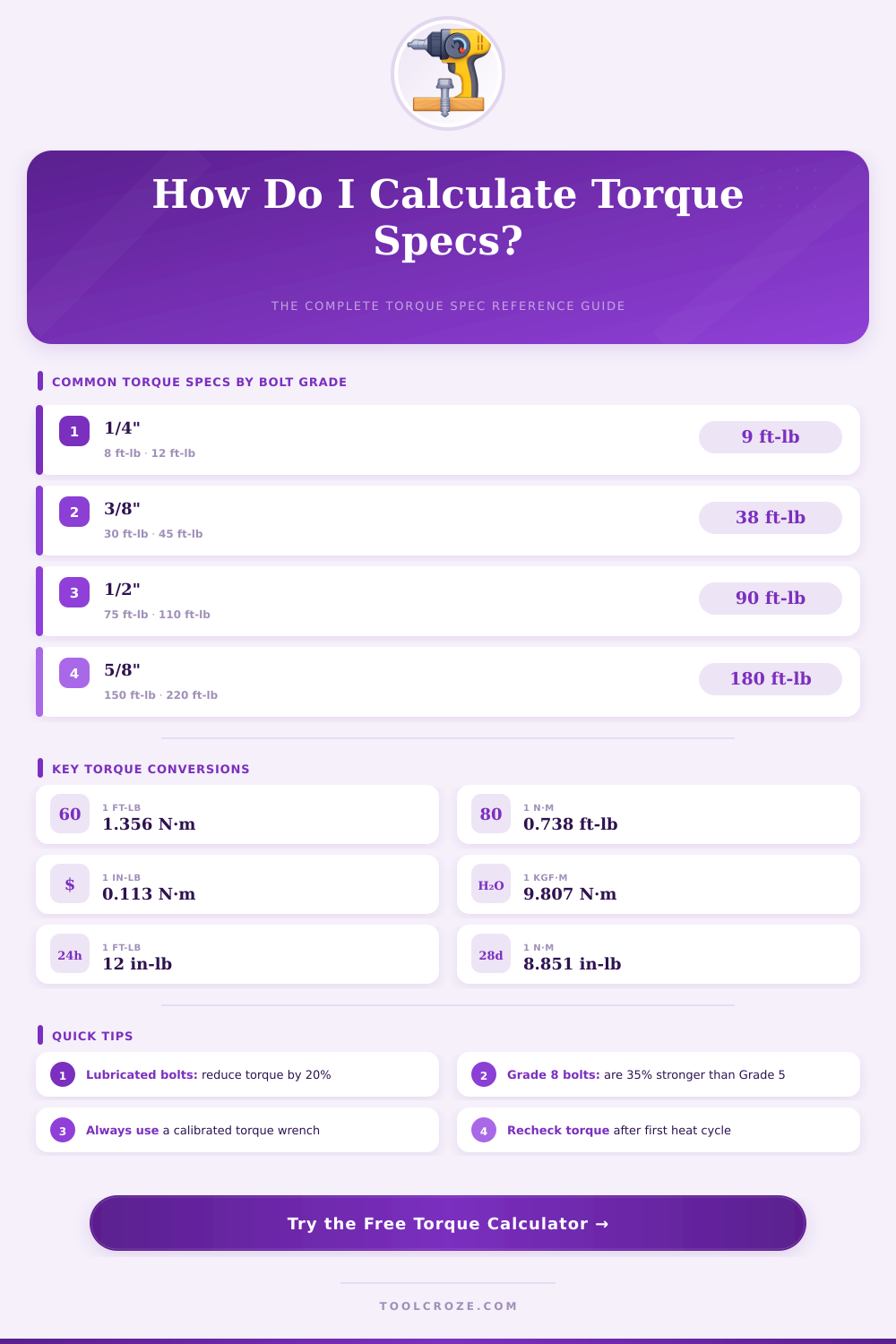
To counteract the increased pressure on the threads, one can reduce the target torque for a lubricated fastener by approximately 20% of the total target torque for the fastener. The grade for a bolt will determine the amount of torque that it can withstand before it fail. Grade 5 bolts are made out of medium carbon steel and are used in many everyday applications.
Grade 8 bolts are made out of alloy steel and are approximately 35% stronger than Grade 5 bolts. Metric bolts also come in different grades. For instance, class 10.9 bolts has a specific tensile strength.
The grade of the bolt will determine the torque that must be applied; using the wrong amount of torque on a bolt of a specific grade can cause the bolt to break. When it comes to the unit of measurement for torque, there is mistakes that people can make when converting between imperial and metric units. For example, many people use imperial units to express torque when others might use metric units.
One foot-pound of torque is equal to 1.36 Newton-meters of torque. Therefore, if a component in the manual specifies a torque in Newton-meters, you will have to convert the specification to foot-pounds. Additionally, 12 inch-pounds of torque are equal to one foot-pound of torque.
Therefore, they must be distinguished when setting the required torque for a component. The angle at which you apply force to a bolt also determines the amount of torque that is created. Applying force in a direction that is perpendicularly to the bolt creates the maximum amount of torque.
However, if you apply your force at 45 degrees to the direction of the bolt, the amount of torque that you will create will be less. If you are not using a torque wrench to apply the correct amount of torque to a bolt, you can calculate the amount of torque that you can apply by measuring the force that you are applying, the length of the wrench that you are using, and the angle at which you are applying the force. Not all components of a vehicle require the same amount of torque to be secured.
For example, spark plug in engines with aluminum heads require a low amount of torque to avoid stripping the threads in the aluminum. However, the nuts that secure the axle to a vehicle require a high amount of torque. To determine the amount of torque that should be applied to a component, one must refer to the service manual for that vehicle.
Some vehicles use what are called torque-to-yield fasteners. These types of fasteners will stretch once the torque is applied. Due to the way that these fasteners stretch when tightened, one must use an angle method when applying the proper amount of torque.
There is some mistakes that people can make when it comes to the application of torque to bolts. For instance, overtorquing a small bolt will snap the bolt head off the bolt. Undertorquing bolts on an exhaust manifold will create leaks at those bolts.
Additionally, the threads must be clean when applying torque to a component. If there is debris between the mating threads of the component, this will create friction that will make it difficult for the bolt to reach the proper amount of torque. Finally, the mechanic will have to calibrate the torque wrench once a year to ensure that it is still providing the proper amount of torque to the components of a vehicle.