
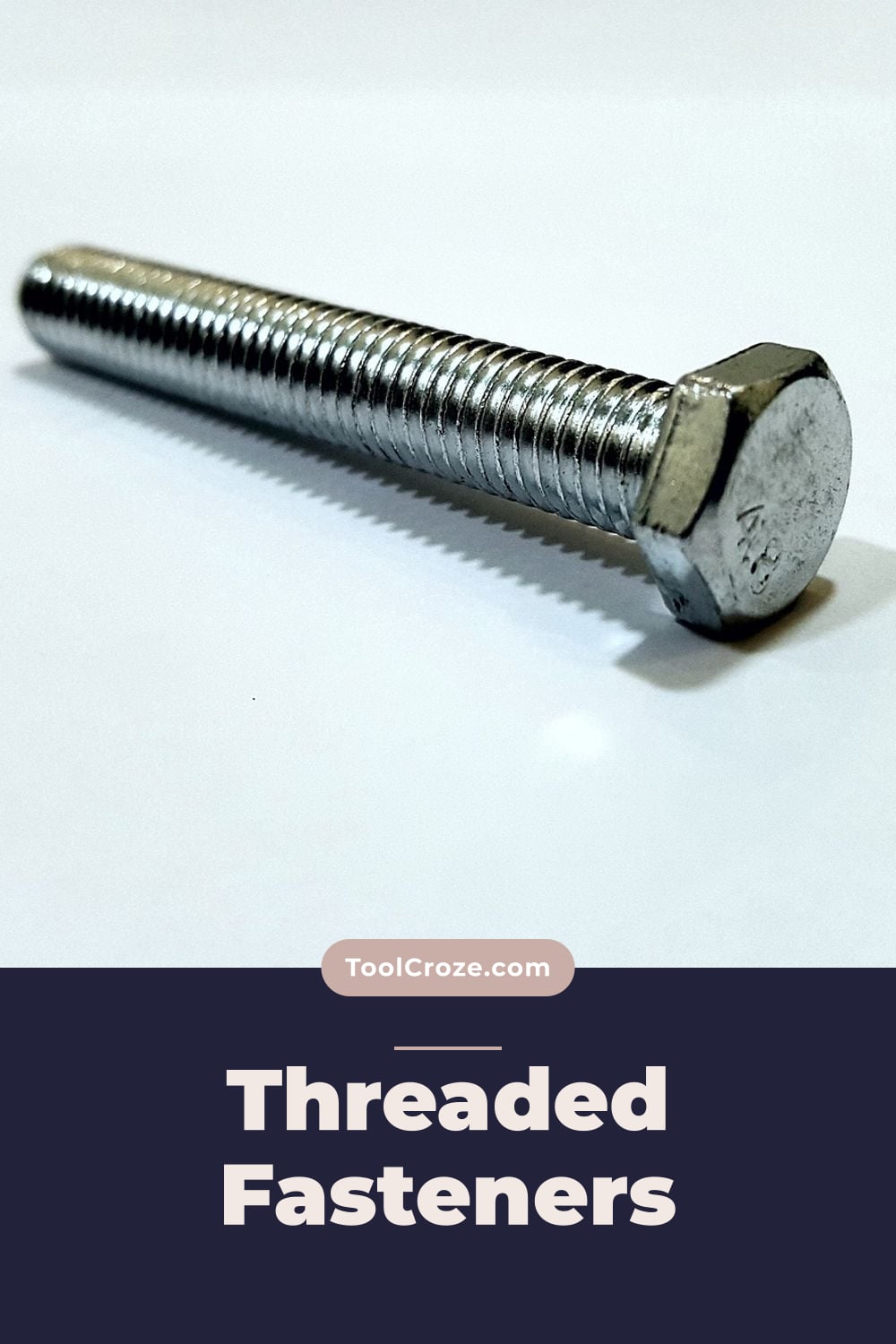
Threaded fasteners is used to hold the moddern world together. From the engines of our cars to the chairs on which people sits, threaded fasteners can be found in nearly every aspect of our lives. Made of metal and designed to allow for joints to be created that can be disassembled from and reassembled into the same component, these fasteners are essential to the construction of nearly every product out there.
Despite their importance, though, many people treats all threaded fasteners as the same. Oftentimes, people will simply take the fastener that is nearest to them on the hardware store pegboard. This carelessly chosen fastener are the reason for many of the worlds stripped threaded joints and broken fasteners.
By understanding the different types of threaded fasteners, people can change the way in which they build, repair, and even troubleshoot the issue that commonly arise in their constructed products. The differences between these types of fasteners are not to be overlooked; instead, these differences is important to the function of the product that utilizes those fasteners. For instance, the type of fastener used can determine whether a motorcycle chain vibrates apart or whether a bridge fastener can stand for decades.
In understanding each fastener that is available, and in learning the way in which they are most likely to be used, people can make certain that the product that they build last as long as they should of. The different types of threaded fasteners include machine screws, lag screws, self-tapping screws, wood screws, set screws, eye bolts, carriage bolts, threaded inserts, and cotter pins and castle nuts. Machine screws are used in numerous task with a variety of different tasks.
Common Types of Threaded Fasteners to Know
1. Machine Screws
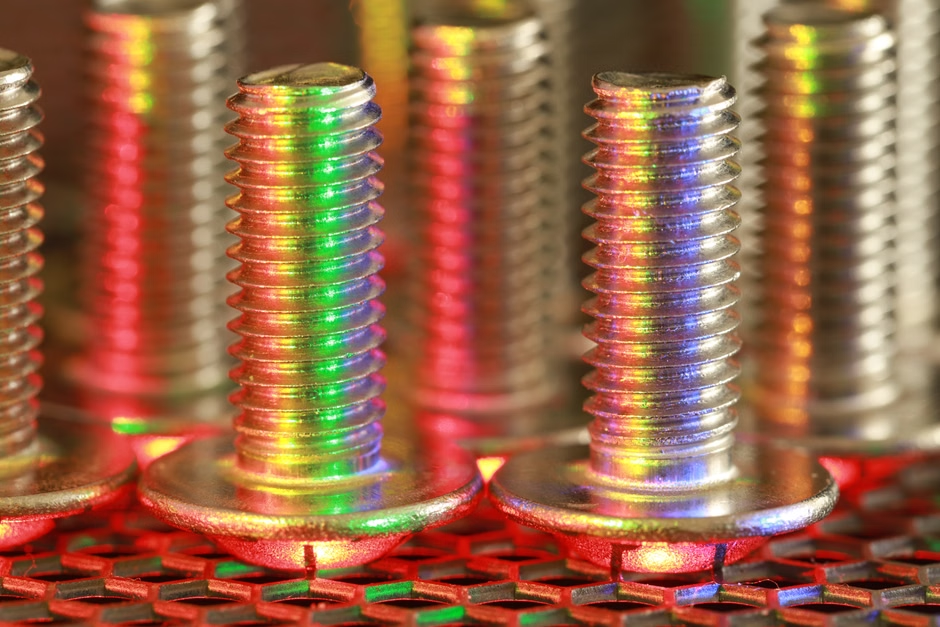
The fasteners has uniform threaded rods that can accept a nut or a thread directly into a tapped hole. Additionally, machine screws has a variety of different drive styles and heads. Additionally, the screws are often used to hold a variety of objects together.
The benefit of using machine screws is that they are highly predictable. Due to the precision in which the thread and the parts that mate with the machine screw are cut, there is little guesswork required with how to tighten the fasteners. Additionally, the screws allow people to avoid overtightening the screws in objects that could otherwise be damaged.
Additionally, the design of machine screws allows people to use them whenever the object that is being built must be disassembled for maintenance. The drives that are used with machine screws, however, must match the tools that is available for each project. For instance, Phillips head screws may be common for many projects, but the same type of screw will become inaccessible if they damage the recessed area of the screw.
2. Hex Bolts
Hex bolts are used in structural connections. These bolts has a hexagonally shaped head and shank, which can be either partially or fully threaded. Additionally, the hexagonally shaped head of the bolt allow for more even distribution of the torque that the wrench applies to the bolt.
Additionally, the shape of the hex bolt prevents the bolt from camming out when it is being tightened. Additionally, the bolts are often of high interest to engineers, as the unthreaded portion of the shank act as a dowel. However, the drawback to using hex bolts is that there is a need for space to turn the wrench in the project.
3. Lag Screws
However, where movement from the joint is not permitted, these type of bolts are of the first choice for the design of the project. Lag screws are often used in wooden products. The lag screw has thick, coarse thread that are designed to bite into the timber.
The head of the lag screw is often in the form of a hexagon or a square shape, which allow it to be turned using a socket wrench. Lag screws are often used in products like ledger boards, heavy beams, or even machinery that are secured to wooden floors. Additionally, the point of the lag screw is often sharp enough to allow it to be driven into the timber without a pilot hole.
However, pilot holes are required in hardwoods to prevent splitting of the wood. Additionally, lag screws require high amounts of torque to allow for strong clamping forces that is needed to allow the wood joint to withstand seasonal movement within the lumber. However, the downside of using lag screws is that they are permanent.
The fasteners leave a large hole in the wood, which may not be desired if the wood joint may need to be changed in the future. Self-tapping screws are used in thin sheet metal products. These types of screws has a cutting notch in their tip that allows them to tap into the sheet metal as they are being inserted.
Self-tapping screws are used in products like HVAC systems, computer cases, outdoor signage. Self-tapping screws require the person to match the point style of the screw to the thickness of the material. For instance, thin sheet metal such as aluminum may not be able to take the aggressive threads of a self-tapping screw, or the sheet metal may be damaged before the head of the self-tapping screw can be fully seated into the sheet metal.
Additionally, the benefit to using self-tapping screws is that they allow for one person to complete the fastening of a joint. However, the downside is that these screws should not be reusing in the same hole. The threads that are formed by the self-tapping screw will lose their sharp edge after being driven into the sheet metal once.
Wood screws are often used in wooden products and are of the most obvious of the fasteners. However, they can be distinguished from other types of screws, such as drywall screws. The drywall screw, for instance, may not hold firm in wooden decking boards outdoors.
Wood screws has a tapered shank and deep, wide threads that allow for the threads to grip the wood without splitting the wood. Additionally, the head of the screw is typically slotted or Phillips head, which allow the screw to sit flush against the wood, and the smooth upper shank of the screw allow the screw to pull the pieces of wood together. Old-growth pine and oak products are good candidates for these types of screws.
Additionally, the modern composite decking boards that is sold today may not be as easy to fasten with wood screws. To address this issue, the manufacturers of wooden products have created specialized versions of wood screws with sharper points and coated shanks that work well in the composite woods. Additionally, people must ensure that the thread of the screw is matched to the wood density.
If they are, they will save themselves time and money in replacing the failed fasteners.
4. Set Screws
Set screws are used inside of products to lock parts in place. These types of screws is headless and are threaded along their entire length.
The set screw presses against a flat part of an object. Additionally, set screws are tightened using an Allen key. Additionally, the best set screws will have a cup point or cone point of the screw head so that the screw bites into the object that it is securing without destroying the object.
Additionally, a set screw will not function properly if it is applied to a polished metal part. However, if a small flat area of that metal part is filed to allow for the set screw to land, it will be able to properly secure that object. The small size of these fasteners allow them to perform a critical role in the object that they are added to.
5. Eye Bolts
Eye bolts allow for products to be quickly attached to other products using a loop. Additionally, the threading on the product opposite the looped end of the bolt must match the direction in which the load will be applied to the bolt. Additionally, if a regular eye bolt is placed into a product in the wrong direction, the load that is applied to the product will dramatically reduce the load that is applied to the eye bolt.
Shouldered eye bolts has a reinforcing fillet at the location where the thread of the bolt meets the eye of the bolt. Additionally, if a product needs to be hung from the floor or to hold a swing that can hold a significant amount of weight, the shouldered eye bolt will save the product from being broken by the weight of the object being hung.
Carriage bolts are named for the square shoulder of the bolt under its domed head. The carriage bolt is designed to lock into the material being fastened when the nut is tightened. Additionally, because carriage bolts are locked into the object with a square shoulder, only one person is needed to tighten the carriage bolt. Additionally, carriage bolts were used in the past to secure the carriage’s wheels.
Today, these types of bolts are still used in timber-frame structures and outdoor play structures. Additionally, the carriage bolt’s domed head look better to some products than the hex head of the bolt. However, the square neck of the carriage bolt requires a matching hole in the object that it is securing. Otherwise, the carriage bolt will chew through the wood over time. However, using a washer and a locknut on the backside of the carriage bolt prevents this problem from occurring.
6. Threaded Inserts
Threaded inserts allow a threaded fastener to be used in products whose materials could easily strip if a screw is used in those products.
Threaded inserts can be pressed into, heated, or screwed into plastic, wood, or composite materials. These inserts allow machine screws to be used in products like furniture whose wooden materials are made of particleboard. Threaded inserts can be used in a variety of products including plastics.
However, the insert that will be used in the product must be chosen according to the type of material that is being fastened. Inserts that work well on maple wood may split the particleboard that is made of MDF wood. Using the correct threaded insert will allow the joint to be stronger and reusable.
7. Cotter Pins and Castle Nuts
Cotter pins and castle nuts are often seen in rotating assemblies. These types of fasteners are designed so that the castle nut can be placed over the bolt, the slots of the castle nut can be aligned with the hole in the bolt, and the cotter pin can then be inserted through that slot. Additionally, the cotter pin is bent to prevent it from working loose from the bolt.
These fasteners are used by mechanics to secure axles of vehicles and other linkages. These types of fasteners are used wherever vibration is a problem for the component that is secured. Regardless of the type of product that is being built, understanding the needs of the various fasteners will allow for a better understanding of the way in which those products will last.
By understanding the forces that may act upon a product’s joint, people can build products in a way that will minimize the likelihood of failure. When people understand the role that hardware plays in building products, the hardware will not fail in their presence when it matters most.
