
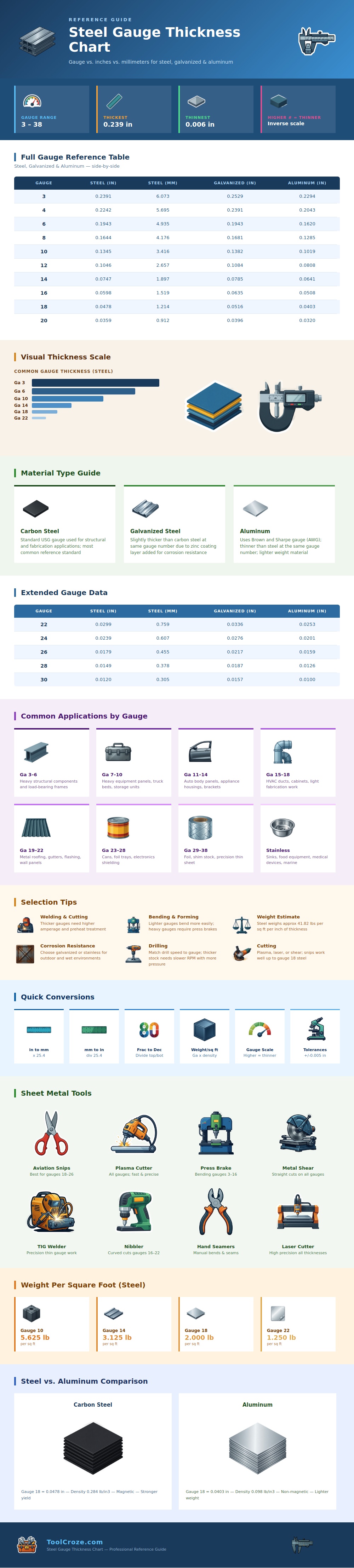
If you’ve ever found yourself in front of a rack full of shiny steel plates, all looking like they came off the same roller, you’re not alone. Chances are you’re there looking for metal for a project, however those labels on the back confuse you. The number that looks like a gauge is actualy a code; and a backwards code at that. Thinner metal has a larger number. This make it feel backwards. That’s because the system was never built with intuition as a goal.
When first steel was made, it was done by hand in rolling mills. The number were based off how many times the metal sheet pass through the mill. Each pass would make it thinner and therefore increase the number. Even though the machines were replaced long ago we stuck with the old way so before you go cutting anything keep a reference chart handy.
How to Read Metal Gauge Charts
This inverse relationship is explained more clearly with a visual breakdown found in the image above. As you can see, thin sheet metal (gauge 20) would make a nice decorative panel whereas heavy structural plate (gauge 3) might be what’s appropriate. Why does that matter? It costs both time and money when you guess incorrectly.
For example, ordering gauge 10 because you want something that bend easily will disappoint you. Gauge 10 need some serious machinery to shape correctly. On the other hand, if you choose something too large for a simple bracket then you’re just adding unnecessary weight without any meaningful gain in strength. In the end, you want to match the material properties to the specific physical demand of your build. And this is where material makes all of the difference.
You’ll see on your standard chart steel, galvanized steel, and aluminum side-by-side. But they use different gauges altogether when talking about carbon steel vs It is aluminum. Gauge 14 doesn’t mean the same thing in aluminum as it do in steel. And actualy, gauge 14 aluminum would be much lighter (and thinner) then gauge 14 steel. This is how some DIYers get tripped up: They want to switch material directly, but they don’t realize how decimal measurement compares until then.
For instance, if you’re swapping out a rusty steel bracket for an aluminum version, you may have to change the gauge to keep things equally stiff. Respect the difference between densities; it’s there for a reason.
The other wrinkle comes with galvanized steel, which is coated in zinc. According to the chart, galvanized steel are very slightly thicker than bare carbon steel at the same gauge number. That’s because of the protective coating added during production. When making close fits where tolerances matter, you can’t just take off thickness of the zinc and call it good.
Machinists fret over thousandths of an inch; accountants fret over cents on the dollar. A small thing, but when parts has to fit together tightly or slide into place, oh man does it matter. What you’re cutting dictates which tool is best.
Hand tools is fine for thin sheet metal, typically as thick as gauge 18. Anything larger than that and you’ll break things and ruin joint strength trying to shear it. For heavier metal like heavy structural frames or truck bed metal, you want laser machines, shears or plasma cutters. Knowing your tools will save you from getting frustrated before starting to cut any metal.
Another practical consideration that doesn’t get enough airtime is weight. Gauge 10 steel, on average, weighs about forty-two pounds per square foot per inch thick. Sounds abstract? A single four-by-eight sheet of gauge 10 steel weigh more than two-hundred pounds. Unless you like your back in pain, you’ll be needing some assistance when it comes to lifting time. You should of saved your back by planning ahead for the logistics earlier.
Ultimately, the chart exists to take the guesswork out of a historical accident of a system. Order your material with this handy dandy chart so you can be sure of the thickness. In metal working precision trumps approximation every time. Once you get the numbers down, the metal becomes less of a hurdle and more predictable in its behavior.
