
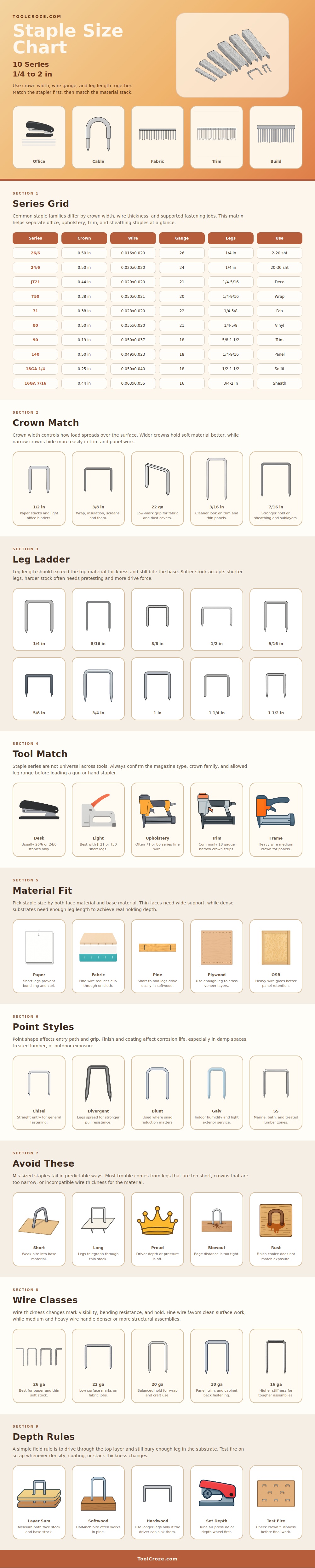
Choosing the correct types of staple is an necessary step in completing the project, and choosing the incorrect type of staple can cause the project to fail. Staples isnt all the same size and shape. A person must choose the correct type of staple based off the tool that will be used to insert the staples, the type of material that must be fastened, and the thickness of that material.
If a person choose staples that are too short for the material to be fastened, the staples will not be able to grip the base material and the fastened item will come apart. If the staples are too long for the thickness of the material to be fastened, the staples will come out the other side of the material. Several different specification relate to the function of the staple.
How to Choose the Right Staple for Your Project
Specifications include the crown width, wire gauge, leg length, and point style of the staple. The crown width refers to the width of the top of the staple. A wide crown is used for fastening to soft materials to ensure that the soft material does not tear.
A narrow crown is used for fastening to tight areas, such as a trim joint. Wire gauge refer to the thickness of the metal that is used to make the staple. Fine wire is used for delicate fabrics to ensure that the staple does not tear the fabric.
For thicker materials, such as plywood, the user will use a staple with a thicker wire, such as 16-gauge or 18-gauge wire, to ensure moreer shear strength for the staple. Leg length is one of the critical specification for the staple. The leg length will determine how deep the staple is driven into the base material.
If the leg length is too short, the staple will not secure the material to be fastened. If the leg length is too long, the staple will emerge from the bottom of the material. Point style refer to the shape of the point of the staple; a chisel point will allow for a staple to enter a material in a straight fashion, while divergent leg staples provides resistance against being pulled out of the material.
The type of tool to be used will limit the type of staple that can be used with that tool. For instance, desktop staplers is designed for using small staples to fasten pieces of paper together. If a person inserts construction staples into a desktop stapler, the stapler will not function.
Similarly, a pneumatic upholstery tool is designed to use fine staples to fasten to foam and fabric. It wont function with construction staples. The material that is to be fastened will require a specific type of staple.
For instance, paper require staples with short legs to avoid curling the paper. Fabric require staples with fine wire to allow the wire to pass between the fibers of the fabric. The thickness of the materials will also impact the type of staple.
For example, staples for plywood will have a longer leg than staples for soft pine wood due to the number of layers of plywood. In damp environment, galvanized or stainless steel staples should of be used since staples will not rust in damp environments. Standard staples will rust in damp environments and cause damage to the project.
To avoid making mistake with the staple gun and fasteners, a person should use a size chart to determine the proper type of staple series. The tool to be used, the material that is to be fastened, and its thickness will all play a role in determining the proper type of staple series. Before beginning the project, a person should perform a test drive of the staple gun on a scrap piece of the material that is to be fastened.
This will allow for the person to adjust the air pressure of the staple gun or the depth of the staples driven into the material until the crown of the staple sit flush with the material. Following these steps will ensure that the fastened materials will remain secure and the project will remain stable.
