Spray Paint Reducer Calculator
Estimate reducer, activator, sprayable mix, per-coat cup load, waste loss, and viscosity direction for automotive refinish spraying.
Choose a common coating setup, then tune the cup volume, temperature, waste, and viscosity target to match the job sheet.
Reducer Mix Results
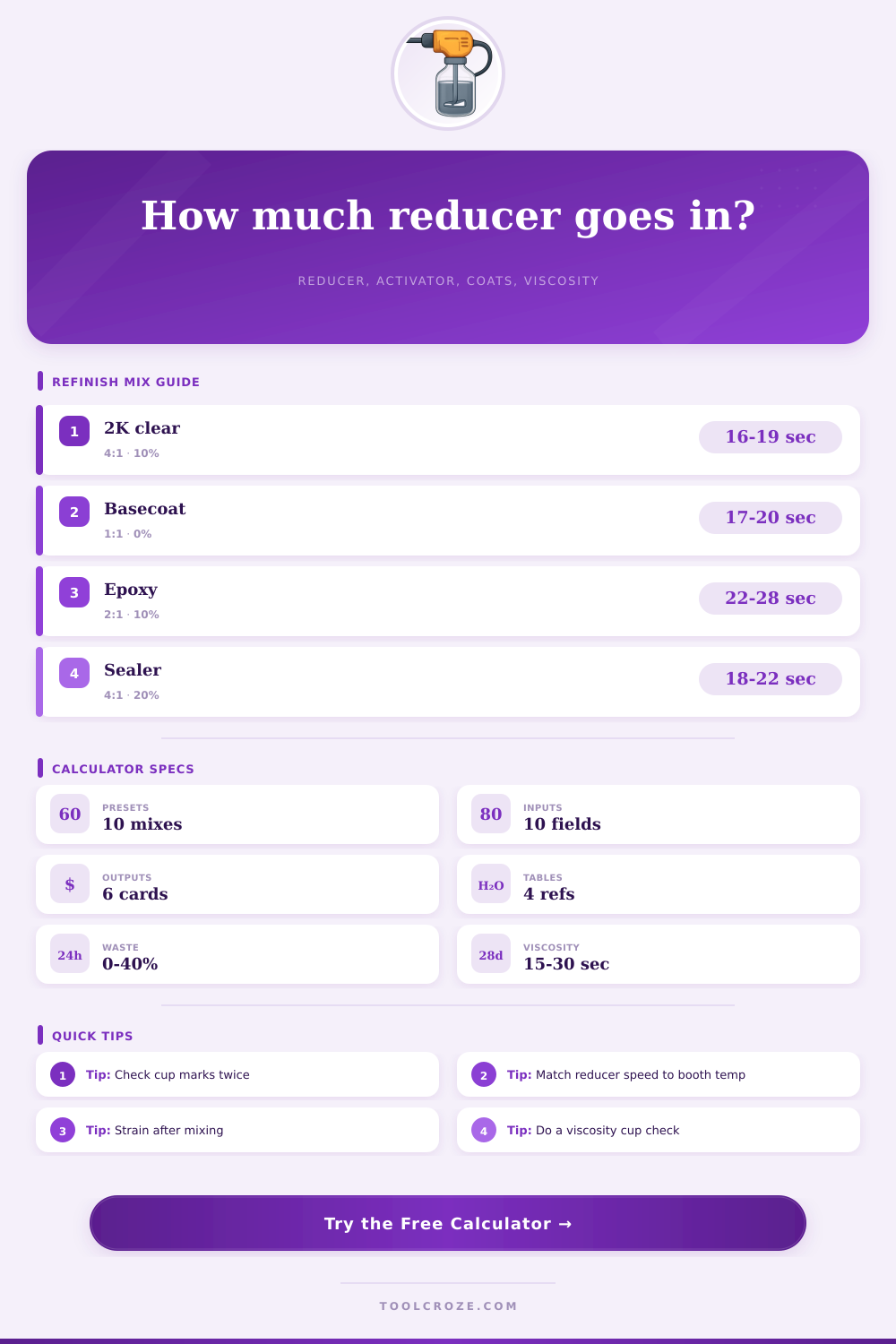
| Refinish material | Common ratio | Reducer range | Typical target viscosity |
|---|---|---|---|
| 2K urethane clear | 4:1 plus reducer | 5-15% | 16-19 seconds |
| Solvent basecoat | 1:1 with reducer | 50% by paint volume | 17-20 seconds |
| Epoxy primer | 2:1 plus reducer | 0-15% | 22-28 seconds |
| High build primer surfacer | 4:1 plus reducer | 10-20% | 24-30 seconds |
| Wet-on-wet sealer | 4:1 plus reducer | 15-25% | 18-22 seconds |
| Booth temperature | Reducer speed | What it helps | Calculator cue |
|---|---|---|---|
| 55-65 deg F | Fast | Shorter flash in cool air | Watch solvent pop on heavy coats |
| 66-78 deg F | Medium | General refinish work | Default balance for panels |
| 79-90 deg F | Slow | More flow on warm panels | Expect longer flash time |
| 91-105 deg F | Very slow | Large panels and hot booths | Reduce dry spray risk |
| Spray system | Good planning range | Reduction behavior | Common refinish use |
|---|---|---|---|
| HVLP gravity gun | 16-24 seconds | Needs good atomization at lower air speed | Base, clear, sealer |
| Compliant / RP gun | 17-25 seconds | Tolerates slightly fuller material | Clear and single stage |
| Conventional siphon | 15-22 seconds | Often sprays thinner material well | Older enamel and lacquer |
| Mini detail gun | 14-20 seconds | Small tips prefer lower viscosity | Jambs, spots, edges |
| Air-assisted airless | 22-35 seconds | Handles higher viscosity at pressure | Primer and industrial panels |
| Job size | Usual coats | Waste allowance | Planning note |
|---|---|---|---|
| Blend panel or jamb | 1-2 coats | 8-12% | Small cups lose proportionally more in the gun |
| Single panel refinish | 2-3 coats | 10-15% | Keep enough for edge passes and a dust coat |
| Two panel repair | 2-3 coats | 12-18% | Mix batches with the same ratio if splitting cups |
| Overall clear session | 2-4 coats | 15-25% | Temperature and booth airflow change flash timing |
Mixing teh paint correctly prior to utilize the spray gun is necessary to ensure that the paint creates a smooth finish and to avoid any mistakes in the finish. The reducer is used to thin the paint, but it also even the solvent speed with the temperature of the paint spray gun. If the wrong amount of reducer is add to the paint the spray pattern may appear dry at the edges of the painted area, or the clear coat may crawl back off of the painted object.
The amount of reducer to use in the mixing cup is not a percentage that may be used for each different spray gun job; the amount of reducer required will depend upon the type of paint being used. For instance, 2K clear paint may require a small amount of reducer, but the basecoat will require more reducer due to the lower amount of solid in that type of paint. The calculator can be used to calculate the math that must be performed to determine the amount of reducer, activator, and the other components of the paint that will be used in the painting job.
How to Mix Paint for a Spray Gun
Each input will affect the outcome to the paint job; temperature, the type of spray gun used, and the amount of waste that is lost during the painting process will all have an impact upon the outcome of the painting job. The temperature will impact the rate at which the solvent leave the paint film. The type of spray gun will impact the amount of atomization of the paint that is sprayed from the gun.
The amount of waste will impact the amount of paint that is lost in the mixing cup, the strainer, and the overspray that does not land upon the painted panels. The activator will initiate the chemical cure of the paint. Once painter adds activator to the paint, the chemical cure process will have begun.
Because the chemical cure process begins upon the addition of activator, the painters must be able to complete the spraying job in a specific time frame. Painters often use smaller batches of paint if they are performing painting jobs that involve blends or jambs. Painters use smaller batches to prevent the paint from curing prior to the painters have completed their painting job.
The painter use the activator calculator to determine the amount of activator that should be mixed into the paint. The calculator will also display the impact that the addition of activator will have upon the total amount of sprayable paint. By knowing the amount of material that will be available for each coat, the painters will be able to determine if they have enough mixed paint to complete the painting job.
The viscosity of the paint must be measured to determine the thickness of the paint. The viscosity must be adjusted to ensure that the paint will perform correctly with the object to be painted. If the viscosity is set to too high of a level, the paint will be too thick for the object to be painted.
If the viscosity is too low with respect to the paint that is being used, the paint may create runs on vertical objects to be painted with that paint. The reference tables will provide the painters with the viscosity estimates to use with the type of paint that they are using and the spray system from which the paint will be dispensed. These estimates are not strict rules to be followed, however; if the amount of viscosity estimated for the paint is outside of the range of percentages indicated in these tables, the painters should check the paint prior to beginning the painting job.
Temperature and reducer speed are two components of the painting job that are related to one another. In cooler spray gun environments, a faster reducer will be used to allow for the flash time to be within an appropriate amount of time. With warm spray gun environments, a fast reducer may cause the paint to skin over prior to the solvents in the top layer of the paint film can escape the object being painted.
The temperature can be adjusted in the paint calculator to reflect the actual temperature of the spray booth in which the painters will spray the panels. Waste allowance refers to the amount of paint that will be lost in the painting job. The amount of paint lost in the mixing cup, the strainer, and overspray must be accounted for in the amount of paint that is mixed.
The waste allowance will allow the painters to account for all of the losses of paint that may occur in the painting job. By inputting the waste allowance into the paint calculator, painters will be able to determine whether they should mix all of the paint that will be needed for the job at once, or whether they will need to mix two batches of spray paint. The volume of the paint and the percentage of the reducer will have the largest effect upon the total amount of paint that will be created in the paint mixing cup.
The temperature of the paint and the type of spray gun will have an impact upon the viscosity of the paint; the amount of activator that is used will impact the chemical cure of the paint. Each of these factors the painters should understand prior to the use of the paint calculator. The calculator will display the amount of each component needed for each paint job.
Testing the paint in the paint mixing cup is still required after the addition of each component, but the calculator will assist the painters in creating the proper amount of paint to begin with. Mixing the paint correctly is a process of control; using the correct amount of reducer at the proper temperature will ensure that the paint will spray in an even pattern and form a level paint film.