
Speaker wire carry the electrical signal from the amplifier to the speaker. Speaker wire has the potential to affects the performance of the speaker because it creates electrical resistance. Electrical resistance can reduce the amount of power that reaches the speaker from an amplifier.
Furthermore, electrical resistance can alter the way in which the speaker sound. If the speaker wire that is used is too thin for the distance that the speaker need to travel, the resistance created by that thin wire will increase. High resistance in the speaker wire will reduce both the bass and high frequency from the speakers.
How to Choose the Right Speaker Wire
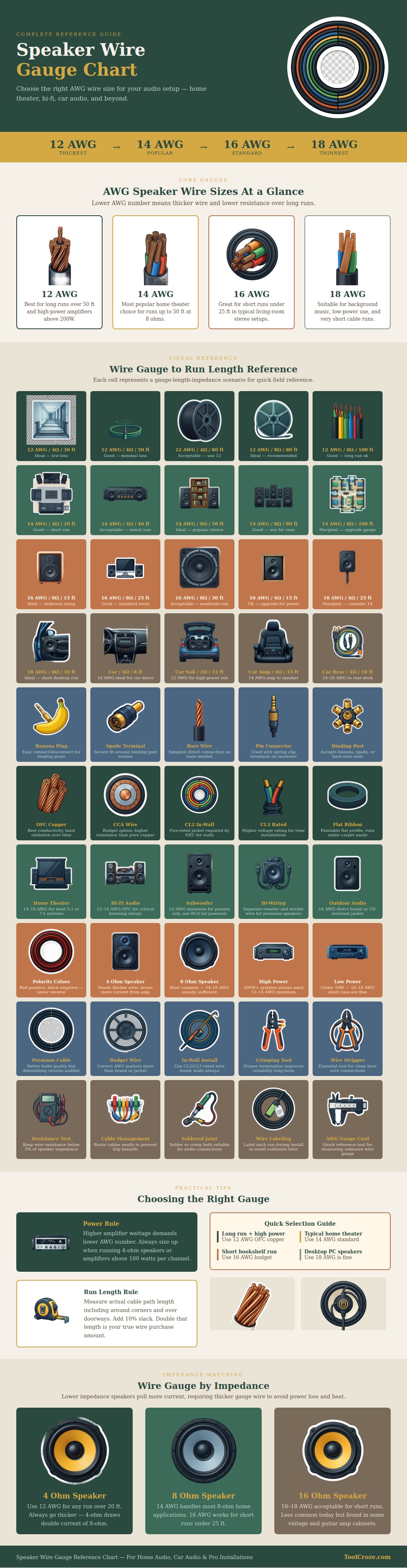
The thickness of the speaker wire are measured in gauge. Lower gauge numbers indicates that the wire is thicker. Thicker speaker wire create less electrical resistance than thin speaker wire, allowing more electrical power to travel through the wire over long distance.
You should consider the length of the speaker wire and the impedance of the speaker when purchasing speaker wire. If the speaker wire run will be very long, you should use a thicker gauge of the wire to allow for less electrical resistance. If the speaker wire is short in length, thinner wire can be used since short speaker wire run has less electrical resistance than longer speaker wire run.
Fourteen gauge speaker wire is one of the most common speaker wire gauge used in homes. Fourteen gauge speaker wire is thick enough for most installation in living rooms. Fourteen gauge wire can handle eight ohm speaker out to fifty feet in length.
For four ohm speakers, however, the fourteen gauge wire may not be sufficient in carrying the signal. If you use four ohm speakers or an amplifier with high wattage, you should purchase a thicker gauge wire than fourteen gauge. Sixteen gauge wire is suitable for speaker wire run length of less than twenty-five feet.
People commonly use sixteen gauge speaker wire in ordinary stereo speaker setup as it maintains low enough electrical resistance for short distance between the amplifier and speakers. Eighteen gauge speaker wire is thin wire and is used for very short distance between amplifier and speakers. Eighteen gauge speaker wire is commonly used for desktop monitors or background speaker that are positioned very close to the listening device.
Very thick speaker wire should not be purchased for very short distances between speakers and amplifier as the thick wire will not make a difference in sound production at short distances. You may unnecessarily purchase thick gauge speaker wire. Another factor to consider in the purchase of speaker wire is the material of the wire.
Speaker wire can contain oxygen-free copper or copper-clad aluminum. Oxygen-free copper conducts electricity efficiently and resists oxidation which can degrade the wire over time. Copper-clad aluminum cost less than oxygen-free copper but contains more electrical resistance.
If you use copper-clad aluminum, you should consider the potential effect of the resistance on long run of speaker wire. Connectors can be used to attach the speaker wire to the amplifier and speaker. Banana plugs allow for the speaker wire to be easily swapped out with other speaker wire.
Spade terminal allow for a permanent connection between the wire and the device to which it is attached. Bare wire connection require the copper contained in the speaker wire to be directly connected to the binding posts on the speaker device. While the type of connector does not impact the gauge of the speaker wire, poor connection can have a negative impact on the sound system and negate the benefit of using the proper gauge of speaker wire for the distance between the amplifier and speakers.
The type of speaker wire jacket should be considered according to where the speaker wire will be installed. If you are to run the speaker wire inside walls, you should purchase speaker wire with a fire-rated jacket. If the speaker wire is to be run outdoors or embedded in the ground, you should purchase speaker wire with UV protection or direct burial jacket.
These different type of speaker wire jackets ensure that the speaker wire remains safe and effective in the different installation environments. To purchase the correct gauge of speaker wire, you should measure the length of the speaker wire run, the impedance of the speaker devices, and the power of the amplifier. Based off these measurements, you can determine the speaker wire gauge that provides the lowest possible resistance.
