

Snap rings is small metal clips that are located in various machine components such as engines, transmissions, brakes, and many other machine categories. These small metal clips is used to retain various components that would otherwise spin out of control. However, using the wrong tool to remove or install these snap rings can quickly transform a five-minute task into a difficult task that could potentially cause injury to your knuckles.
Using the correct snap ring pliers for the snap ring that you are removing or installing will significantly reduce the chance of causing damage to the component or the tool that you are using. There are several distinction between a difficult work experience as compared to a good work experience. Once you understand the different varieties of snap ring pliers and the jobs that they perform best in, you will no longer be required to guess what type of pliers you will need from the pegboard.
The distinctions between snap ring pliers include the shape of the jaws, the angle of the tips of the pliers, the size of the pliers, and whether they are designed to squeeze or spread the snap ring. Internal snap ring pliers open up when the handles is squeezed together. Mechanics use these snap ring pliers to allow the snap rings to be compressed in order to allow them to be dropped into the groove of the component that they are retaining.
Common Varieties of Snap Ring Pliers
1. Internal Snap Ring Pliers
For example, snap rings can be used as circlip snaps that retain the bearing within the transmission case. These snap ring pliers will be useful on snap rings where the snap ring is facing outward of the component. Most mechanics will use internal snap ring pliers because snap rings are mostly found in components that retain the snap rings rather than the components that the snap rings is retaining.
The tip size of the internal snap ring pliers should be matched to the diameter of the snap ring in order to avoid damaging the snap ring or the component. There are two different subtype of internal snap ring pliers. Straight-jaw internal snap ring pliers will be used for tasks where the snap ring can be approached head-on and where there is much room for the pliers.
2. Straight-Jaw Internal Snap Ring Pliers
The jaws remain in alignment with the handles of the pliers. These will be most useful for larger components where there is ample room for the pliers. When there is limited room to work within a component, the straight-jaw pliers will no longer be the best choice for the job.
Bent internal snap ring pliers will solve the problem of working in tight spots. The tips of the pliers are angled at 45 or 90 degrees which will allow the pliers to be used in situations where the mechanic has to work around components or into tight bores in a component. Using these pliers can allow for much more better visibility into the task that the mechanic has to complete.
3. Bent Internal Snap Ring Pliers
However, because there is a bend in the pliers that the mechanic has to use, more strength will be required from the mechanic to perform the task. Technicians will have both straight and bent versions of the pliers in their tool drawer as there is no way that one type of plier will be used more than the other. External snap ring pliers work in the opposite way to internal snap ring pliers.
4. External Snap Ring Pliers
When the handles is squeezed together, the jaws of the snap ring pliers will close which will expand the snap ring so that the snap ring can be removed from the component that it is retaining. These snap ring pliers will most often be used on axle shafts and components that have a circlip that wraps around a male component. The jaws will be more robust to fight against the tension of the snap ring as opposed to the internal snap ring pliers that assist the tension of the snap ring.
These external snap ring pliers will have the same straight and bent versions as the internal snap ring pliers. Straight versions will be used for heavy-duty snap rings that are found on agricultural equipment and electric motors. Because the straight pliers provide a direct line between the handles to the tip of the snap ring pliers, there will be no wasted effort when using these snap ring pliers.
However, in situations where the shaft of the snap ring is deep within a component or near another bulky component, the bent versions will be of more use. The 90-degree tip on the bent-jaw snap ring pliers will allow the mechanic to open the snap ring without scraping their knuckles against the component. Convertible snap ring pliers are designed to function as a tool that will work in both internal and external snap ring tasks.
5. Convertible Snap Ring Pliers
Using a small lever or screw on the convert snap ring pliers will switch the jaws from internal to external snap ring tasks. This plier is useful for those that have limited space for snap ring pliers within their tool drawers. However, there is a compromise of the precision of the snap ring pliers.
The extra joint on these snap ring pliers can flex slightly under heavy pressure to the snap ring. The tips will not have the same precision as dedicated snap ring pliers. However, for those that may only have a few snap ring tasks within a home garage, having a set of convertible snap ring pliers will cover all snap ring tasks.
Miniature snap ring pliers will be located at the other extreme of snap ring pliers. These pliers will be used on various electronic components, small engines, and intricate machine components. These snap ring pliers will be small enough to handle snap rings that are measured in millimeters.
6. Miniature Snap Ring Pliers
The tips will be delicate enough to insert into snap rings with holes of as small as 0.5 millimeters in diameter. Snap ring pliers that work on electronic components will be required for tasks such as small RC cars and watches. These pliers will be too small to work on full-size automotive snap rings as they may bend the jaws of the snap ring pliers.
Therefore, if you work with different sizes of snap rings, it would be a good idea to have a separate set of miniature snap ring pliers. Heavy-duty snap ring pliers will have the same look as snap ring pliers that are used for bolt cutters. These snap ring pliers will have longer handles and reinforced jaws to provide the leverage needed for massive snap rings that are used on industrial gearboxes, mining equipment, and hydraulic cylinders.
7. Heavy-Duty Snap Ring Pliers

Some snap ring pliers will have interchangeable tips that will allow the same pair of handles to work with various sizes of snap rings. These heavy-duty snap ring pliers will cost more money and weigh more pounds than standard snap ring pliers. However, they will eliminate the frustration of attempting to remove a snap ring that will not move when using the regular snap ring pliers.
If you have ever attempted to remove a 50-millimeter external snap ring with snap ring pliers that were meant for small projects, purchasing a set of heavy-duty snap ring pliers will pay for itself after one task. Specialty self-locking pliers will have a ratcheting mechanism or a locking switch that will hold the jaws of the snap ring pliers in an open or closed position. This will be of great use for those who must use both of their hands to move some heavy component while they use one hand to keep the snap ring open.
8. Specialty Self-Locking Pliers
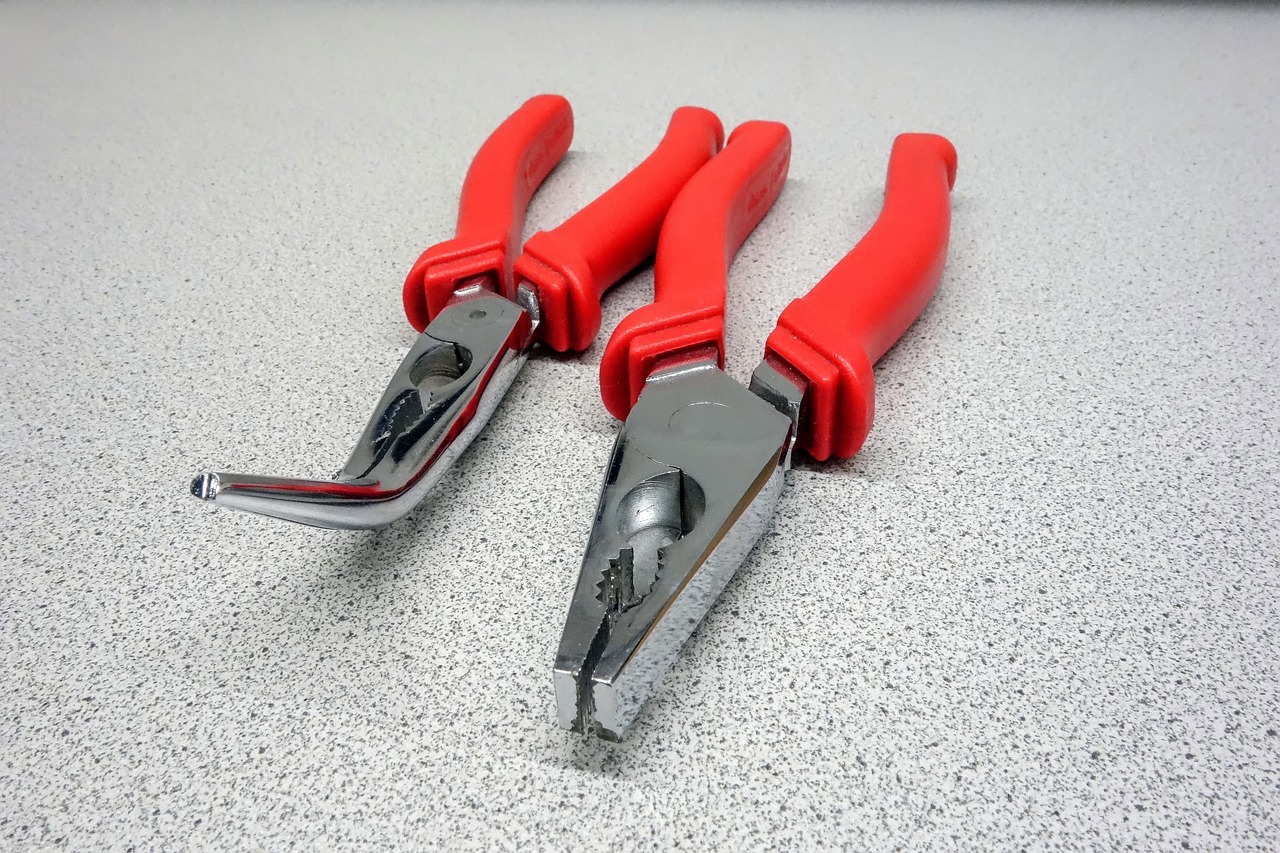
A mechanic servicing aircraft or transmission components will use these snap ring pliers. The drawback of these snap ring pliers is that they are of added bulk which will limit the accessibility of the pliers to the snap rings in the tightest components. The other distinction between snap ring pliers is whether they have flat or pointed tips.
Flat-jaw snap ring pliers will distribute the snapping force even across the snap ring. This is useful for thin snap rings as the even distribution of the force will prevent the snap rings from being deformed. Pointed-jaw snap ring pliers will allow the tips of the snap ring pliers to dig in deeper to the snap ring.
9. Flat-Jaw Snap Ring Pliers
This will be of more use for snap rings that are oily and corroded as the point will grip for better leverage. However, if used excessively, the pointed tips will enlarge the snap ring. Both varieties of snap ring pliers will be owned by most professionals as they must select the proper type of snap ring pliers depending upon the condition of the snap rings they are removing.
10. Pointed-Jaw Snap Ring Pliers
Lastly, insulated snap ring pliers will have a dielectric material on the handles of the snap ring pliers that will protect the mechanic from up to 1,000 volts of stray voltage in the component. This will add a few extra millimeters to the length of the snap ring pliers but will not be used in place of the regular snap ring pliers. However, snap ring pliers with insulated handles will be useful in situations when there are live electrical systems or electronic components.
11. Insulated Snap Ring Pliers
The best way to choose the proper snap ring pliers is to examine the snap ring that will be removed. The mechanic should measure the snap ring for its diameter, note whether the snap ring is inside or outside the component, and determine the approach angle to the snap ring. Based on these three measurements, one type of snap ring pliers should be chosen.
The tips of snap ring pliers should be kept clean and straight as they will often lose their accuracy if they are ever allowed to bend the snap rings. Although it may seem difficult to purchase five or four different sets of snap ring pliers, it is far better to purchase these sets rather than one very expensive universal snap ring pliers that will not fit any of the snap rings. When the proper snap ring pliers are selected and the snap ring removed, there will be a feeling of satisfaction with the task that was just completed.
The snap ring will easily slide into place and the component will turn easily. Furthermore, owning snap ring pliers of each variety ensures that you understand how the machine that you are working upon functions and each of its components.
