
Remember the pain of using a screwdriver to tighten a screw and then watching it slip and dig into the wood? That’s what can happens if you grab the first flathead that appears like it will do the job. Typically it isn’t your fault. Usually it’s because the width of the blade don’t match the width of the screw slot. It seems straightforward, a slotted screwdriver is just a piece of metal with a handle attached. But getting dimensions correct is what separates a pristine installation from a screwed-up workpiece.
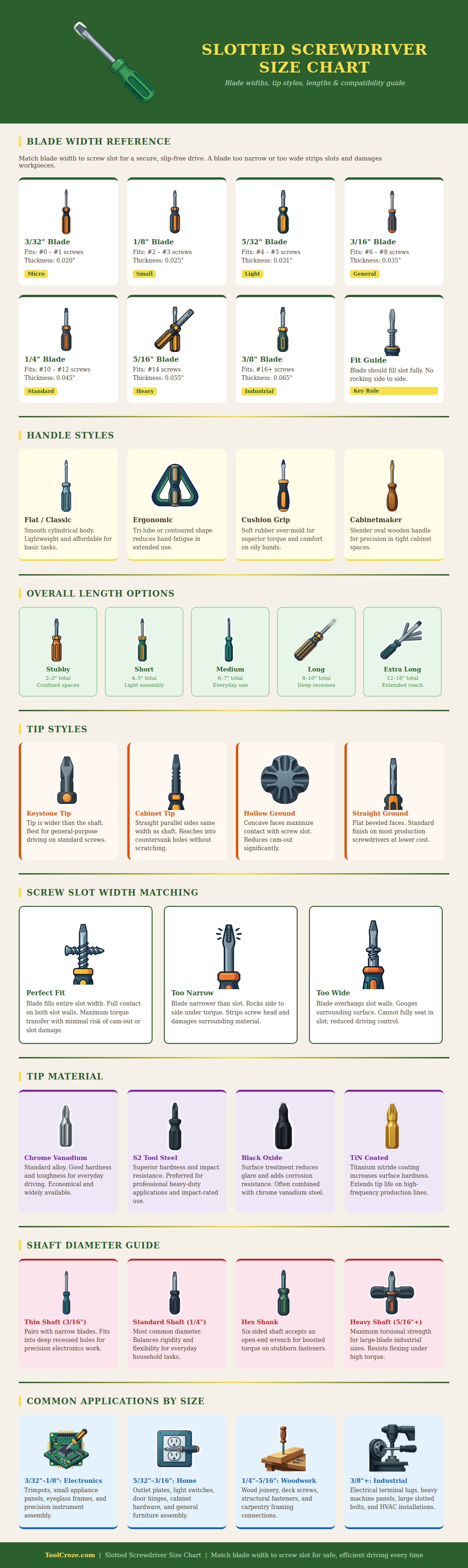
The chart above shows which sizes matches common screw sizes and blade widths. It’s not necessary to remember all fractions, but it will help you assemble a handy assortment. A small micro blade such as 3/32 inch has virtually zero torque capacity. Use it on something tiny, such as eyeglasses or a small electronic device. As you move up to 1/4 inch or larger, the tool become heavy-duty enough for structural woodwork.
How to Choose the Right Screwdriver
The guide shows one key rule: Make sure the blade fills the slot fully so there is no side to side rocking. The reason is that full contact are where the force is transferred well. Here is a tip. The length isn’t really the issue; it’s the width and shape of the tip.
Everyone knows there’s a flathead screwdriver (a rectangle), but what about a keystone? That one tapers into a wider end so it won’t slip off regular screw. Then there’s a cabinet type with parallel sides equal in width to the shaft. It fits nicely into a deep countersunk hole without scratching the side of the wood. If you’re doing a lot of trim work, you’re going to get along well with this cabinet type. The hollow ground version is for home repairs; it provides more surface area between the concave surfaces, so you are less likely to cam out when applying pressure.
The handle design combines form and function. You might get away with a cheap, basic cylindrical handle for one project, but be careful if your hands starts to sweat or become oily. The handles with comfortabley tri-lobe designs evenly disperse pressure into several area within your palm, reducing fatigue over long periods. Cushion grip handles adds a layer of rubber over the base plastic, providing superior torque transmission. Twist harder with no slippage of your hand. This small upgrade rewards you with less wrist strain and fewer stripped screw.
The choice of handle length comes down to accessibility. For cramped quarters, like where the driver might contact a nearby component or wall before you can turn it. A short stubby driver is essential. Most common applications (furniture assembly, picture-hanging) requires standard medium-length handles. Long handles delivers more power, good for rusted and stubborn fasteners. Always consider that additional length translates into swing radius; make sure there’s enough clearance to work the tool safely.
Your tools last as long as their material can withstand abuse. The workhorse is chrome vanadium steel because it’s a balance of hardness and toughness. It doesn’t snap as easy as less expensive carbon steels when suddenly asked to bear weight. S2 tool steel is a pro-grade option that has better impact resistance and maintains an edge longer. Black oxide coatings provides some mild corrosion protection and reduce glare. Titanium nitride coatings increases tip life on high-frequency production lines. If you’re driving screws all day, then you might want these; otherwise, just get whatever’ll do the job at home.
Rigidity is another area where diameter of shaft comes into play. When we try to turn some fasteners with a thin shaft like a pry bar, the shaft bend instead of staying straight, which makes it hard to be precise. An open-end wrench can put much more turning force on a seized tight fastener due to its hex shank. A heavy industrial shaft won’t flex at all; perfect for big machinery panels and large bolts.
The selection of a slotted screwdriver comes down to geometry for the job. When the blade fits perfectly in the slot, the tool dissapears. There’s no more fighting with the hardware; you’re driving it now. This is what all this attention to detail is about, to create that seamless connection. Use the right size screwdriver whose blade fits snugly within the slot, and you won’t even be aware the tool is there.
