
In the world of woodworking, a router jig is capable of making repeatable cut that would otherwise take many hours of work to accomplish. When one needs to make perfect mortises, or when one needs to make flawless dovetails, or when one needs to make a batch of identical curved part, the correct jig will be useful in creating those parts with consistency. Woodworkers who spend time learning about the accessories available to there power tools will find themselves capable of tackling projects that they may have previously considered too difficult.
Understanding which jig can solve which problem will allow you to use your router like a seasoned pro. After all, the difference between good work and great work often depends on how accurately you guide your router. The following describes several fundamental jigs, those that deserve a place in the majority of workshop.
Essential Router Jigs For Woodworking Projects
1. Straightedge Guide
A straightedge guide is the most basic of all routers and jigs, and one might not think that this is worthy of mention. This jig is essentially a straight piece of plywood or aluminum that you can screw to a workpiece. The router’s base then rests against the straight piece, ensuring that the router creates a perfectly straight cut on the workpiece.
As one might expect, this is useful if you want a straight cut, hence the name. The beauty of this jig is that you dont require any fancy hardware to create this type of jig, it can be made in minutes with whatever scrap material is available. This jig is highly useful when trimming sheet good to size or when cutting a long dado.
Its only limitation is if you want to make the same cut repeatedly, in which case, you might want to turn to something a little more specialized.
2. Dovetail Jig
A dovetail jig will come in handy if you plan on producing drawers or casework. Dovetail jigs use a finger template and a bearing-equipped bit to cut pins and tails, forming half-blind joints.
Commercially available units are designed for wood stock from half an inch thick to one inch thick. This jig is highly useful if you plan on producing multiple drawer, a dozen of the same shape and size… As it will help you reduce the time and improve uniformity.
The only downside is that the finger template does not permit much variety in terms of joint geometry. If you want to produce dovetails of different dimension, you need to purchase another jig or become skilled in the art of creating your own templates.
3. Mortising Jig
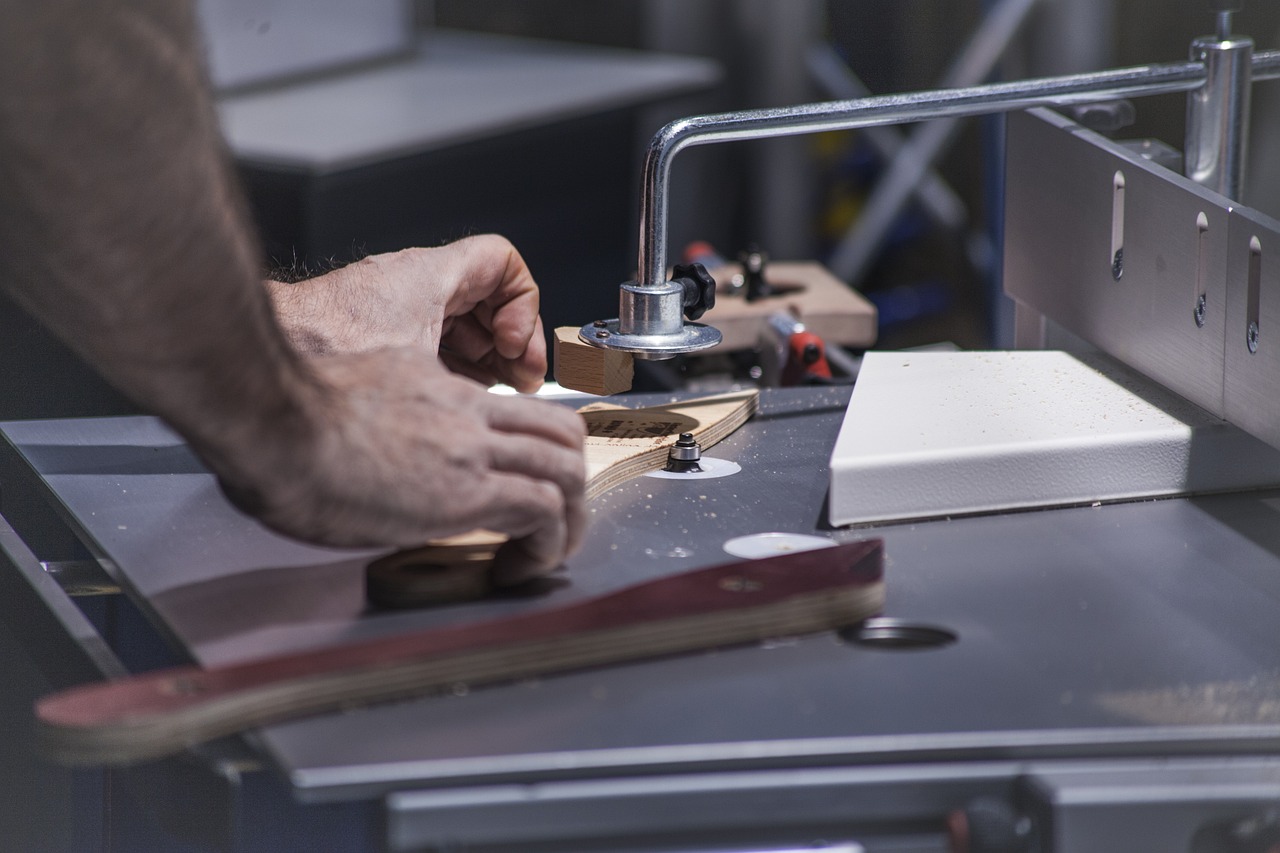
When it comes time to make your tenons, you will need a mortising jig so that your tenons can fit snugly in there corresponding mortises.
These jigs can either be made or bought. A typical mortising jig is basically a box that clamps onto your workpiece so that the piece stands vertically while you cut. This box will give you something flat to brace your router base against so that your router does not tip over while you use it.
Two stops will limit the length of your cuts as you move the router from side to side between those two stop. Mortising jigs are useful for cutting multiple tenon quickly and accurately, but they may not be great for all woodworkers given dust evacuation problems.
4. Circle Cutting Jig
If you want to cut perfect arcs, then you should keep a circle-cutting jig in your workshop.
Circle-cutters can cut arc segments ranging from a few inches to several feet in diameter. This jig is useful if you specialize in making round tabletops and curved aprons.
5. Router Table Sled
An often overlooked jig is the router table sled for crosscutting larger workpiece than you might like to put through your tablesaw.
This jig allows you to cut precise tenons, lap joints, and finger joints on larger pieces of material than you feel comfortabley holding while routing.
6. Template Routing
Another useful function is template routing, which lets you produce an entire surface profile. The most common use of this jig is making curved chair leg.
This jig is especially useful when you need to make multiple copies of an intricate design.
7. Box Joint Jig
A box-joint jig is also going to come in handy at some point, especially if you need to create tiny, interlocking finger that form drawer corners without visible end grain showing. This brings me to edge-banding jigs.
8. Edge Banding Jig
When folks talk about veneer, what they usually mean is edge banding, that’s when you apply a narrow strip of solid wood to cover plywood or MDF edges, and this jig helps you do just that. I suppose I should also talk about pantorouters since they’ve been around for decades and once were all the rage, especially among folks who do a lot of carving, but I rarely see other woodworkers using them much these days. What jigs do I keep around?
It depends on what kinds of projects I have lined up. If I’m just dabbling in decorative pieces here and there, say, carving up some intricate pattern, mortising jigs might only be useful now and then for adding out-of-the-way door hinges (that basically never see much action). If I plan on making tons of drawers or boxes, dovetail jigs and box jointers are gonna be valuable enough even if I don’t use them every day; better safe than sorry.
The first time you pull a finished piece out of a jig that required no hand-fitting whatsoever so it’s got perfect fit-and-finish every time without fail (voila!). That’s when you realize why seasoned pros have so many jigs lying around. Here’s my thought: if it ain’t broke don’t fix it, just keep those standard jigs like dovetailers, circle cutters & mortising ones within easy reach so you can focus on creating killer design rather than waste hours tracking down random tools every once in awhile.
Even though there’s no “best” router jig per se… When used correctly… Simple gadgets combined with intricate contraptions still get their job done seamlessly depending on where (and how often) they’re called into play!
At some level though using any type of device during woodworking should free up our creative juices instead of eliminating them; and provide as much assistance as possible especially with repetitive tasks needing precision cut within tight tolerances. So… Why so many?
Because each one helps eliminate room for error during different process needing accuracy across variety shapes & sizes! If we had only one tool performing multiple functions while saving space, that’d be awesome… But who can stop dreaming about…
Instead… Let’s just appreciate these unique helper especially those without built-in complexities requiring loads of maintenance over time! Until then here’s hoping everyone discovers which jigs suit their need best so as effortlessly complement their personal crafting style!
