
A ratchet wrench is a tool that a person holds in there hands. Specifically, the ratchet wrench is crafted in such a way that it will click forward in a precise manner when the user apply force to the wrench handle. Additionally, the tool will hold firm in place so that the user can loosen or tighten the bolt without lifting the tool.
Ratchet wrenches are a helpful tool that turn difficult job into smooth jobs. That is the reason why they are seen in mechanic boxes, work shops, and even roadside emergency kit. Not all ratchet wrenches are alike, however.
Some ratchet wrenches have different lengths of handles, heads, the number of teeth on the tool, and the size of the drive. These features help to ensure that some jobs are easier to complete with a ratchet wrench than other, and that some jobs may cause injuries to the knuckles of the person operating the tool if they are not choose wisely. If a person purchases the wrong type of ratchet wrench, they may end up losing valuable time in attempting to complete the job.
Additionally, using the wrong tool may actualy damage the bolt that is being loosened or tight. To avoid these situations, a person should purchase a wrench that fits into the available space for the bolt, the wrench should match the amount of torque that is required for the job, and the wrench should click consistencies in place during use. Once a person is knowledgeable about the different varieties of ratchet wrenches, they will find themselves eliminating the need to guess at which tool to use at the tool counter, and instead, can accurately select the exact tool necessary to perform the job.
The different types of ratchet wrenches is discussed below.
Common Types of Ratchet Wrenches to Know
1. Standard Fixed-Head Ratchets
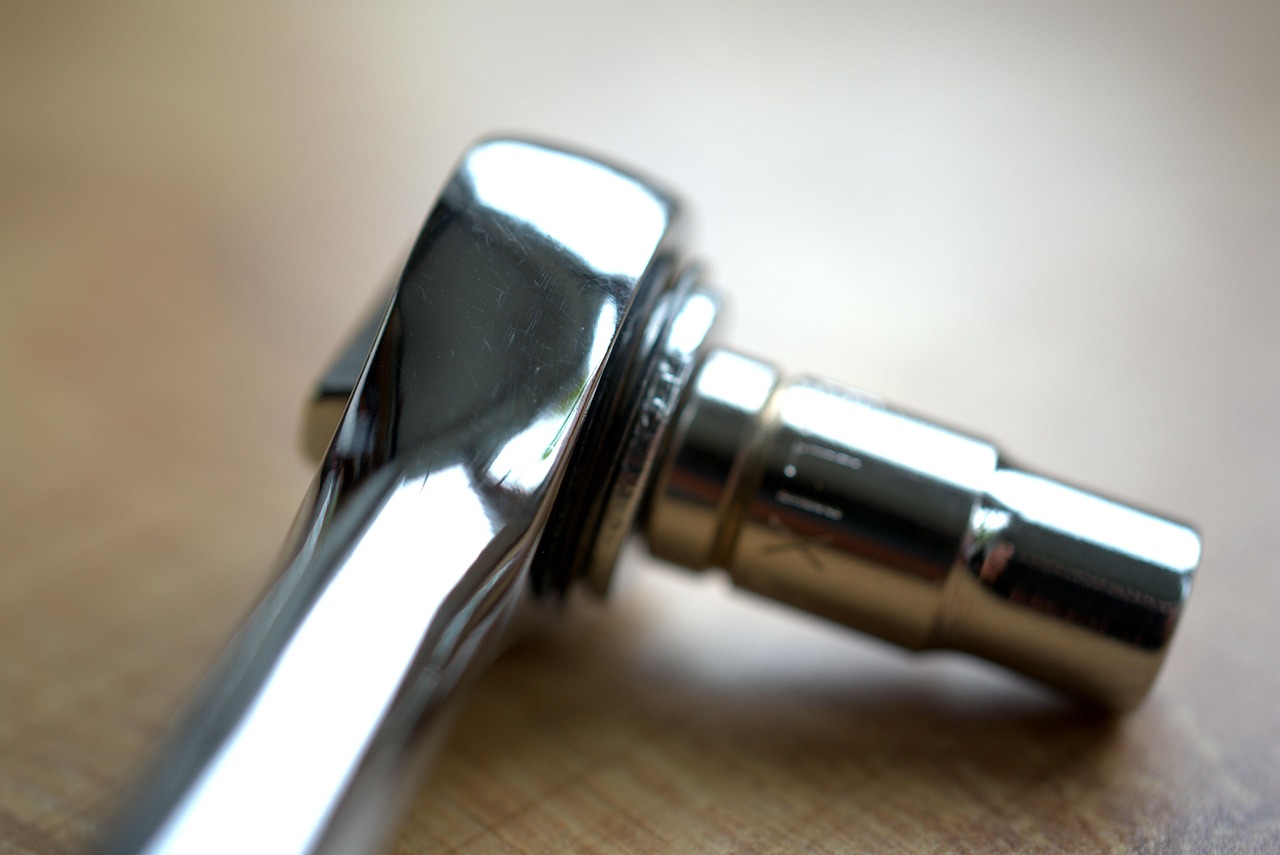
Standard fixed-head ratchets are the most common design for ratchet wrenches and there are a few reasons for this. The head of the tool is a single piece and the drive square for the tool is held firm in place.
Additionally, the pawl on the tool engages the teeth that are within the head of the ratchet. Standard fixed-head ratchet wrenches have between 36 and 72 teeth and allow for arc swings of between ten and five degrees, respectively. These wrenches can be used for a variety of tasks such as loosening and tightening bolts in open engine bays, bicycle repairs, and furniture assembly.
Additionally, there are fewer parts for these tools to potentially break and fewer parts to maintain. However, these tools will not necessarily allow for the user to work in tight space, such as within the engine or behind the dash on a vehicle. The flex-head ratchet was created as a tool for tasks in tight spaces.
2. Flex-Head Ratchet
The flex-head ratchet allows the drive of the tool to be mounted onto a hinge joint that allows the head of the tool to be tilted up to ninety degrees in either direction. Flex-head wrenches are often used for tasks on exhaust systems, suspension systems, and any other component in which the straight ratchet wrench may not be able to reach the necessary bolt. Because the joint between the head and the handle for flex-head wrenches allows for some flexing of the tool, the flex-head ratchet may begin to squeal if very high torque is placed upon it.
Thus, technicians that use the flex-head wrench often have both types of wrenches in their tool kit. The versatility of the flex-head wrench justifies the purchase of the tool, even with the slight need to tighten the joint after a few years of use. Long-handled ratchet wrenches are sold with handles that are twenty-four inches or thirty inches in length.
3. Long-Handled Ratchet Wrenches
These long handles allow for more force to be placed upon the bolts that are being loosened with the ratchet wrench. This increased force is helpful for loosening large lug nuts, exhaust manifold bolts, and suspension parts that have not be loosened in ten years, for example. Additionally, because the handle is so long, the user can use their body weight to loosen those bolts rather than using their arm alone.
However, the length of the handle is also a disadvantage of the tool because it limits the ability of the user to place the long-handle ratchet wrench into tight spaces within a vehicle. Thus, most tool owners will purchase one long-handle ratchet wrench in their toolbox for the purpose of loosening difficult bolts, yet they will use shorter ratchet wrench models for most of their other tasks. Stubby ratchets have handles that are only three inches in length, for instance, and their heads are low-profile and small.
4. Stubby Ratchets
These models of ratchet wrenches allow individuals to place the wrench in places that are too small for a flex-head wrench. Tasks that require the use of a stubby wrench can include locations behind the dash on a vehicle, on the motorcycle’s fairing, or within the engine bay of a moddern vehicle. However, because the handle is so short, less force can be placed onto the bolts that are being loosened.
Thus, stubby wrenches are only used for loosening fasteners that are already somewhat loose, or loosening bolts that require only moderate force to be loosened. However, if a stubby wrench is fitted with an extension and a universal joint, the user will be able to reach areas that would otherwise require the removal of half of the vehicle. High-tooth-count ratchet wrenches have 80, 90, or even 120 teeth.
5. High-Tooth-Count Ratchet Wrenches
The higher the number of teeth on the ratchet wrench, the smaller the arcs that the tool can turn the bolts. High-tooth-count wrenches are used in those instances in which the bolts are in locations that limit the movement of the wrench, such as behind the frame rail of a vehicle or within the fender of the vehicle. Additionally, because the teeth are so fine on these types of tools, the user will feel that the ratchet wrench is smooth when tightening the bolts.
This smoothness will not round the heads of soft bolts that are being loosened. These wrenches cost more money than other designs of ratchet wrenches; however, their benefits justify the purchase of such tools. Ratchet wrenches that have built-in torque wrench functions allow a user to set their wrench to apply a certain amount of torque.
6. Torque Ratchet Wrenches
For example, clicks on the wrench indicate that the set amount of torque has been applied to the bolt. Additionally, click-type torque wrenches, beam-style torque wrenches, and digital torque wrenches with ratcheting heads allow a person to apply precise amounts of foot-pound torque. These types of tools are used for the tightening of critical components, such as the bolts on a car’s cylinder head, the lug nuts on the wheels of performance cars, or other components whose under-tightening or over-tightening would pose a safety risk to the vehicle and its occupants.
Additionally, because the wrench will not need to be removed from the bolt after each click, the built-in ratchet wrench saves time and strain on the wrist of the user. However, because most torque wrenches lose accuracy during the loosening of bolts, most mechanics will own a breaker bar and use the torque wrench with a ratcheting head for tightening tasks only. Seventy-two-tooth ratchets have slim-profile heads and fall somewhere in between the standard and high-tooth-count ratchet wrenches.
7. Seventy-Two-Tooth Ratchets
The slim design of these wrenches allow them to be placed into tight spaces within a vehicle. Additionally, the models have a six-degree arc in which they can turn the bolts. Thus, they are a very versatile tool.
Slim-profile wrenches can be found in most professional tool kits because they can handle a variety of tasks in a workshop. For example, oil pan bolts or brake caliper bolts may be loosened by these tools. Although the slim design to the ratchet wrench may sacrifice some durability of the tool, if it is treated well it will last for many years.
Reversible ratchet wrenches have a button or a handle on the head of the tool that allows a person to change the direction of the wrench without having to flip the tool over. This feature is often used by mechanics who are working under a vehicle because the tool can be held in one hand and the other hand can be used to hold a socket that extends from the bolt. Additionally, the user can change the direction that a wrench turns by moving the thumb that controls the button or lever on the tool.
8. Reversible Ratchet Wrenches
Thus, the user does not need to drop the tool or lose their grip on it when changing the direction of the tool. While most ratchet wrench models have the ability to be reversed, there are differences in the smoothness of the reversal. For example, budget models for ratchet wrenches may require the person to use two hands to reverse the tool.
Additionally, the cheap models may not hold the pawl of the tool in the same orientation as it was released, which may allow for the tool to skip teeth on the bolt. Thus, spending more money on quality models with a good reputation for their smooth reversal will allow a person to notice the difference right away. Offset ratchet wrenches have handles that bend at a slight angle that allows the drive square portion of the wrench to remain away from the edges of the component being loosened.
9. Offset Ratchet Wrenches
Offset wrenches are often used in situations where a user does not want to place their knuckles against the sharp edges of a component. Additionally, it may also be necessary to place the tool away from the heat of the exhaust system components, or out of the way of wires on a vehicle. These types of tools are often found in kits used for aviation tasks, motorcycle shops, or classic cars.
Because the offset handle of these tools alters the angle at which the torque is applied, they may not be used for tasks that require precise tightening of critical components. Thus, they are only purchased by tool owners for loosening of bolts or to snug parts to be loosened, and then a straight ratchet wrench may be used afterwards for precision tasks. Palm ratchets are tools that have a head that is thick like a coin with the drive square for the tool extending from that coin.
10. Palm Ratchets
These models can be spun by the user with their fingers to loosen small bolts or fasteners that require alot of turns to be loosened. For example, the bolts on a vehicle’s dash, the trim clips on a vehicle, and the small engine covers can be loosened with a palm ratchet. However, because there is very little torque that can be applied to the bolt with a palm ratchet, it cannot be used for loosening bolts that are very tight.
Thus, it will be useless for final tightening of bolts. However, it takes up very little space and saves the user time in tasks that require the turning of many small fasteners. As discussed above, there are a variety of types of ratchet wrenches that may be needed for a variety of tasks by a mechanic and a handysman.
For example, during a single afternoon a technician may need to use a long-handled breaker bar, a flex-head wrench, and a stubby wrench to complete a variety of tasks on a vehicle. Thus, building a collection of tools for these tasks will allow an individual to save time and frustration when faced with a particular job. Additionally, using these tools as required will allow individuals to develop a relationship between the type of task and the correct tool that will accomplish that task.
Therefore, each click of a ratchet wrench will be associated with the completion of another task, and the click will indicate to the technician that the job is progressing as it should.
