
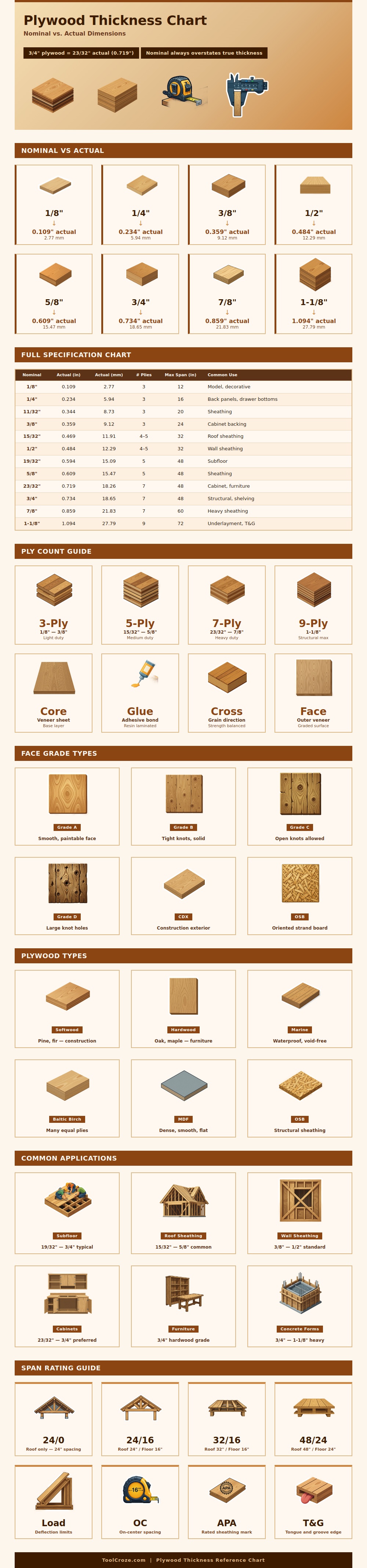
So when you grab a sheet from that one and rip it off the rack, you think you’ve got three quarters of an inch in your hand. You don’t. And that’s the first trap that every DIYer fall into. It typicaly ends up costing them money or making them re-design halfway into project.
What you ordered is what the sticker says. What you’ve got is what the material tells you. Knowing the difference between actual thickness and stated size are the number one key to working with sheet goods. This isn’t some measurement nitpicking. This is the difference between your shelf sagging beneath weight of a few heavy books or your cabinet drawer closing.
Why Wood Size Matters for Your Projects
And then there’s the issue of shrinkage (see chart above). That means that even though they’re called nominal sizes, they’re actualy more like marketing names different than accurate engineering specs. So while you purchase a half inch panel, you might as well be working with fourteen sixteenths.
Why does this matter? Joinery depend upon accuracy. If you cut a rabbet for a back panel based off standard thickness and your board is too thin, your hardware will not line up. If it runs thick, you’ll find yourself spending twenty minutes sanding down edges which would of fit perfectly out of the box. In theory, it’s a small discrepancy; in practice, it’s a massive headache.
It matters not only how thick your plywood is, but also how many layer of wood make up that thickness. Structural stability and strength comes not just from thickness but from ply count. For something like decorative accent pieces or light duty backing, a 3-ply plywood will be sufficient. But if you’re looking at shelving or subfloors intended to bear some weight, you’ll want at least a 5-ply or even 7-ply plywood sheet.
The interior layers adds stiffness as well as provide cross grain support so the plywood won’t warp. These images shows the layering of each plywood sheet, starting with simple 3-ply sheets suitable for small projects to heavier 9-ply versions that can stand up to structural demands. The tradeoffs are cost, weight, and function.
The final factor in selecting wood is the face grade… Exposed cabinetry/furniture vs. This could be anything behind a wall. A good face grade (A) has enough smoothness so that staining is easy and look great. This would be used for a furniture piece or maybe an open cabinet like this one.
On the other end of the spectrum is a poor face grade (D). It’s got lots of holes/knots, looks nasty, but hey, who cares if it’s hidden behind siding or drywall? Why spend more money on best possible face grade for your sub floor? Or instead, why waste your time putting a nice coat of paint on some construction grade CDX if you want it exposed in your kitchen island?
The graphic does a nice job describing those surface variations and help you find the right look for the right place before you drive out of the lumber yard. If you’re working on some framing stuff, keep in mind span ratings. Span rating is the maximum distance between rafters or joists to keep the panel from sagging or making the floor bouncy.
You don’t want to ignore that number. Some thin sheets could sag through 24 inches no problem, but others requires tighter spacing to work properly. Not only is it a matter of weight bearing but also keeping it rigid over time. Humidity makes wood move and proper thickness plus support will prevents that movement from showing as damage.
Then finally, always double check your measurements before making any cuts. Depending on what type of wood and what mill made it, each will vary a little bit. Hardwood species such as maple and birch behaves differently than softwoods such as pine. For instance, Baltic birch maintains its dimensions very well and that’s what makes it more expensive compared to regular domestic plywood.
Understanding how thick (or thin) your wood actualy is helps you make in-the-moment adjustments. What would have been a disaster becomes a simple tweak. You will have less waste, less time, and a project that comes together as intended. Peace of mind is priceless.
