
A dripping faucet at two a.m. Can serve as a good reminder of plumbing’s focus on the practical task of plumbing. One minute a person may be warm and cozy in there bed, but the next minute they may be struggling under a sink with a flashlight in their teeth attempting to fix a plumbing job. The difference between a five-minute plumbing job versus a plumbing disaster that lasts an entire weekend is often the availability of the proper hand tools.
Professionals in the plumbing trade that has worked in the trade for long periods often have a close relationship with their tools, they have no time to improvise when performing a plumbing job in tight spaces or with necessary pressure to complete the job effective. Good hand tools can transform difficult plumbing jobs into routine jobs. Hand tools will protect the plumbing fixtures from damage, protect the plumber’s knuckles and prevent any small leak from developing into floods on the floor.
Those with experience in the trade can observe apprentices using low quality tools to perform the same jobs as those with many years of experience who can complete the same jobs in half the time. Each of the following tools is used on every plumbing service truck. Each tool has a specific job to perform, and each one outperforms any other tool that could be purchased for the same price.
Essential Hand Tools for Every Plumber
1. Basin Wrench
The first tool to consider buying for a plumbing shop is a basin wrench. No other tool can reach behind a sink to grasp the nuts that hold a faucet in place. The basin wrench has a long shaft with a swivel head that allows the plumber to complete jobs in the six inches between the sink and the wall.
The jaws of the tool grip the nuts from the side of the fixture so that the plumber does not have to hit their knuckles against the counter top to complete the job. Once a plumber has used a basin wrench, they will never attempt to attempt the job with only channel locks and a shot of luck. The basin wrench is almost useless for jobs other than a sink, but it is used so often that it pays for itself within the first month of using the tool.
2. Pipe Wrench
The next tool that is often seen in plumbing shops is a pipe wrench. Pipe wrenches are heavy tools made of cast iron and are used to turn the pipes that are difficult to turn with plain old hands. The serrated jaws will more firm grasp the pipe as the plumber adds more pressure to the tool.
However, care must be used when using the tool on chrome or brass fixtures as using too much pressure with the tool may require the fixture to be cut off at the affected joint. Two sizes of pipe wrenches should be kept in a toolbag. A 14-inch pipe wrench is used for general jobs but an 18-inch pipe wrench is used for turning the frozen main shutoff valve on a plumbing fixture.
The weight of the pipe wrench is very reassuring when a plumber sets out to complete a difficult job. However, the weight of the pipe wrench becomes difficult to manage when the job requires the plumber to climb three flights of stairs with both pipe wrenches in their bag. In this situation, aluminum pipe wrenches that weigh less will be preferred over the cast iron tools.
3. Adjustable Wrench
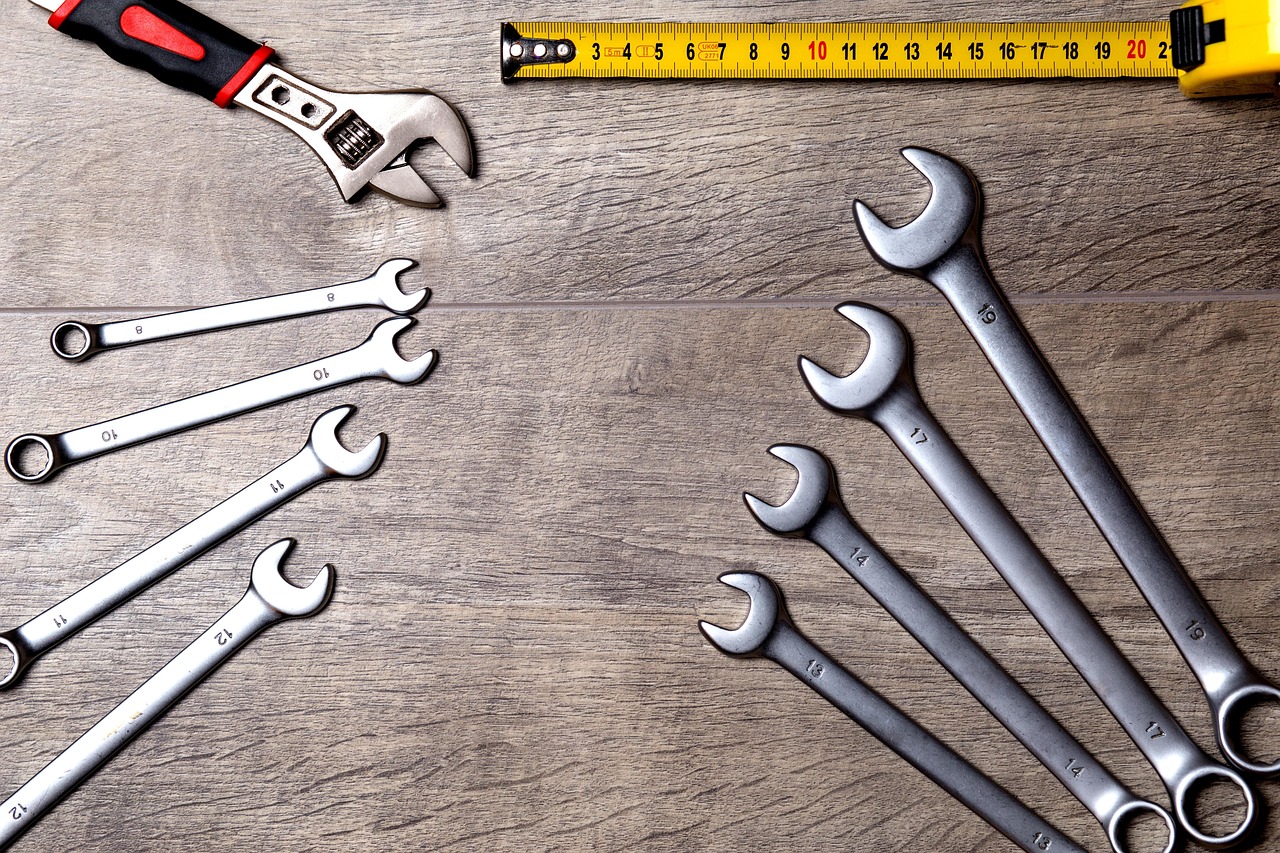
The next tool in every good plumbing shop is an adjustable wrench. While many may consider the adjustable wrench to be of low quality or a compromise tool compared to other options, there will always be at least two adjustable wrenches in a professional plumber’s bag of tools. The slim profile of the tool allows for the tool to reach into tight spaces that a pipe wrench could not possibly reach.
Additionally the smooth jaws will not damage fixtures that are made of brass or nickel. The adjustable wrench is used for many supply line nuts, packing nuts on valves and odd sized fixtures. The trick to using an adjustable wrench is to ensure that the fixed jaw is on the side of the object that faces the plumber as they use the tool so that the tool will not slip from the object being tighten.
4. Tubing Cutter
A tubing cutter is necessary for plumbing jobs to make a clean cut on copper tube fixtures. Quality tubing cutters will make a clean cut on the copper tube with a square end and a small inside burr. The built in reamer will remove the burr quickly so that the joint will solder properly on the first try.
Many plumbing shops may have cheap tubing cutters that come with wobbly wheels that make spiral cuts in the copper that will not allow the joint to properly fit into the copper fitting. Quality tubing cutters will track straight and perform their job well when only one handed plumber must perform the cut. Over time the plumber will notice that the quality of the tubing cut will significantly improve if the proper tool is used.
5. Tongue and Groove Pliers
A pair of tongue and groove pliers, often called Channellocks, will be found in every good plumbing shop tool bag. The adjustable pivot of the tool allows the plumber to grip a quarter-inch compression nut or a two-inch coupling. The angled teeth of the pliers will allow the plumber to apply more pressure to the object that they are turning.
Additionally the long handles of the pliers offer the plumber more leverage when attempting to turn a fixture. The tongue and groove pliers will be used to hold objects steady while the other hand tightens a plumbing fixture. Additionally the pliers can be used to free a stuck plumbing trap.
The teeth of the plers should be kept clean so that they do not lose their grip on the plumbing fixtures.
6. Hand Auger (Drain Snake)
The hand auger, also known as a drain snake, will be used to unclog a toilet or sink that refuse to drain properly. A 25-foot hand auger with a sturdy crank will help to free most clogs in plumbing jobs.
Additionally using a hand auger will allow a plumber to avoid using chemical drain cleaners that could damage many of the older plumbing fixtures. To use the hand auger the plumber must feed the coiled wire slowly into the drain to follow the path of the clog. When the hand auger encounters the clog the plumber will turn the crank to hook the clog and eventually pull the clog out of the fixture.
If used properly the plumber will see hair and other waste material emerge from the fixture. To prepare for the next job the plumber should rinse the hand auger to remove the waste and debris that has become stuck to the snake.
7. Hacksaw
A quality hacksaw will be found in every plumbing shop. While it may seem like an archaic tool, it will come in handy for cutting through galvanized nipples or cast iron cleanout fittings. A hacksaw with a pistol grip handle and a tension wingnut to secure the blade will provide the plumber with more comfort during the job. A 24-tooth blade will be used to cut metal fixtures but a coarser blade will be used for cutting PVC or ABS plastic.
A hacksaw can also deburr a pipe joint if a plumber does not have access to a proper pipe reamer.
8. Flat-head Screwdriver
Finally, a tool that should never be under estimated is the flat-head screwdriver that has been sharpened to act as a pry bar. Such a tool may be used to pop off snap rings, lift stuck shower stems, to scrape old gaskets and to remove valve cartridges.
This tool will be found in the side pocket of a plumber’s tool bag and will be used for many different tasks that are not the intention of the tool manufacturer. The blade of the screwdriver should be filed to a certain angle to allow the tool to perform its many jobs without chipping the edge of the tool. Additionally the screwdriver may become somewhat curved over time to offer the plumber more leverage in certain situations.
Mastering the tools in a plumbing shop is not about the purchase of the tools, but about mastering these tools. The best plumbers has a sense of when to use a basin wrench instead of an adjustable wrench. They have a sense of when the tongue and groove pliers will be able to free a fixture without damaging it.
Such a sense is developed over time with experience and learning how to avoid making mistakes. A person should take the time to keep the tools clean, oil the tools in the areas where they are needed and store the tools in such a way that the teeth of the tools will not damage the tool bag. By taking care of the tools a plumber shows customers that the plumber is competent in their trade.
Plumbing is a trade that relies upon the plumber’s physical abilities and these tools will allow a plumber to successfully perform their jobs. If a plumber takes proper care of their tools the tools will be able to prevent leaks in the plumbing jobs they complete for many years.
