
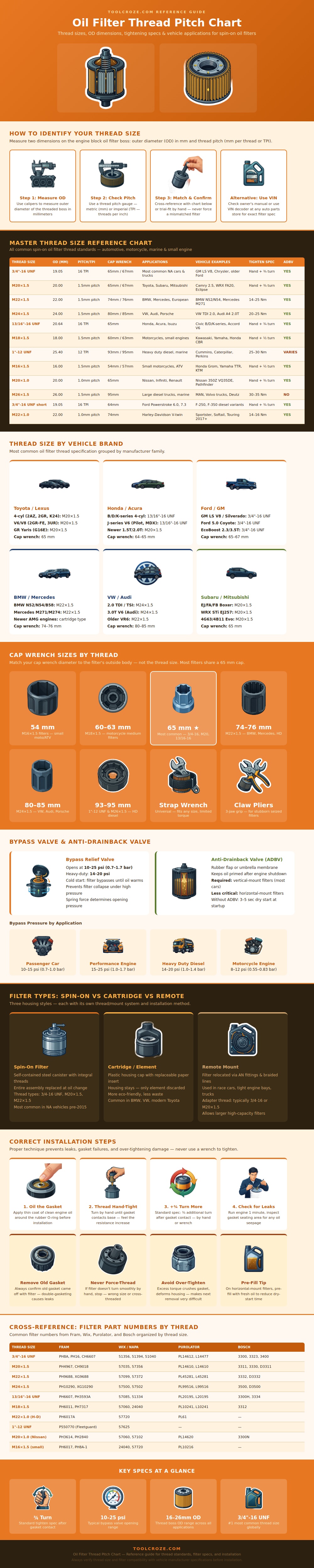
When choosing an oil filter for your engine, it is importance to make sure that the threads of the oil filter match the threads of the engine. If the threads dont match, then the oil filter will not create a proper seal. An oil filter that doesnt create a proper seal can allow for the engine to leaking oil, and the oil filter will loosen over time.
Therefore, the threads of the oil filter and the engine should be identical in size and shape, and you can select the correct oil filter by measuring those threads. To determine the size of the oil filter threads, you can use a pair of calipers to measure the outer diameter of the threads, as well as a pitch gauge to determine the pitch of the threads. By measuring both the outer diameter and the pitch of the oil filter threads, you can ensure that you are purchasing an oil filter that will correctly fit your engine.
How to Choose the Right Oil Filter
Another way to determine the size of the oil filter is to measure the mounting boss on the engine. You can measure the outer diameter of the boss with a ruler or calipers, as well as the pitch of the threads on the boss. By comparing these measurements to an infographic that include common oil filter sizes and dimensions, you can determine the oil filter that is needed for the engine.
Once you know the thread size of the oil filter, you can purchase the filter that will thread onto the engine without any resistance. The thread sizes that are used for oil filters can be different depending on the make of the vehicle. Many domestic trucks and muscle cars uses imperial thread sizes for their oil filters.
European car brands like BMWs and Mercedes use metric sizes for their oil filters. Many Asian car brands use metric sizes for their oil filters, as, though the sizes can be slightly different than the metric sizes used for European cars. A reference chart for oil filter sizes can save consumers the trouble of remembering the different thread standards for the various makes of cars.
In addition to measuring the thread sizes of the oil filter, it is also important to make sure that the physical diameter of the oil filter is correct. The oil filter wrench that you use to install the oil filter must match the outside diameter of the oil filter housing. The wrench does not need to match the thread size of the oil filter.
It is possible for two oil filters to have the same thread sizes but different outside diameters. Therefore, each oil filter will require a different oil filter wrench. Using a wrench of the wrong size can damage the oil filter housing; using the wrong sized wrench may round the edges of the housing or it may not provide enough leverage to properly install the oil filter.
The anti-drainback valve is another component that is include within the oil filter. Oil filters do not include an anti-drainback valve if they are meant to be installed in the oil filter housing of a vehicle whose engine is horizontal in orientation. Oil filters that are installed into the oil filter housing of vertical engine vehicles will include an anti-drainback valve.
Oil filters that do not contain an anti-drainback valve will allow the oil to drain into the oil pan when the engine is not running; the oil pump will have to refill the oil filter before the oil can reach the engine bearings. If the engine is started while the oil is refilling the oil filter, the engine bearings will experience excessive wear over time. You can refer to the reference chart for oil filter sizes to determine if the oil filter that you are purchasing will contain an anti-drainback valve.
Finally, errors can be made during the installation of the oil filter. Some individuals may overtighten the oil filter, which can deform the rubber gasket that is contained within the oil filter; others may not tighten the oil filter enough so that the oil filter will loosen over time. Prior to installing the oil filter, coat the rubber gasket in fresh oil.
Place the oil filter into the oil filter housing and spin the oil filter by hand until it seat into the oil filter housing. Once the oil filter is seated, turn the oil filter an additional three-quarters of a turn. If the oil filter does not spin smoothly when you are installing it into the engine, do not force the oil filter into the housing.
Instead, put the oil filter back into its packaging. Some engines require that a certain amount of torque is placed into the oil filter when it is installed. Examples of engines that require specific amounts of torque include heavy diesel engines and some models of European engines.
Using the specific amount of torque for the oil filter helps to avoid oil leaks out of the oil filter housing, and ensures that the housing is not crushed when it is installed into the engine housing. A chart that includes the specific torque amounts for the various sizes of oil filters can assist in finding the correct amount of torque that should be placed into the oil filter. Overall, though, the most important step in installing an oil filter is to ensure that the correct size of oil filter is purchased.
By ensuring that the oil filter that is purchased has the correct thread size, you can be sure that it will create a proper seal with the engine oil filter housing.
