
Quiet is where hydraulic systems breaks down. Fluid can slowly leak out through what appears to be a tightly fitted hose and fitting when there is vibration. That drops the pressure and makes your hoses work too hard.
Slow leaks are stopped by o-ring face seal fittings. It’s like a rubber ring in a flat machined groove. Rather than sealing against a flare surface or threads, it seals on the face. As long as you get parts right for your application, your connection will remain dry while that machine shakes away the day.
How to Use O-Ring Fittings Correctly
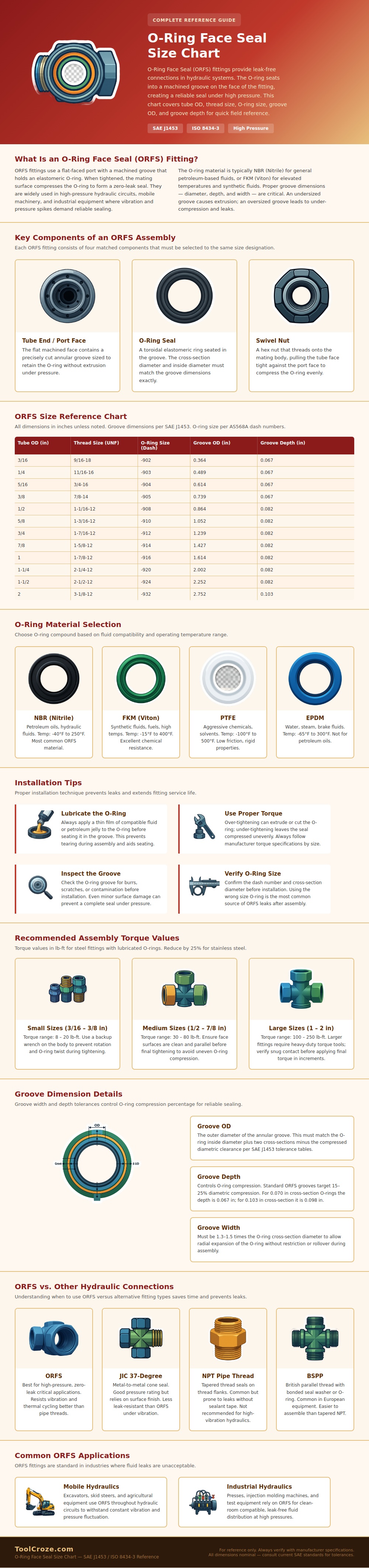
The chart above shows the relationship between tube sizes, grooves, and threads. To use the chart, you read down the first column matching your tubing size. Then you read across to see what thread is needed and which O-ring dash number will work with that groove. Tube length for most sizes are the same for compression in the correct range. That’s why there are numbers. So you don’t have to guess whether or not a -910 ring will fit on 5/8-inch port. If it is on the row, it will fit as long as all other component of the assembly match the row.
It is not just about size; the compound selection also counts. While nitrile is flexible in cold weather and resists ordinary hydraulic oil, FKM goes to work for any system that see high temperatures (hot) or runs with a synthetic fluid (chart gives material clue). For harsh chemicals, it’s PTFE. Steam or water? For steam or water, use EPDM. Note: No options show up during the fitting. That call comes before delivery; figure out your need first, then determine compound type.
The little things are where people miss a step and end up with an install mistake. They drop the ring in dry and can’t understand why it tore when they tightened it down. The ring seats as you tighten the nut but a light coat of fluid helps to seat it. Also check your groove condition. One burr left over from machining will cut the ring before the pressure is ever seen at the fitting. Checking surface takes ten seconds and saves you from hours of chasing leaks later.
This leads us into torque. If there isn’t enough torque applied, the ring won’t be compressed enough. If there’s too much torque, it will simply extrude out of the material and into the space between faces. The chart provides starting values. However, the true rule is to follow manufacturer’s spec for the torque required on your particular plating and material being fitted. Stainless needs less torque then steel because the threads bite differently.
With constant pressure and vibration spikes a face seal beats out tapered pipe threads and even a JIC flare. Over time the metal-to-metal cone of a JIC can become worked loose. Pipe threads simply use the threads to make the seal and that is fine until temperature cycles stretch the joint. With an O-ring it soaks up those moves. Go out into the world and you’ll find these fittings on test stands, injection presses and excavators. They’re all alike, high pressure, repeated motion and no room for drips in the floor. If you get the ring lubed and align the size row properly it won’t be a concern. That’s the advantage of using the chart to get it right the first time.
You should of used the chart more often. Actually, if you recieve the wrong ring then you will have problem. It would of been better to check the moddern specs first. Most people find this informaton naturaly difficult to follow but it is comfortablly worth it.
