
Nail guns have changed the way that people fasten material together because nail guns allow people to fasten materials together with more speed and with more cleanliness. The specific nail that is used in the process of framing a house, installing trim, or building furnitures are important. The type of nail that is used can make the difference between a construction project that lasts for many decades versus one that fails with the first amount of stress that is placed into the constructed project.
Most people tend to choose any nail that fits into the pre-existing nail gun rather than considering how the nail was designed. A nail, in its most basic form, is a small cylinder of metal and those metals contain various engineering choice regarding the shank, the head, the point of the nail, and the coating of the nail. Each of these engineering choices can determine various aspects of the nail, such as the pullout strength of the nail from the wood that is being fastened, and the way that the wood may look after the nail is drive into it.
If you understand the main types of nails that are manufactured for construction and furniture building, then you will understand how to best use each of these nails for their appropriate task. Each variety of nail can perform its task, but it can also fail in certain situations. If you understand the difference between each of these varieties of nails, then you can make certain that you use the correct type of nail for each job site.
Each of these nail types has different benefits to the construction worker that is based off the demands and the requirements of the various construction site environments. There are a few nails that are important for construction workers and wood craftsmen to understand, and there are the facts regarding these nails that is most important to know on the job site. Round head nails are typically the default choice for framing and any construction work that relies upon the strength of the fastened materials rather than the appearance of the framed structure.
Common Types of Nails for Construction Work
1. Round Head Nails
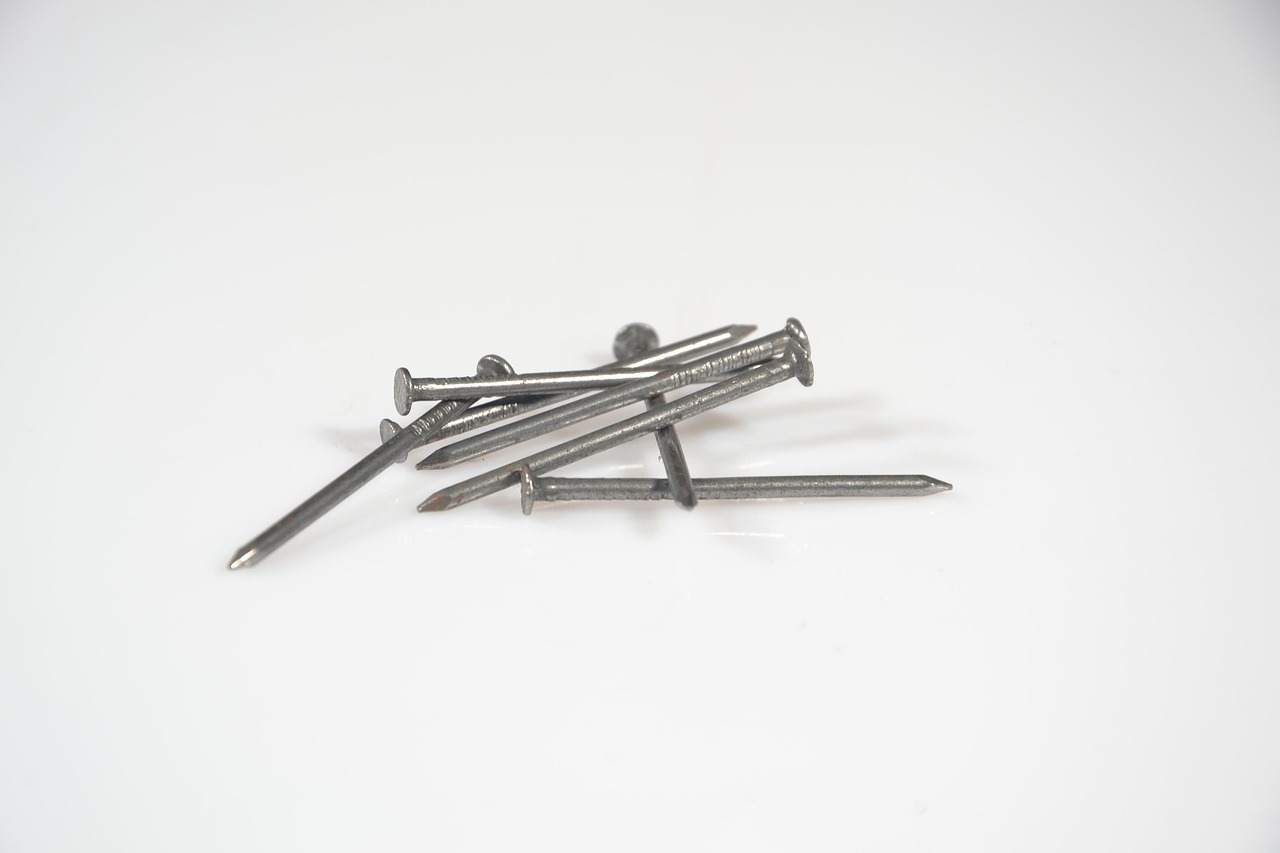
Round head nails are typically the default choice for framing and any construction work that relies upon the strength of the fastened materials rather than the appearance of the framed structure. The heads of round head nails are flattened and full, and the nails sit proud of the surface of the wood that they are fastened into. This type of nail provide more surface area for even pressure to be distributed across the nailed-in wood. As a result, round head nails prevent the nails from being pulled out of softer lumber.
Round head nails are often used in sheathing and roofing, and for any jobs that building codes requires the use of the full head of the nail to provide shear strength to those structures. The negative aspect to the use of round head nails is that the nails will leave marks on the wood, which may need to be covered by drywall or other coverings when the framed structure is completed. For projects that may remain exposed to the weather and other elements, round head nails may not be the best choice for fastening materials together.
2. Clipped Head Nails
Clipped head nails are the second most popular type of nail for framing structures. The clipped heads of these nails are manufactured by cutting a wedge out of one of the sides of the nail head. This allows the nails to nest within the strips of plastic that are created by the nail gun manufacturer, which allows for the builder to have more nails in the magazine of their nail gun.
Thus, the builder will have to reload the nail gun less times while building the structure. The pullout strength of clipped head nails is the same as round head nails, but building inspectors may still have a preference for the use of round head nails in framing projects. For the building of tracts homes or any homes that are to be built within three week, the popularity of clipped head nails is based upon the fact that builders will have fewer breaks in their building efforts.
3. Ring Shank Nails
Ring shank nails are used in situations in which there is a need for a nail to have high holding power, but where there is no possibility of the structure made with those nails being disassembled. These nails have spiral rings that are rolled into the shank of the nail, which allow those nails to be withdrawn from the wood with more strength than a nail without these spiral rings would be able exhibit their strength to withdraw from the wood. Ring shank nails are often used in subflooring, in decking, and in areas where the lumber that is being constructed will expand and contract due to moisture.
The issue with the use of ring shank nails is in the possibility of having to disassemble the framed structure that utilizes these nails; using a pry bar to remove the nails may split the lumber. Care should of been taken in planning framing projects to avoid using ring shank nails in areas that may need to be disassembled. Screw shank nails are similar to regular nails in that the shank of the nail is a cylinder of metal.
4. Screw Shank Nails
However, the screw shank nails have helical threads along the shank that are used to grip the wood when the nails are driven into the wood. These threads allow the nails to have a mechanical grip on the wood to exhibit more strength than ring shank nails when working with certain types of softwoods. Flooring installers may prefer screw shank nails because the grip of the nails reduces the possibility of the formed flooring boards creating squeaks many years down the road.
Screw shank nails are more costly than other nails; they also require a nail gun that can handle the extra torque that is required to drive screw shank nails without causing the nail gun to jam. While the additional cost of screw shank nails may seem high to some construction workers, the cost of having a homeowner complain of a bouncy wooden floor after six months of construction may be higher. Brad nails are typically used by finish carpentry trades.
5. Brad Nails
Brad nails are 18 gauge and are typically less than two inches in length; the small size of the nail allow for the framed structure to be filled with putty to seal the holes created by the brad nails. Brad nails have a slight head and the head of the nail sits below the frame of the wood that they are fastened into. Brad nails are used by cabinet shops and trim carpenters to attach delicate moldings, thin panels, and prefinished wood components.
Brad nails should not be used for their strength, but rather for their ability to enter the tight spots of hardwood boards without splitting the hardwood. Finish nails are the same size as brad nails but are 15 or 16 gauge in size. The size of finish nails creates a better balance between strength and the slender profile that is required by many trim carpentry jobs.
6. Finish Nails
The heads of these nails are small enough that they can be set below the surface of the wood. Finish nails can be set below the surface using a nail set or the countersink that is built into the nail gun. These nails are used on baseboards, door casings, chair rails, and almost anywhere there is trim.
Finish nails are a balance of features to the carpenter, which is the reason that trim carpenters may own two different nail guns. One gun may be loaded with brad nails for their more delicate projects; the other gun may be loaded with finish nails with which they can perform their more extensive trim projects. While staples may appear to be different than nails, staples are a form of two-legged nails.
7. Staples
Roofing staples have wide crowns that allow the staple to clamp onto the shingle without tearing the felt paper of the roofing material. The staples are driven quickly into the wooden beams, and the staples are designed to withstand the uplift of the wind if the legs of the staples are of sufficient length to bite into the wooden beams of the roof. In cabinet shops, staples that have narrower crowns are used to hold thin wooden backs in place without driving the nails through the face of the case.
Staples are not to be used in structural connections because they can rotate under a load more easily than nails with the same amount of strength. In addition to the different types of nails, there are also various coatings of nails that are applied to the nails once they are removed from the package. Electrogalvanized nails have a zinc coating that protects the nail from developing rust.
8. Electrogalvanized Nails
However, the zinc protection is only for a short period of time. Most construction jobs that use wood require that the framing is covered. For lumber that is treated with chemicals and for outdoor jobs, hot dipped galvanized nails are used.
9. Hot Dipped Galvanized Nails
These nails have a thicker and rougher coat of zinc than the electrogalvanized nails. For outdoor jobs in the coastal areas of the country, or for jobs using cedar siding that remains unfinished, stainless steel nails are often the best choice because they will not develop stains that will bleed through the paint that covers the siding many years down the road. While the price of stainless steel nails may seem high at the lumber yard, the alternative of stained trim may be even higher.
10. Stainless Steel Nails
There are some nails that are manufactured that are used for specific situations that the standard nails can cause more problems than the standard nails can solve. Chisel points are used to drive into the densest types of lumber without splitting the lumber. Blunt points are manufactured for use with types of wood like oak and maple; the blunt portion of the nail will crush the fibers of the wood rather than push them apart.
Some nail manufacturers also produce nails with an adhesive coating; the adhesive is activated when the nail is driven into the wood. These types of nails are used for temperamental wood that does not appreciate the use of any fastener. In order to choose the best nail for a job site, one does not need to memorize each type.
Instead, understanding the three key aspects of a framing job will allow the worker to make the best choice for each project. These three aspects are the type of nail gun that is used, the type of material to be fastened, and the forces that will be placed into the framed structure. Taking a few minutes to explore the different types of nails in the hardware store will pay dividends in each construction or framing job.
The next time someone hears a nail gun rattling on a job site, remember that the nail gun is one of the tools used at the construction site; however, it is actualy the small piece of metal that is moving inside that tool that makes the biggest difference.
