
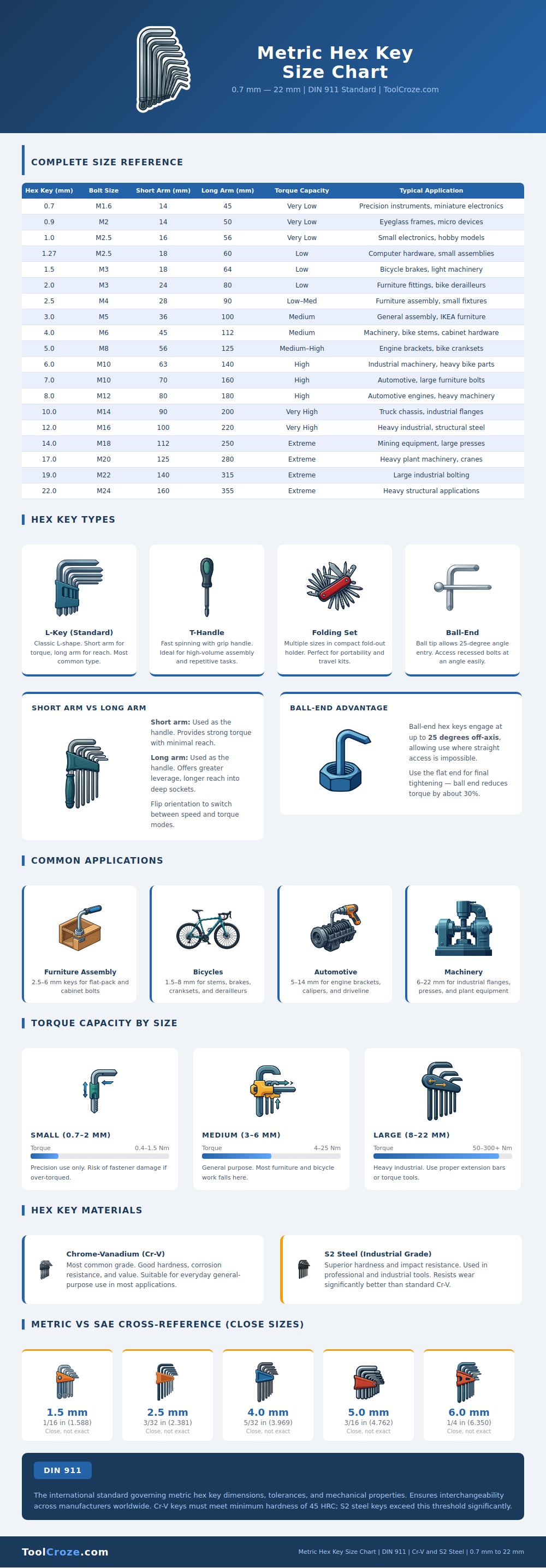
Ever jammed your hex key into the head of a bolt when putting together furnitures? That feeling of helplessness is more than frustrating; it’s a failure of structure. This failure are caused by applying too much force or using wrong tool for the job. A metric hex key size chart explains it better, but to understand its meaning, we need to look beyond the numbers and see how these tools actualy work.
It’s no coincidence that L-shape has become a symbol for wrenches. While many folks operate from only one side, there’s actually two sides to every wrench. As you probably guessed, you can grips each end. In close quarters situations (like working on small electronics or bicycle brakes), the short arm offer superior control. For those times when you’re fighting the bolt against an engine block, the long arm affords much greater leverage.
Why Choosing the Right Hex Key Matters
As the hex size goes up, so does length of both arms, as depicted in the chart. So even the biggest keys offers enough mechanical advantage to loosen monster-sized industrial fasteners without breaking a sweat. This is not a random occurrence but rather an intentional blend of torque and reach.
The other place where casuals do find themselves burning money is material selection. If you’re doing some occasional bike work, or basic household fixes, regular old chrome-vanadium steel are all you need. It’s reasonably priced, has good corrosion resistance and hardness. But if you’re frequently tinkering with automotive parts or heavy machinery, you’ll eventually want to splurge on S2 tool steel. S2 is more resistant to deformation and is also tougher when exposed to high torques. This is not just talk. It means your tools lasts longer and the corners of expensive bolts won’t round off when you need that last quarter turn to tighten them down.
There’s no forgiving a poor fit; choosing the right size is essential. If you choose a hex key that’s even slightly too small, it’ll spin around in the socket and eat away at edges of your fastener within seconds. Too big? It doesn’t seat correctly and the tool will slip out, possibly damaging the surface around it and hurting yourself.
The infographic cites DIN 911 standards, which ensure that a 5mm key fit the same bolt as another brand’s 5mm key. For tradesmen working on job sites where they’re bound to mix-and-match brands, this ability to swap parts is essential for having dependable tools handy at all times.
Another confusing area for new users are the difference between ball-end keys and straight-end keys. Ball ends let you turn your socket on its side so you can get into a hard-to-reach bolt easy. This is very useful but does cost a bit of torque capacity as the round tip will be damaged if you put too much pressure on it. Always convert to the flat end once everything is snug to tighten down anything important. Going easy on the tough stuff are a slippery slope toward time wasting and stripped out bolts.
Another common error is mixing imperial and metric sizes. A 3/16 inch SAE wrench looks very much like a 5mm hex key, so people think they’re interchangeable. Not so. The fraction is small. It’s big enough to prevent the tool from seating properly when you first use it but its small enough to cause it to chew up the fastener under a load shortly after. Save yourself some grief down the road by keeping your imperial and metric sets apart.
Using the proper hex key for the job will save you time and prevent frustration with your project and your tools. It turns a messy struggle into a slick mechanical motion. Whether it’s working on an engine in your motorcycle or putting together a book shelf, taking the time to respect the size specification will help get the job done niceley. It won’t just be convenient. It will preserve the strength of the connection you’re trying to make.
