
To perform masonry work effective, a person has to exhibit patience and have the right touch when working with the stone. A solid wall built well stands for many decade, but a masonry wall will not stand for decades if the mortar between the bricks are of the perfect consistency. A well-built wall will stand for decades because the person building the wall understands the tools needed to work well with the stone instead of fighting against it.
Any job site that features masonry work features the same few hand tools performing the work. These hand tools may appear simple, but they has been designed to solve specific problems that masons encounter when working with brick and mortar. Learning how to work with these essential masonry tools will change how you look at a brick wall that otherwise may seem difficult to understand.
A weekend project that a beginner can produce that might look homemade as compared to a more professionally built brick wall may rest on the use of the right tool at the right time. The list of essential masonry tools that every mason eventually owns are listed below. The trowel is the most important tool in a bricklayer’s toolkit.
Essential Hand Tools Every Mason Should Own
1. Trowel
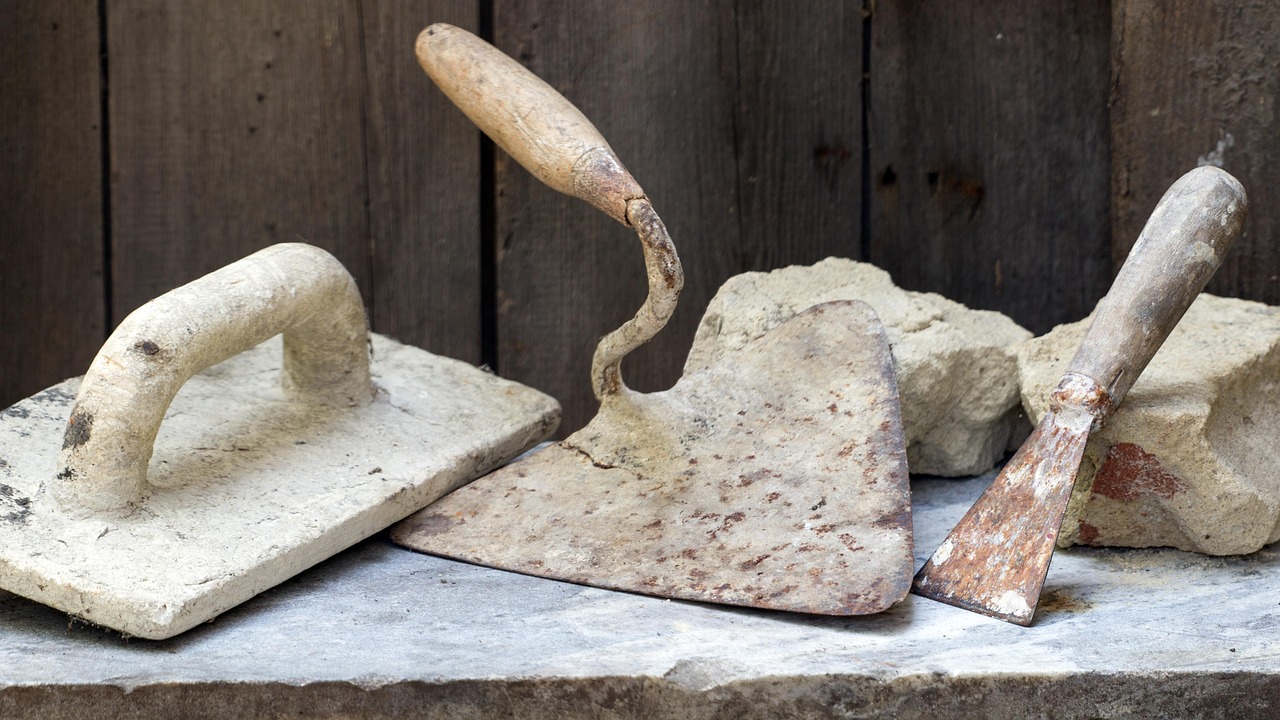
A trowel features a flat steel blade with an offset handle, which allow the bricklayer to scoop mortar off of a hawk and spread it across the brick and butter the ends of the bricks. A good trowel will develop a feel of being an extension of the forearm of the mason who use it the most. The blade of the trowel should be stiff to cut excess mortar and flexible at the tip to feather the joints of the brick.
Most good masons uses a trowel with a 10-inch or 11-inch blade. Such a blade will carry the right amount of mortar for a mason’s work without causing fatigue of the wrist of the mason over time. A wooden handle of the trowel will absorb the shock better of the work than a plastic handle.
However, wooden handles will require sanding every so often to ensure that the handle remain comfortable to the masons grip. A rubber grip on the handle of the trowel will come in handy in colder weather to allow the mason to maintain a good grip on the trowel. The trowel can also be used to clean the mortar off the joints of the brick.
Once the mason masters the flick of the wrist to dispose of a perfect ribbon of mortar, the trowel can be used as a meditative tool to dispose of mortar. Most people will miss this tool until they have use the trowel for a full week. The next essential tool is the brick hammer.
2. Brick Hammer
The tool may look crude when first observed but an expert in the trade will see it differently once used. One end of the hammer features a flat area on the brick to tap the bricks into place. The other end of the hammer is a sharp chisel that the mason will use to score the bricks to snap them into the desired lengths.
A brick will take a firm tap along a marked line. This will weaken the brick such that tapping the brick on the opposite side will result in the snapped brick. Too many taps will damage the brick.
The head of a brick hammer should weigh between 16 and 20 ounce. Too much weight will result in bruising the hand of the mason by lunchtime. A lighter brick hammer will take more blows to cut a fired brick.
A mason will develop an instinct for the perfect weight of a brick hammer over time. The longer the handle of the hammer, the more power that will be used to cut the bricks. However, a long handle will be clumsy when used in tight spaces in a wall.
Once the mason perfects the sound that a properly snapped brick will make, the brick hammer will stop being a tool and start to be seen as another tool in the masons toolkit. The level tool will be used to ensure that all the bricks are plumb and level. A four-foot level will have three vials.
3. Level Tool
Two vials will measure whether the bricks are plumb and the third will read whether the bricks are level. There will also be a 45-degree vial in the best levels to measure the corners and slopes of a masonry project. The best levels will show accuracy in the vials even after being dropped from scaffolding.
Aluminum frames for the level are more resistant to twisting than wooden frames. Aluminum will flex enough to take the fall on concrete. The skill in using the level is to read the bubble correctly even under different types of light.
The level tool should also be used as a straight edge to measure the face of the masoned wall. The bricks that are too proud will be easily spotted when the level is placed across them. The level is a tool that a mason should treat with care.
The level will be used on every course of a wall if the level becomes bent. Masons should store the level flat and keep it clean. Never use a level to pry on a brick.
These rules may seem fussy but are vital to the mason so that the mason will not ruin a fine finished wall by using the level as a crowbar. The jointer tool may be the smallest in size in the masons toolkit but has the potential to create a significant impact on the way the masoned wall will look. Once the mortar has cured to firmness, the mason will use the jointer to run a metal rod along the joints of the bricks.
4. Jointer
The metal rod will have a shaped end that will compress the mortar to create a smooth concave joint between the bricks. The concave joint sheds the rain that would potentially be trapped within the wall. A V-shaped joint may be used for moddern buildings and a concave joint for historic buildings.
A joint will take place when mortar is of the proper firmness. If applied too soon the mortar will smear. If applied too late the mortar will become too hard for the jointer tool to properly tool the joint.
Experienced masons will have a feel for the proper firmness of mortar after a few job. A half-inch joint requires a different jointer than a three-eighths inch joint. A variation of sizes of jointers will be added to a mason’s toolkit so that compatibility with different types of bricks can be maintained.
The hawk will be used to transport mortar to the building site and will act as a mortar board for the mason. The mortar board is a flat metal with a perpendicular handle. The mason will use the hawk to transport mortar from the mortar pail to the bricks.
5. Hawk
A good mason will learn the tricks of how to load the hawk without spilling the mortar and how to scoop the mortar with the trowel in one motion. Good hawks are made out of lightweight aluminum. The handle of a hawk will be comfortable in the masons hand.
Masons may wrap the handle of the hawk with tape so that they can have a firm grip on the masons hot hand. Using a hawk well will allow a weekend worker to differentiate between there work and that of a professional mason. Good use of a hawk will allow the mason to save mortar that would fall off of the hawk onto the ground and maintain the consistency of the mortar used in the projects.
A hawk may also be used as a tool to mix small batches of color for use in the project to ensure that the color of the mortar matches that of the existing brick wall. This tool will never be left behind by a mason even on the smallest of projects. The pointing trowel is a small tool that is used for repair work and detail work around a masoned building.
6. Pointing Trowel
This tool is smaller than a regular trowel and has a more triangular blade that can reach the corners of a masoned wall. A pointing trowel is used when tuckpointing where crumbling mortar is packed into the joints of the bricks. Restoration of older buildings will require the mason to use this pointing tool as the historic bricks will not allow for the replacement of mortar within them.
The narrow pointed tip of the tool can be used to make decorative struck joints on garden walls or chimney caps. Using the pointing trowel will require more precision than using a regular trowel but will lose speed with the pointing trowel. The precision required for pointing work will prevent further damage to the bricks when performing repair work.
The blade on a pointing trowel will be forged metal instead of stamped steel. A forged metal blade will retain its edge and be resistant to the corrosion caused by the alkaline nature of mortar. A pointing trowel will wear in such a way that the handle will fit the masons hand perfectly after a few repair jobs.
This is one of the reasons why a mason will not lend their favorite pointing trowel to another person. The chisel and bolster tool will also be acquired by a mason. The bolster is a wide chisel that will cut through entire courses of bricks.
7. Bolster and Chisel
Using a bolster and a heavy hammer will enable the mason to remove damaged bricks without destroying the surrounding good work. Cold chisels will be used to remove individual bricks or to remove the old mortar from the bricks. Chisel tools must always be kept sharp to the masons satisfaction to ensure that they do not damage the surrounding bricks.
A dull chisel will result in the mason doing more work than they would of done with a sharp tool. Mason tools may look cool but there will be safety glasses on the work site as the mason will strike the steel tools with a hammer. Chips could fly in the masons face and spoil the day.
A wire brush will be seen on the work site that will be used to clean the masonry tools. Keeping the tools clean will ensure that they work better and last longer on the job site. Mastering these tools takes time but has an immediate payoff to the mason who has perfected their use.
8. Wire Brush
A properly struck joint between bricks will look professional to the untrained eye and will shed the water that falls on the masoned structure for many decades. The wall kept plumb with a good level tool will stand tall for the lifetime of the building. These tools earned their place in the masons toolkit through time and through the generations of master masons who discovered through experience the proper use of each tool and the consequences of misusing them.
The next time you see a mason at work, pay close attention to the details of there work. There will be no wasted motion in the performance of their work as each tool has its place and purpose. The work will seem effortless to onlookers as the master mason knows the skills required of each tool.
The quiet competence that a master mason presents to the world comes from the respect they have for the simple beauty of their tools. The competent master mason understands what each tool can do in the right hands. Your own masonry projects will improve the moment you start to see these tools as the precise instruments that they truly are.
