
Masonry work rewards the use of a correct tool in a persons hand. A single misplaced strike with a chisel could crack a stone that took the person many hours to shape. If a person use the wrong type of chisel for a particular job, then the joint may not remain hidden beneath the mortar that was used to set the stone into position.
Every type of chisel used in the craft of masonry has a specific job that it handles exceptional well; others fail at performing the same tasks. Chisels separate masons from weekend warriors because each tool has a purpose, and there is no place for a person to use a tool of another kind to perform the same function. When a person understand what each type of chisel does best, a persons walls will be constructed straighter, repairs will be made to look invisible to the untrained eye, and a person will have avoided wasting materials due to poor technique that could of been prevented with the proper knowledge of each chisel tool.
The use of the correct chisel versus the incorrect chisel will show the difference right away on the jobsite. One mason may strike the chisel against the stone, and a clean sliver of stone will separate from the massive structure. Another may hit the same weight of chisel against the stone but only create a spiderweb crack that extends to the middle of the stone.
The secret to successful masonry doesnt involve the brute force that is required to drive the chisel into the stone, but the correct choice of chisel. When a person walks into any masonry supply yard, there will be a dozen or more chisel shapes hanging on the wall. Each type of chisel has a reason for its place on the masons tool shelf due to the discoveries of skilled masons over the centuries about which types of stones will accept which chisel tool.
Essential Types of Masonry Chisels to Know
1. Flat Chisels
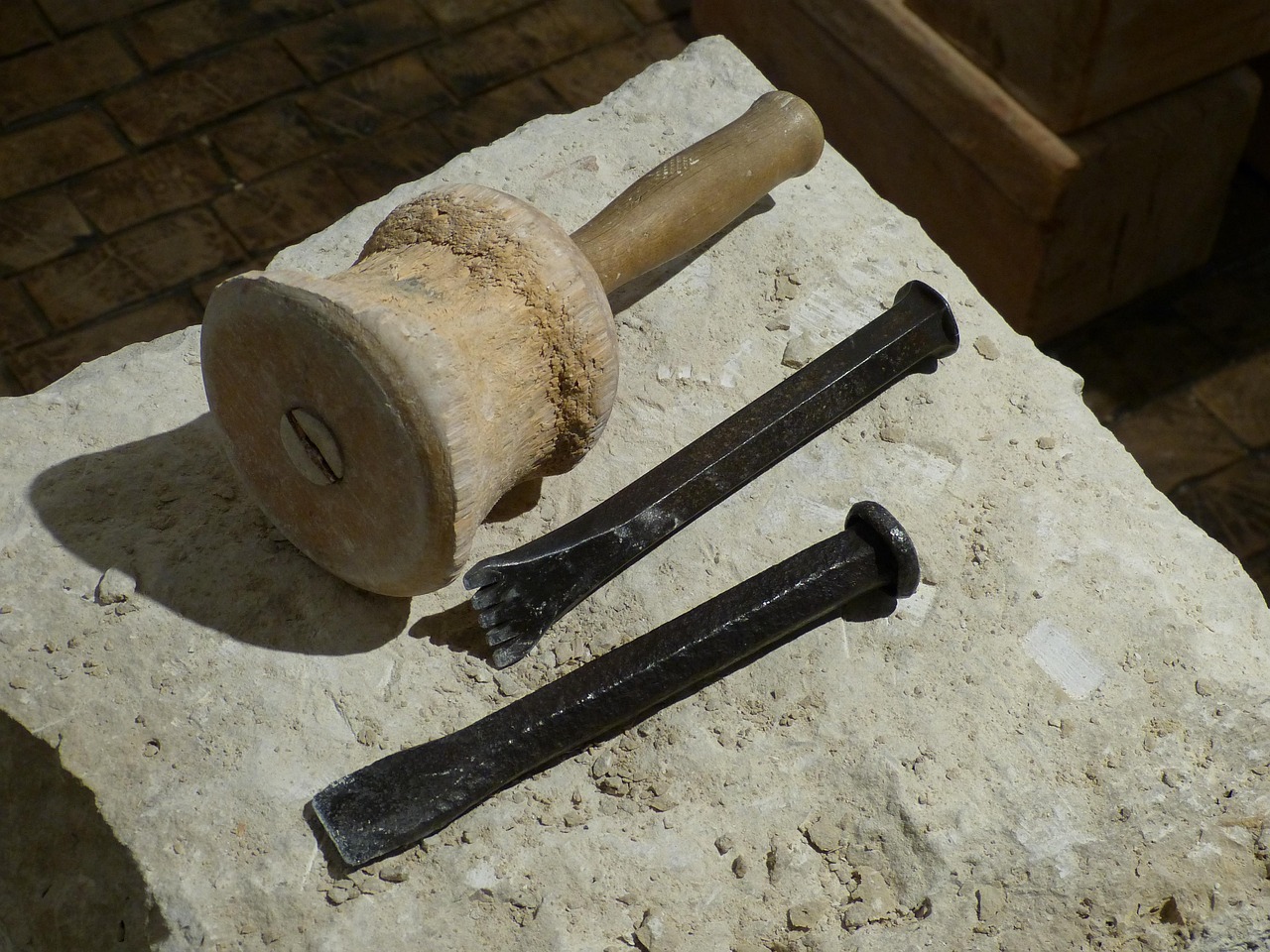
Flat chisels are the most commonly used tool by masons. These tools have a wide, flat cutting edge between one and three inches in width. Additionally, they have a steel shank that can withstand the force of a hammer.
These tools perform a variety of tasks within the masonry trade, including dressing the face of a stone, removing high spots from a stone, and creating a smooth bed for the next course of masonry. The even distribution of force that a flat chisel allows for a stone make it possible for a mason to shear away at the stone without cutting too deep into the stone and potentially destroying the stone. Due to these factors, beginners in the trade prefer flat chisels due to the large cutting edge allowing for some mistake in the angle of the chisel.
With experience, however, masons have a preference for a two-inch chisel for rough work and a one-inch chisel for detail work. Additionally, flat chisels cannot reach into tight corners or perform decorative work on a stone structure. These tools are best used for the honest, straightforward work required for foundation and garden wall work.
2. Tooth Chisels
Tooth chisels feature a series of teeth along the cutting edge of the tool. There are four to eight teeth on a typical tooth chisel. These chisels are used for removing material from stones quick.
The teeth work well on stones such as limestone or sandstone to split the stone to remove a layer quickly without breaking the stone. Restoration masons use these chisels to restore old stone structures to their original look. The teeth on these chisels wear faster than the flat cutting edge of a standard chisel; hence, more frequent sharpening is required with tooth chisels.
These tools are helpful on projects that have a truckload of rough stones to shape.
3. Pitcher Chisels
The pitcher chisel has a blunt, thick head and only one beveled cutting edge. This tool is used to pitch or pitch unwanted stone off the edge of a stone block.
A mason holds the tool vertically against the block to be trimmed and strikes the chisel with a heavy hammer. The force that is delivered strikes the pitcher chisel to the stone, and a chunk of stone can be removed. This chisel tool is helpful in cutting oversized rubble or trimming raw stone blocks to manageable size.
Additionally, because the pitcher chisel has such a blunt edge, the stone does not fracture in a way that will create hairline fractures along the stone that might be trimmed with the pitcher. While this chisel might be considered crude in comparison to other tools, it is effective in its purpose. This tool is the chisel equivalent of a chainsaw when a mason wishes to quickly remove a large amount of stone from a project.
4. Point Chisels
Point chisels are used to perform the same task that their name suggests. The cutting edge of a point chisel has a sharp, four-sided point that is used to remove a knob from a stone surface, deepen mortar joints between stones, or cut a letter into a stone slab. These tools are of particular importance to granite masons because granite stones are harder than other stones, and it is more difficult to cut a granite stone with a flat chisel.
The major downside of point chisels is that a single wrong strike from a hammer with the point chisel could split or crack the stone. Because of this, points chisels are used in small, tight circles to gradually move the point chisel across a stone to perform the required task. Working with a point chisel can be slow and noisy, but it offers the best control for masons to create desired outcomes.
5. Bush Hammers
The bush hammer does not feature a standard cutting edge to the chisel tool. Instead, there is a grid of small pyramidal points across the cutting edge of a bush hammer. When a person strikes a bush hammer against a stone, the pyramidal points leave a pitted texture on the stone.
The pitted finish made with a bush hammer is helpful for nonslip walkways, restoring old stone structures, and giving moddern concrete the look of aged granite. A bush hammer is a heavy tool that creates vibrations that travel up the arm of the person using the tool. Hence, a mason should not use a bush hammer for extended periods throughout the day.
However, no other chisel tool can create the finish that the bush hammer makes to stone.
6. Cold Chisels
Chisels that are used in the process of demolition work and repair work are called cold chisels. These chisels are made of high-carbon steel and are tempered to retain their sharpness even when cutting through hardened mortar and bricks.
Cold chisels feature a flat cutting edge but are much narrower than a standard flat chisel. Additionally, the cold chisel has a longer shank to increase the leverage for masons to remove mortar from bricks. The striking end of a cold chisel is softer than the cutting edge so that when it is struck with a hammer, the striking end will mushroom rather than chip the cold chisel against the mortar.
This tool is of great importance to those performing restoration of old brick structures since a cold chisel can be inserted into the joint between bricks and tapped a few times to remove the mortar without destroying the old bricks. The cold chisel can be used without a hammer when performing restoration work since it is possible to hand-drive the cold chisel against the mortar. While it is not the most glamorous tool in the trade, the cold chisel is the only tool on this list that could save a wall from being destroyed by a wrecking ball.
7. Carbide Tipped Chisels
Moddern masons use a carbide-tipped chisel to cut into reinforced concrete, mortar, or rebar. A small insert of tungsten carbide can be welded onto the cutting edge of the chisel so that the tip of the chisel retains its strength. Carbide-tipped chisel tools work better on reinforced concrete and mortar than other chisel tools.
Although a carbide-tipped chisel cost more money up front, it will save money in the long term due to its long life and durability. The major drawback for a carbide-tipped chisel is that when the carbide edge breaks, the chisel tool is finished and cannot be repaired. A final type of chisel tool that is used in the craft of masonry is the letter chisel.
8. Letter Chisels
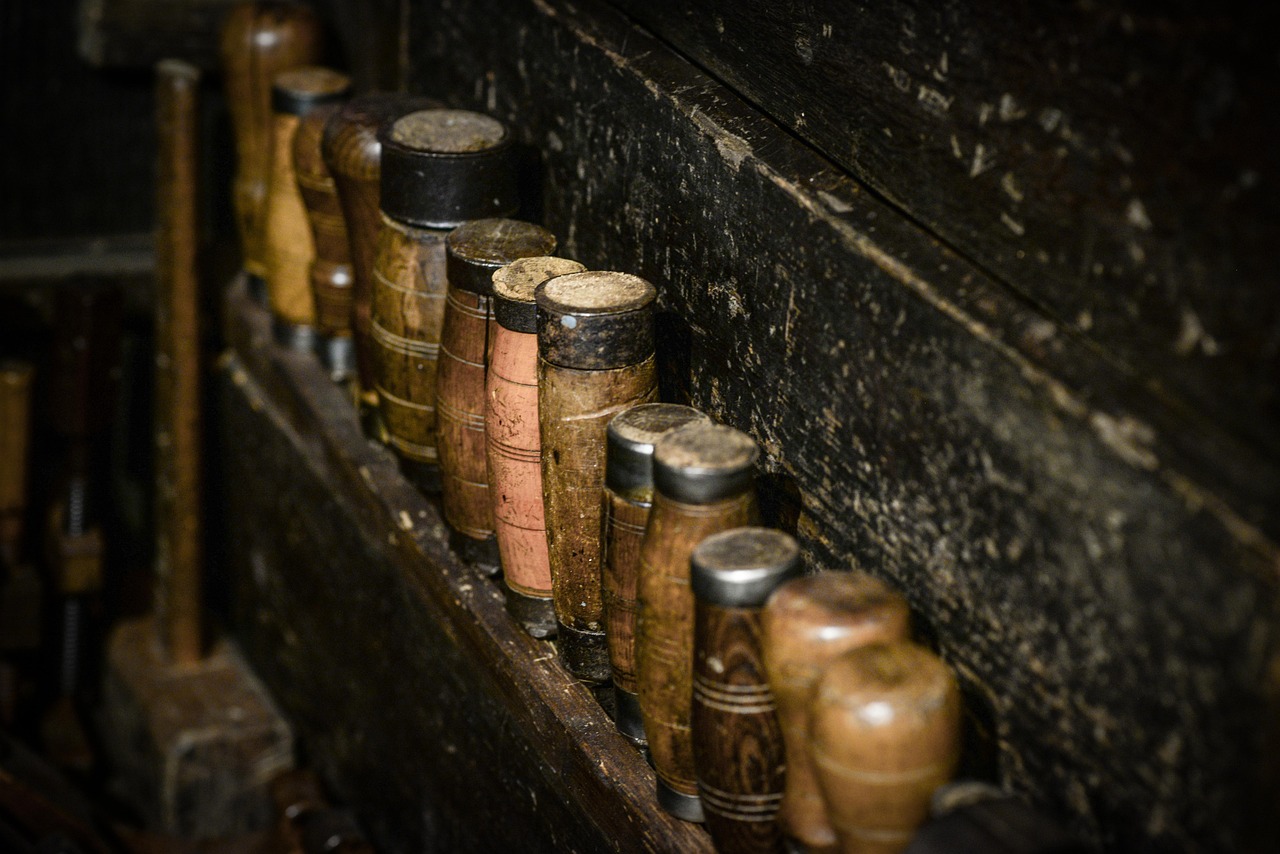
These letter chisels are available in sets that contain every letter of the alphabet and the numerals zero to nine. Monument masons use these letter chisels to cut letters into stone gravestones or commemorative stones. The work with letter chisels is meticulous and requires a significant amount of learning to perfect the skill of using these tools.
No other chisel tools can accomplish the same outcome as a letter chisel. Hence, while not used every day in a mason’s toolbox, a letter chisel will be required for tasks that involve carving letters into stone. A person doesnt have to own every type of chisel tool.
However, a person should have at least one of each of the categories of chisels described above. For instance, a person should start with a good quality flat chisel and a point chisel. Over time, as a person gains experience in the trade, other chisel tools can be added to a persons toolbox as needed.
A mason that owns six chisels and knows how to use each of them will always outwork a mason that owns a toolbox of every type of chisel but does not have an appreciation for the different types of stones that they may need to cut. In the end, the stone will always decide which type of chisel tool was the most successful in a project, and the best masons are those who have learned to listen to the stone to determine which tools it requires.
