
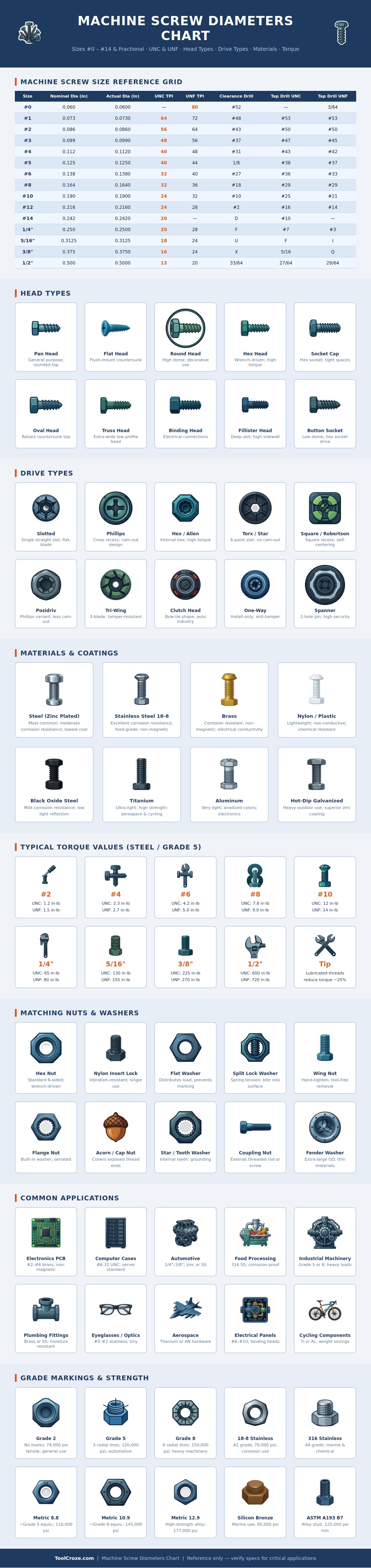
If you’ve ever tried looking at a bag of mismatched screws, then you probably noticed they all looks alike. Sure, the distinctions are subtle: thread count, precise width. But these small differences makes a difference, as the wrong screw may tear through material or back out from the strain.
For when accuracy realy counts, having a reference chart that changes names. Such as one-quarter inch or number six. To actual dimensions simplify selecting the proper screw. They use a fractional numbering system for big screws and a whole number system for little screws. Around fourteen they begins measuring in inches. The trick is recognizing that nominal size does not equal actual diameter. And by the way, nominal doesn’t equate to actual width. Number six screws is a hair wider then an eighth of an inch. Before you drill any holes, measure true gauge. Your parts will be either too loose or stuck tight if you drill according to name rather than the measurement.
How to Choose the Right Screw
Adding a thread pitch is another detail that confuse beginners. For general use, coarse threads go faster and don’t tend to strip out as much. In airplanes and automobiles, fine threads are popular because they resists vibration better but also has more surface area. Two thread choices will of been shown with each size generally. How does the joint handle stress? Can it take finer threads without cracking?
Finally, materials is a compromise of cost, weight and environment. Zinc plated screws are made of steel, which is heavy and strong but rusts quickly. Stainless steel are less strong than steel, but it do not corrode as easily, making it great in moist environments. Brass conducts electricity well and isn’t magnetic, which is ideal for electrical work. Don’t judge your screw based off aesthetics. Sure, that shiny screw is cool looking, but maybe the blacker one is cheaper and more protective.
The amount of torque a screw withstands before breaking are measured by torque values. It doesn’t take much to tighten a small screw. A half-inch screw will hold hundreds of pounds, but a number two screw holds only slightly more than an inch-pound. In hobby projects, people tend to overtighten screws. Because they assume tighter is better, they end up breaking the screw and/or stripping its head. This isn’t true for fragile material.
Choose the head and drive style. For high-torque installations, go hex (wrench) or socket cap (ratchet fits into tight spots). Go Torx (less slipping/surface damage) versus Phillips head (more likely to slip and mar your work). What’s it gonna be? That will depend on joint precision and also the available access space. Some screws goes in some holes and not others. You can’t bang on them all the same way either. They need to be fastened but they also need to be fastened well, with control, it is not just about force.
Knowing the names and sizes of each part and where they go eliminates frustration. Eliminates having to replace stripped out threads because you guessed wrong. Makes you stop guessing and start building right. That makes a bag of hardware a helpful tool rather than a frustrating one.
