
Locking pliers live in top drawer of most toolboxes because they are a very useful tool. Locking pliers can grip objects very tightly, and locking pliers can turn nuts even if the heads of those nuts are stripped. Locking pliers is also useful when someone is welding, cutting, or performing another task on a project.
Not every pair of locking pliers is created the same, however. If you purchase the right model of locking pliers, you can save yourself an hour of frustration later on in your projects. Furthermore, if you purchase the right model of locking pliers, you can avoid having a project’s part slip at a bad moment.
Knowing the varieties of locking pliers that exist will help you to select the proper tool for your project rather then the tool that you have in your hand. There are differences between locking pliers regarding their jaws, the length of their handles, the adjustment of the locking pliers, and the various jobs that their designs are built to complete. Some locking pliers have jaws that is intended for delicate projects that should not mar the workpiece.
Other locking pliers have designs that allow for the exertion of brute force to those that are working in tight or dirty areas. Others fall somewhere in the middle and people utilize them in their projects the most. Knowing what each variety of locking pliers is able to do and their limitations will allow for more sense to be made of toolboxes and projects going more smooth.
Common Varieties of Locking Pliers to Know
1. Slip-joint locking pliers
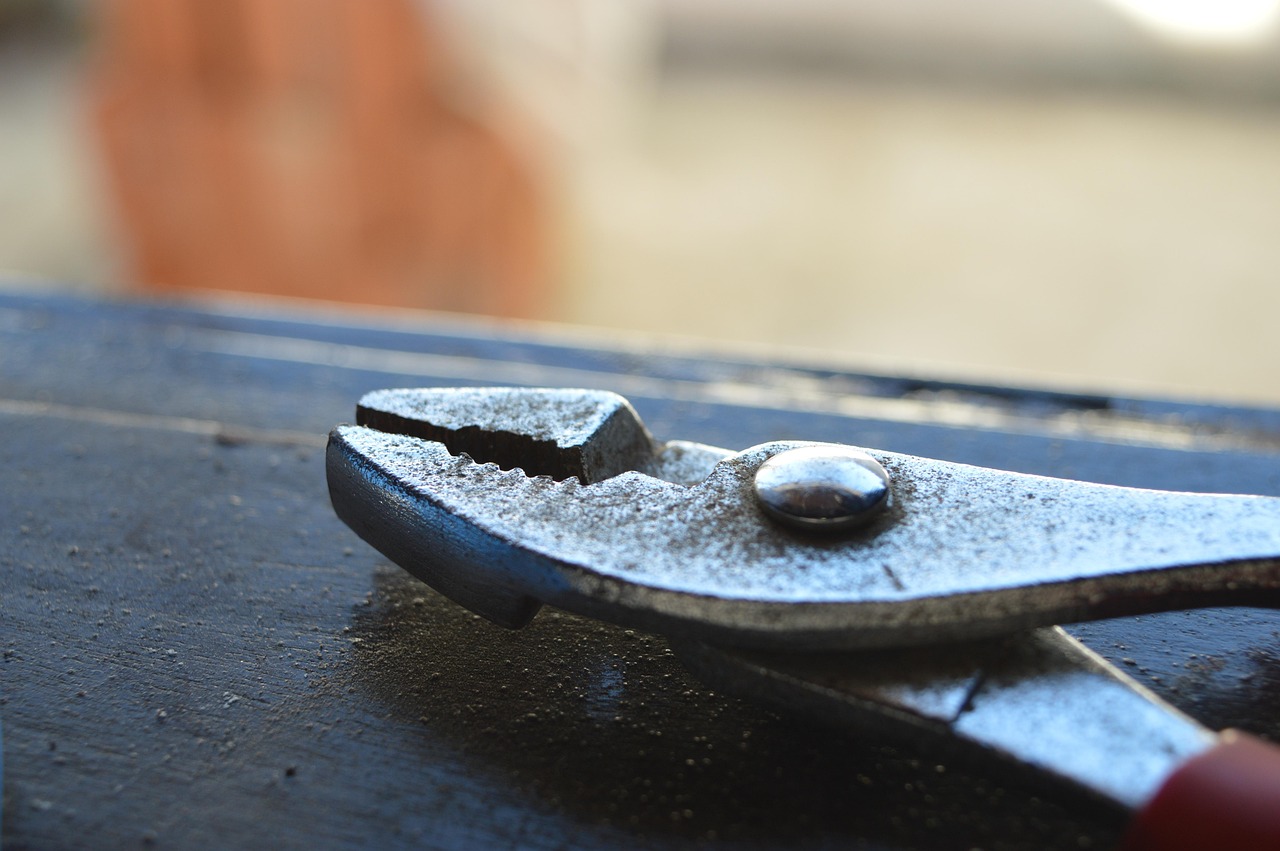
Slip-joint locking pliers are locking pliers that have curved jaws with serrated edges and a lever on one handle that snaps into place to clamp the pliers shut. You adjust the slip-joint locking pliers by using a screw near the handle. The slip-joint locking pliers will lock when the handles are squeeze together.
To open the slip-joint locking pliers, a small tab on the opposite handle must be flicked. Slip-joint locking pliers are useful in tasks that require the slip-joint locking pliers to be held in one position while another person or tool is performing another portion of the project. For example, mechanics often use slip-joint locking pliers to hold brake lines out of the way while performing work on them, welders to hold metal parts together while they perform their weld, or even those working on home projects to remove rust from bolts.
The jaws of slip-joint locking pliers are curved allowing them to exert their force onto round objects. The downside to the slip-joint locking pliers is that the serrations can damage soft materials like brass if they are over-tightened. Slip-joint locking pliers are a common tool used by workers of all trades.
2. Long-nose locking pliers
Long-nose locking pliers have slender jaws that feature a fine point at the tips of the jaws. These locking pliers are used to grasp small objects, such as wires or pins that are located in tight spots in an engine, for example. Long-nose locking pliers allow for better access to workpieces by the user while also providing the strength to perform various tasks on those objects.
For example, long-nose locking pliers are useful for pulling nails from tight spots, bending small metal brackets, or even to retrieve dropped washers. Electricians use these locking pliers to hold the wires into place while they prepare the ends of the wires to be completed. The main downside of long-nose locking pliers is that they are unable to exert as much force as the broader jaws of locking pliers.
Furthermore, the thin jaws are more likely to flex than locking pliers with broader jaws, and may not be used on the most stubborn of fasteners. However, long-nose locking pliers are still very useful.
3. C-clamp locking pliers
C-clamp locking pliers are locking pliers that have the look of a C-clamp tool but with handles of similar size.
Instead of the jaws, the locking pliers have two flat pads that are used to grasp the workpiece; one pad is fixed and the other moves via a screw. The pads can have feet that allow them to remain flat on the workpiece regardless of the angle. Furthermore, locking pliers exert a large amount of pressure with these pads with little mark made on the workpiece.
Welders mainly use C-clamp locking pliers to hold sheet metal in place without burning through it. Furthermore, metal fabricators may use these locking pliers to hold two metal angles together while they are assembled. The main trade-off with these locking pliers is that they cannot be used on round materials or wires.
4. Vise-grip sheet metal locking pliers
Vise-grip sheet metal locking pliers have wide, flat jaws that are smooth and not serrated. These locking pliers are designed with a depth of the jaws that is larger than the width of the sheet metal locking pliers. These locking pliers are used to bend sheet metals and hold them in place during other tasks.
Those restoring old cars may have several pairs of these locking pliers since the smooth jaws will not mar the vehicles expensive paint jobs. HVAC technicians may use vise-grip sheet metal locking pliers to hold metal ducts together in alignment before using rivets to hold them in place. These locking pliers are less versatile than other locking pliers so they may be found in the specialized section of a toolbox.
However, those that work with sheet metals regularly will find these locking pliers to be indispensable.
5. Curved-jaw locking pliers
Curved-jaw locking pliers have jaws that are arc-shaped so they are able to exert their force onto various types of round objects. Furthermore, near the handle of the curved-jaw locking pliers is a cutting edge that allows the tool to cut wires, for example.
Plumbers may use curved-jaw locking pliers to hold pipes in place while they trim wires. Farmers may use these locking pliers to repair fences with wire cutters on these locking pliers. The cutting edge of these locking pliers does not weaken the locking pliers so they can still provide full clamping power.
However, the head of the locking pliers may not be able to fit into tight spots due to its size.
6. Large-jaw locking pliers
Large-jaw locking pliers are locking pliers with jaws that are three inches or more in size and have longer handles that provide leverage. Furthermore, large-jaw locking pliers have a larger screw that allows them to lock onto large objects like bolts, exhaust pipes, or metal beams.
Furthermore, large-jaw locking pliers are weighted to stay in place when clamped onto a project. Mechanics use large-jaw locking pliers to hold the metal beams of heavy trucks or farm equipment. Furthermore, due to the weight of these locking pliers, they may be used as a hammer on a project.
However, this is not a recommended use for these locking pliers. Furthermore, since these locking pliers are so large they are not likely to be carried in a pocket. However, if no other tools seem to work on a project, the size of these locking pliers is the reason to use them.
7. Push-button release locking pliers
Push-button release locking pliers are locking pliers with a button on one of the handles that will release the locking pliers even if the locking pliers are under heavy load. Push-button release locking pliers work in the same way as other locking pliers except for the release mechanism. You may find push-button release locking pliers in production shops where there are hundreds of task each shift that utilize the locking pliers.
Home users appreciate the push-button locking pliers because they will not have to search for the tab to release the locking pliers. Furthermore, the button is likely to stick due to dirt and neglect. However, if you clean the push-button locking pliers properly they will not get stuck.
For the individuals that use locking pliers every day, the convenience of the push-button locking pliers will be hard to give up. Each variety of locking pliers was created to solve a specific problem that tools of the past could not solve. Thus, the variety of locking pliers are of great use.
Furthermore, although one pair of locking pliers may be have all the uses that an individual may have for their weekend projects, the variety of locking pliers will allow for projects to be completed to completion without improvisation of tools. Thus, the next time an individual is faced with a project that needs to be completed, they should not rush to their nearest pair of locking pliers. Instead, they should consider the different varieties and how they may be able to assist with their upcoming projects.
Thus, there is a reason that locking pliers have a permanent spot in each decent toolbox.
