
Removing laminate flooring may seem like a relatively easy job that you can complete over the weekend. However, when you encounter laminate flooring that has become glued down with old adhesive that has hardened into concrete, you will find yourself struggling to complete the project in the time that you expected it to take. Using the correct tools for the job will make it easier for you to complete the task of removing laminate flooring.
Not only will the correct tools protect your subfloor and your back, but they will also prevent the job from taking a whole month to complete. There is several different tools that will make the removal of laminate flooring easier for you. A good set of tools will allow you to complete the flooring removal in one day rather than having to return to the job to continue with the cleanup.
It is important to use the right tool for the right task when removing laminate flooring. Some tools will be used to break the bond created with the glue, others will be used to lift the planks without causing damage to the subfloor, and some will be used to protect you from injuries that are otherwise caused by the task. The following is the list of the practical tools that will get the job done of removing laminate flooring.
Essential Tools for Removing Laminate Flooring
1. Floor Scraper
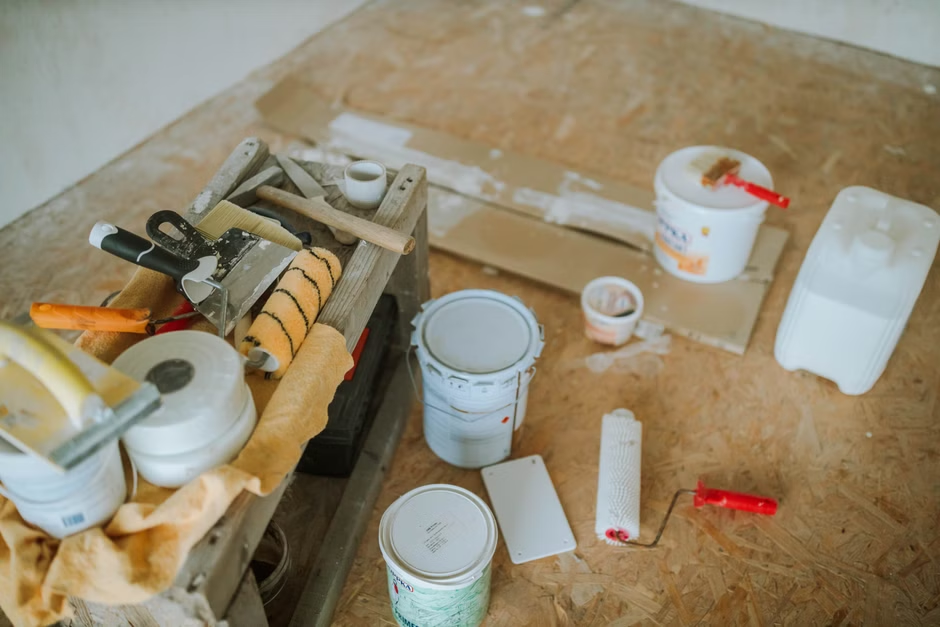
A floor scraper will be the tool that you will use the most during the removal of laminate flooring. A floor scraper consists of a long handle with a sharp blade that is replaceable and set at an angle to the handle. The angle of the blade allows for the blade to be pushed under the laminate flooring plank and for the plank to pop upward.
The best floor scrapers will have replaceable blades that are between four and six inches in width. Blades that are too narrow will take up your time when removing the laminate, but blades that are too wide may crack the laminate plank if you intend to use those planks for other uses in your home. A floor scraper is a tool that will help you avoid using brute force to remove the laminate flooring.
By sliding the blade of the scraper under the flooring plank and tilting the handle, you will be able to lift the plank. This is much better than continually yanking on the laminate plank until something snaps. By having a few extra blades for your floor scraper you will avoid the frustration of using a blade that gets dull quickly due to the laminate adhesive.
2. Rubber Mallet
Having extra blades will also prevent the possibility of damaging your subfloor by using a dull blade to remove the laminate planks. A rubber mallet will be used for some of the more delicate work that must be performed in the removal of laminate flooring. Once you have loosened a few rows of laminate flooring there may be a few remaining planks that require a tap from the rubber mallet to break the connection between the planks without damaging the edges.
The rubber mallet has a soft rubber head so that the rubber absorbs the shock of the falling tool rather than the flooring. Many people will underestimate the rubber mallet until they have split a third plank with a hammer. The rubber mallet will also be helpful in moving a section of laminate flooring that refuses to budge.
A few taps with the rubber mallet will do what thirty seconds of prying with a floor scraper could not accomplish. While it is the simplest of tools, using it will result in a better looking removal of laminate flooring planks.
3. Heat Gun
Heat guns will change the game when you are attempting to remove laminate flooring that has become glued down with difficulty to move.
The heat gun will direct high heat toward the laminate flooring which will soften the adhesive that is holding the planks to the subfloor. For best results use a heat gun that reaches 300 degrees and ensure that it is moving the laminate flooring rather than directly over the flooring to avoid burning the subfloor. The use of a heat gun is helpful in situations in which the installer usually applies an extra amount of adhesive to prevent moisture from the area from damaging the laminate.
If you do not use a heat gun your time to remove laminate flooring may be one hour for three square feet of planks. If you do use a heat gun you can complete the same three square feet in a few minutes. However, be sure to wear gloves as the laminate planks will become very hot during the process.
Also be sure that the heat gun is not aimed at any flammable items in the area as you will want to avoid starting a fire during the project.
4. Pry Bar
A pry bar that is specifically designed for use with flooring falls somewhere in between a crowbar and a paint scraper. The pry bar will have a flat and thin end that will slide easily between planks and a curved end that will allow for the prying of the laminate without damaging the flooring.
The pry bar will have a vinyl or rubber coating on the handle so that your grip will not slip while prying the laminate flooring planks apart. This tool will be helpful in areas that are tight to walls or cabinets. Additionally, it can also be used as a chisel to cut through stubborn underlayment.
However, if used with an excessive amount of force, it will dent your subfloor. In situations where you need to use the pry bar with maximum force use a scrap piece of wood as a fulcrum to distribute your weight to avoid damaging the subfloor for your next installation of flooring.
5. Utility Knife
A utility knife can be used in various situations with laminate flooring removal.
For example, it can be used to score the laminate before using your force to snap the planks apart. It can also be used to cut away stubborn underlayment and trim any adhesive that the floor scraper could not reach. It is important to have fresh blades for your utility knife as a dull blade will tear the laminate flooring rather than cleanly cutting it.
Additionally, when using your utility knife in the final row of laminate flooring removal it will allow you to free the planks without damaging baseboards or cabinet toes. Many laminate flooring installers do not use a utility knife when freeing the last row of planks which may result in chipped drywall or damaged trim. A sharp utility knife blade will allow you to free the last row of laminate flooring without causing damage.
6. Shop Vacuum
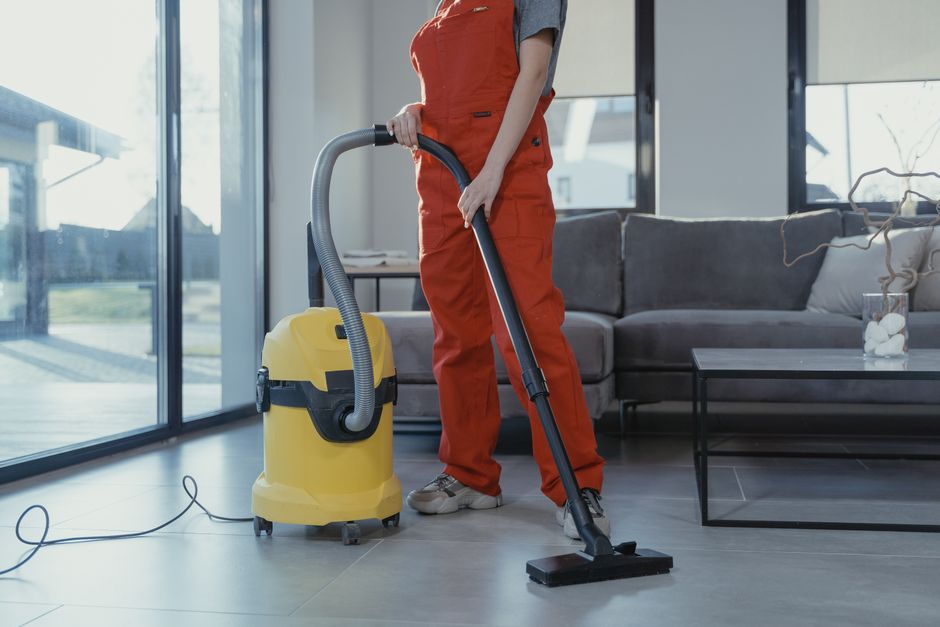
A shop vacuum is a tool that will become necessary to clean up the job site after you have finished removing the laminate flooring. As you remove the laminate flooring you will create both dust and chunks of laminate and adhesive that will need to be vacuumed up. A shop vacuum with a hose attachment will allow you to vacuum the area while you are working rather than having to deal with a pile of debris at the end of your workday.
It is important to vacuum the area every few rows that you complete. Vacuuming will prevent the dust from entering the seams of your subfloor and will help to keep the area safe from slipping on the debris. Additionally, you can continuously vacuum to monitor your progress rather than guessing what is beneath the debris.
By vacuuming the area you will be able to prevent small problems from becoming larger issues.
7. Knee Pads
While this may seem like an unnecessary tool it is important to use knee pads after working for two hours on a concrete subfloor. The best knee pads will have thick gel inserts that will support your knees and will not slide off during your workday.
By using knee pads you will protect your knees but they will also protect your lower back as well. When working on the subfloor your posture will be better with knee pads so that you do not develop any back strain while working. People who perform remodeling jobs will tell you that knee pain will be a fast way to ruin your weekend.
Good knee pads will reduce the fatigue of your legs which will allow for you to maintain even pressure with your floor scraper. This will allow for you to work for a full day without tiring your legs.
8. Utility Pry Bar
Additionally, a utility pry bar will be of great use for jobs that are too small for a full pry bar or too difficult for a floor scraper.
A utility pry bar is compact and has a flat end and a curved end that allow for it to be used in different ways to remove the laminate flooring planks. The utility pry bar will be helpful in the final stages of removing laminate flooring. Its small profile will help to prevent damage to the walls of your home.
While it is important to keep the pry bar sharp the edge should not be razor-edged so that it does not slice through any other materials that may be in the area. There are various situations that will come up when removing laminate flooring that cannot be handled by any one tool. Some planks will be easy to remove while others may be particularly difficult to free from the subfloor.
Using the various tools listed will give you the options that you need during your project without having to battle the floor with one tool only. For most of your project you will use a floor scraper and a rubber mallet. If you come across sections of laminate flooring that are stuck with adhesive use a heat gun to loosen the laminate.
Use smaller pry bars and a utility knife for the precision work around the edges of the floors. Also be sure to use knee pads and a shop vacuum throughout the process of removing laminate flooring. Once the job is done the bare subfloor will be ready for your new flooring.
While the bare floor may seem like an empty task it is a necessary task that will ensure that your new floor looks great. The use of the correct tools will make the task easier, safer and faster to complete. As you begin the project you will find yourself happy that you took the time to choose the correct tools.
