
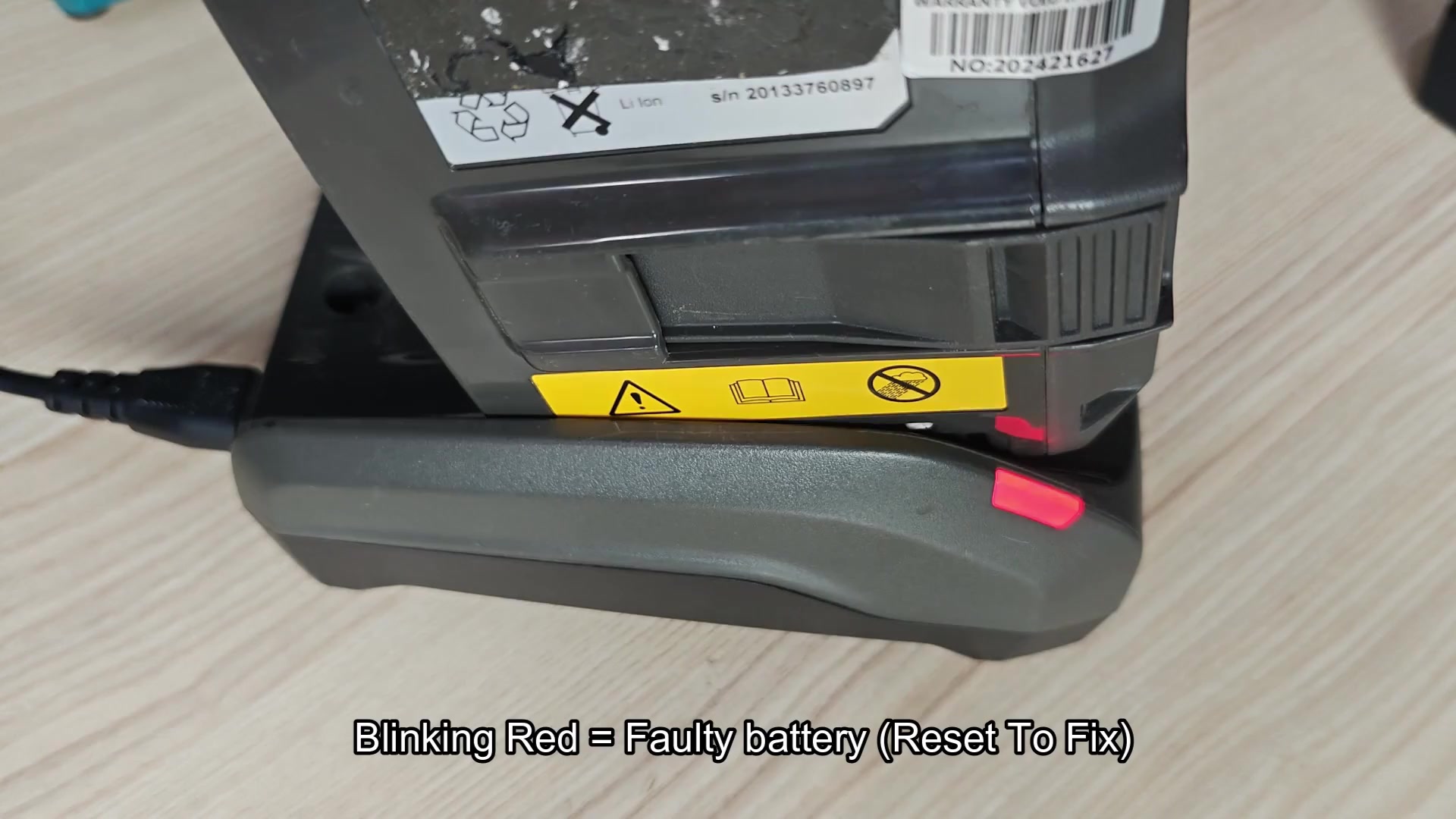
Had a Husqvarna battery that would not charge anymore and figured it was done for. The Husqvarna battery charger was flashing a blinking red light when I placed the battery onto the charger. This usualy mean that the battery pack voltage has dropped too low for the battery charger to recognize the battery. I figured I’d give it a few different tries to bring the voltage back up so I could at least use the battery one more time before I threw it in the bin.
How to boost battery voltage
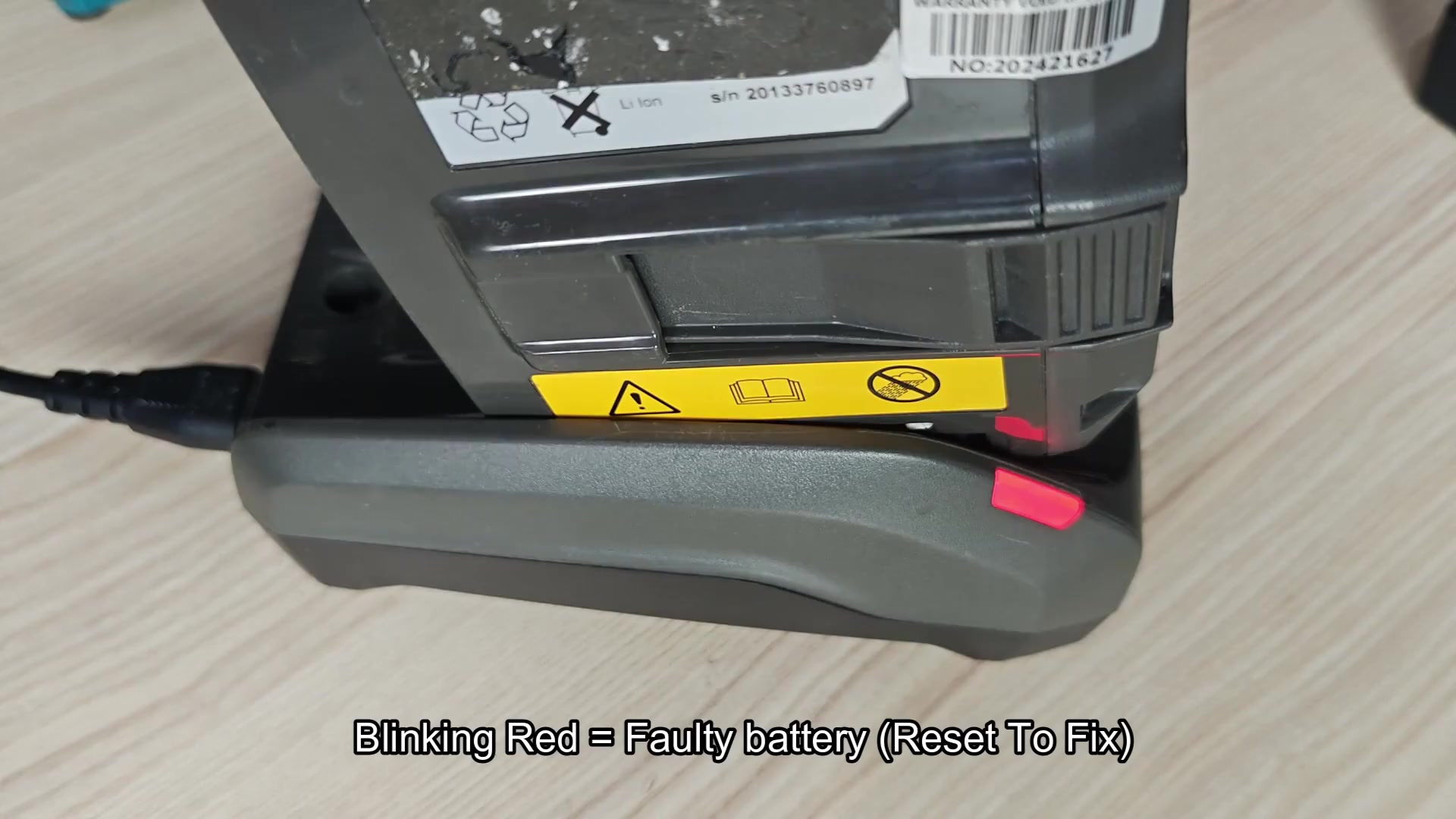
The first try was to use another Husqvarna battery to jump start the dead one. This works because another battery will provide the voltage to the dead battery to allow the charger to recognize its presence. I obtained both a working Husqvarna battery and the dead one.
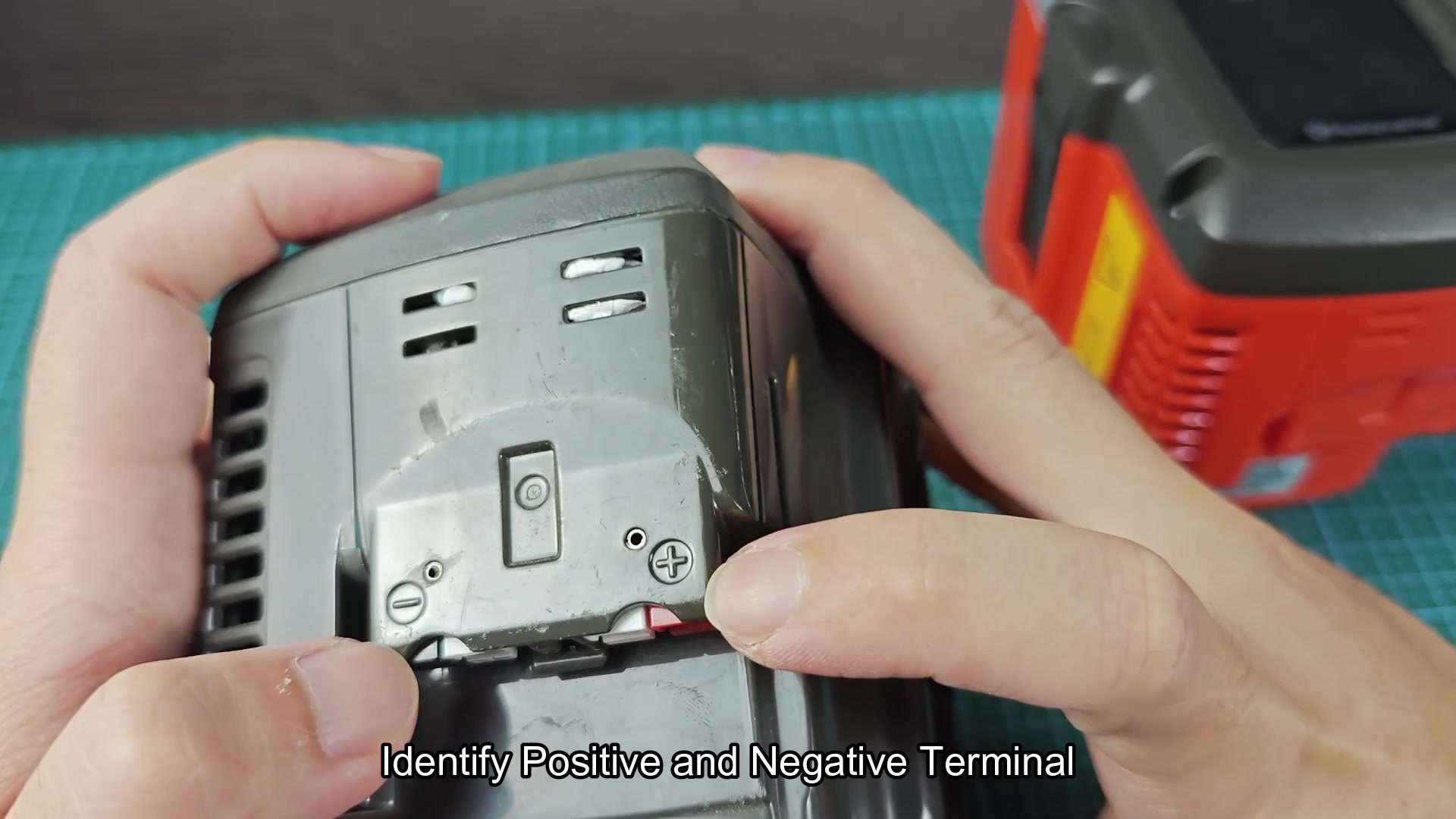
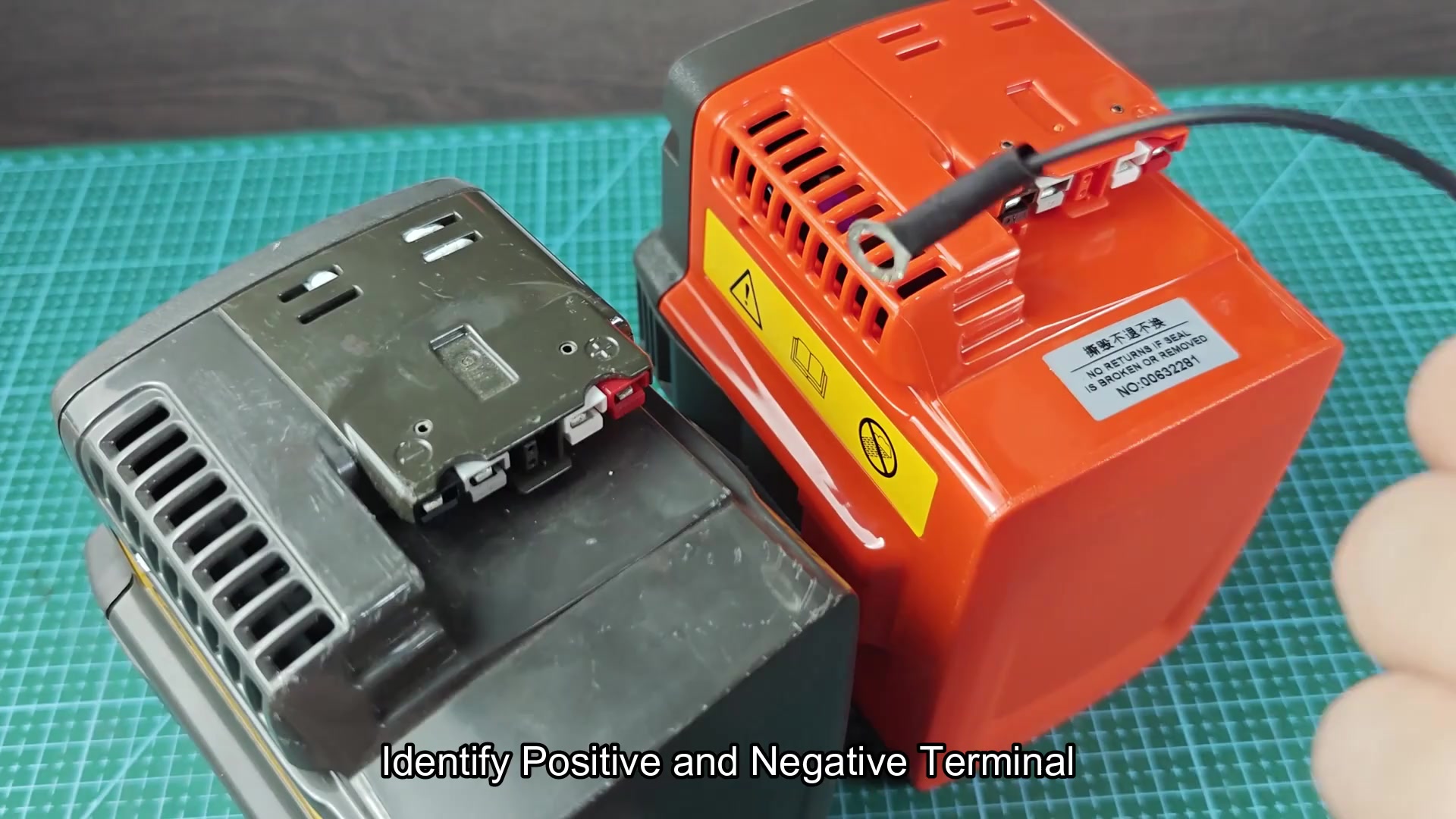
First I had to identify which battery was positive and which was negative. Each battery had the plus and minus sign marked on the battery itself to make it easy to find. I located the positive and negative terminals on each battery.
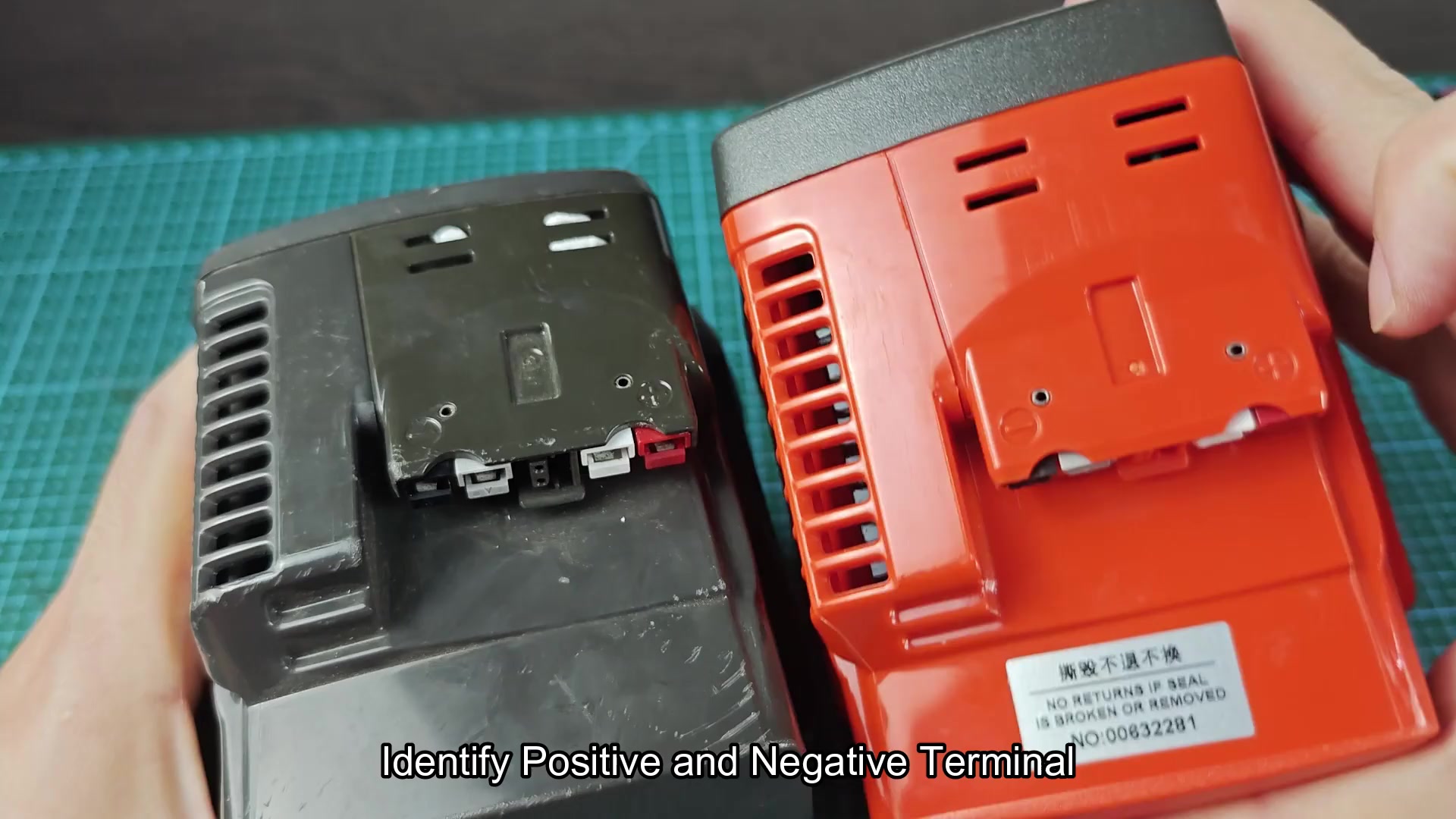
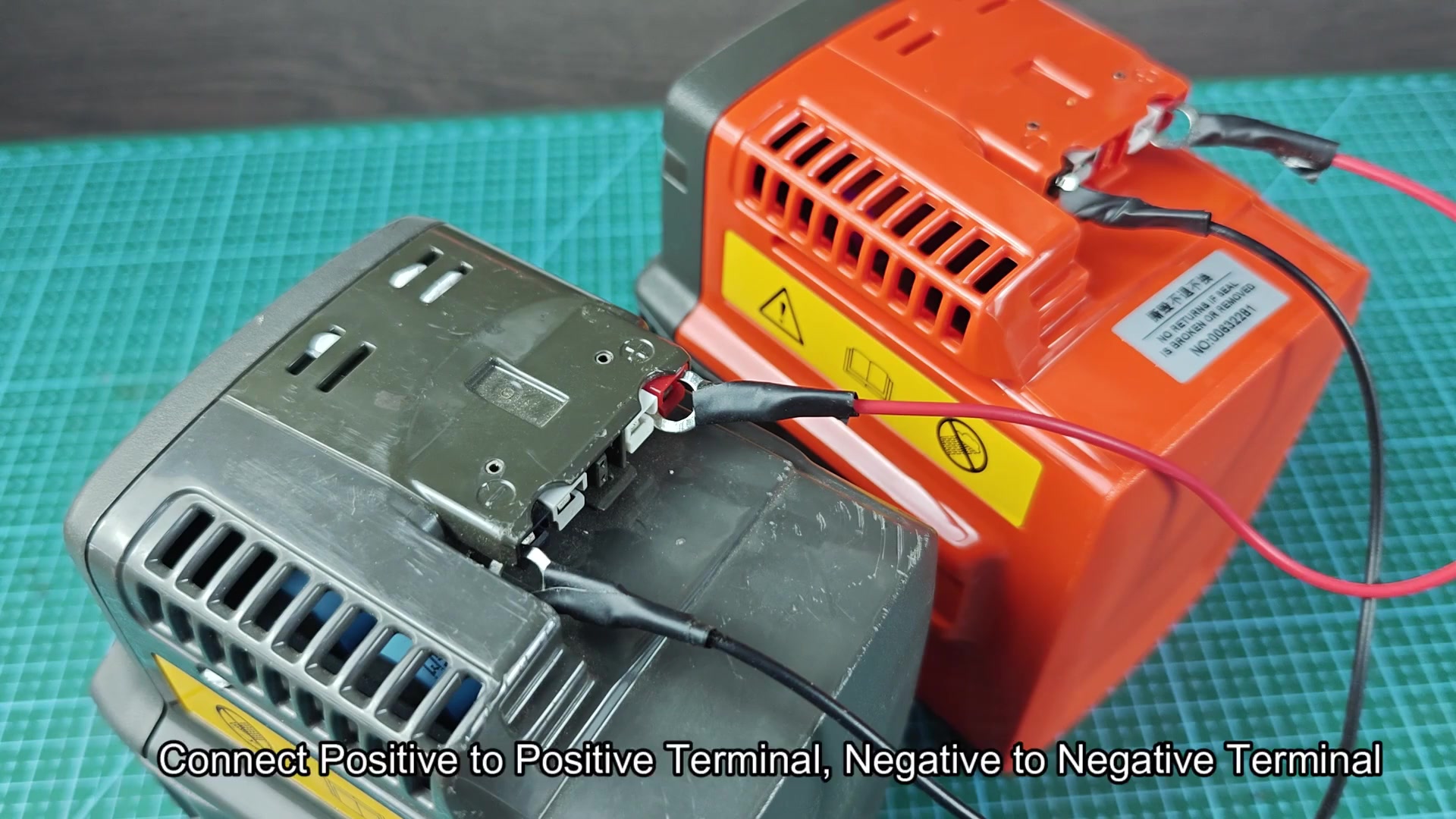
After locating the positive and negative terminals on each battery, I used wire with ring terminals at each end to connect the two batteries together. I connected the positive terminal from the good battery to the positive terminal on the dead battery. Likewise, I connected the negative terminal from the good battery to the negative terminal on the dead battery.
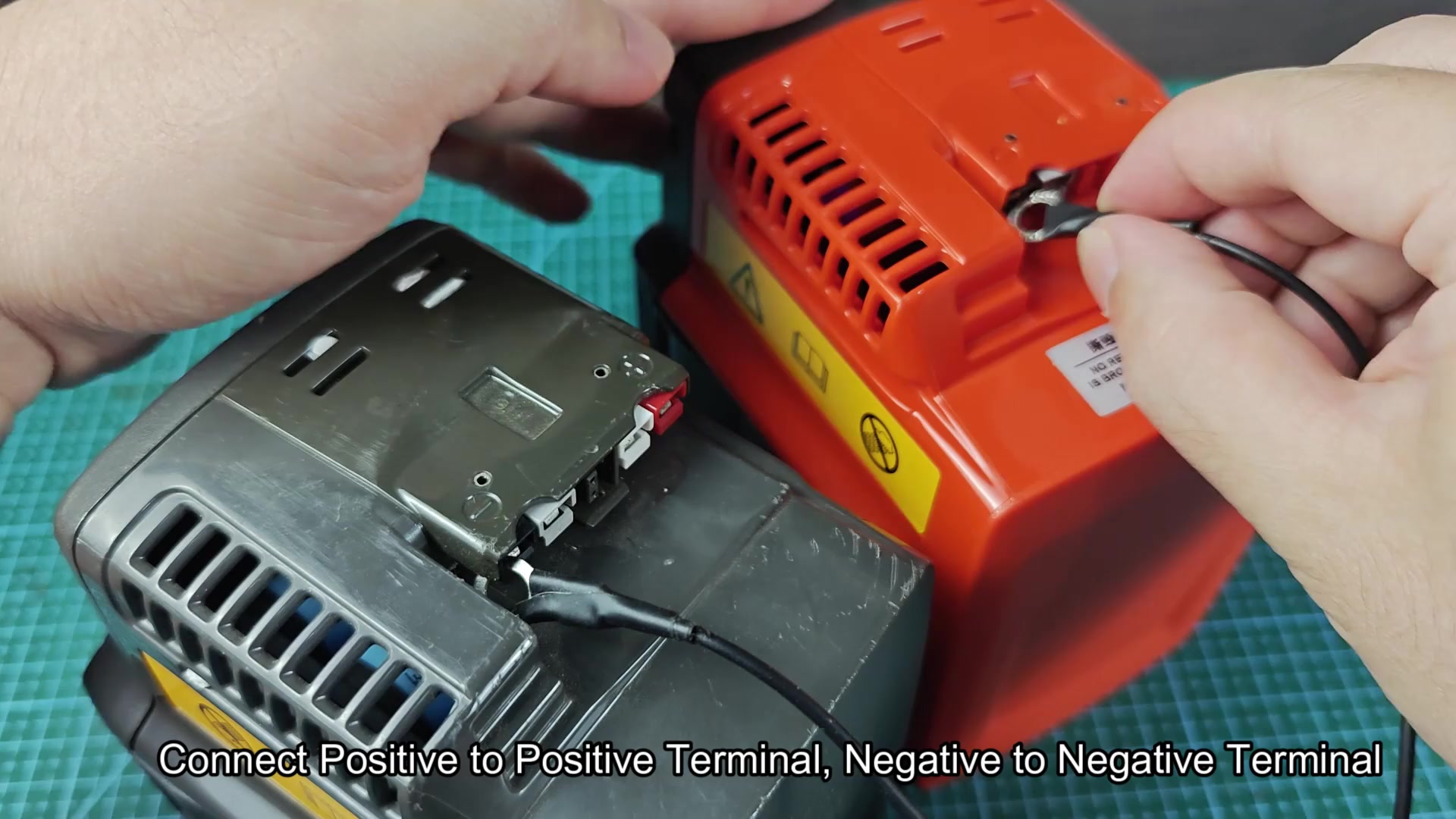
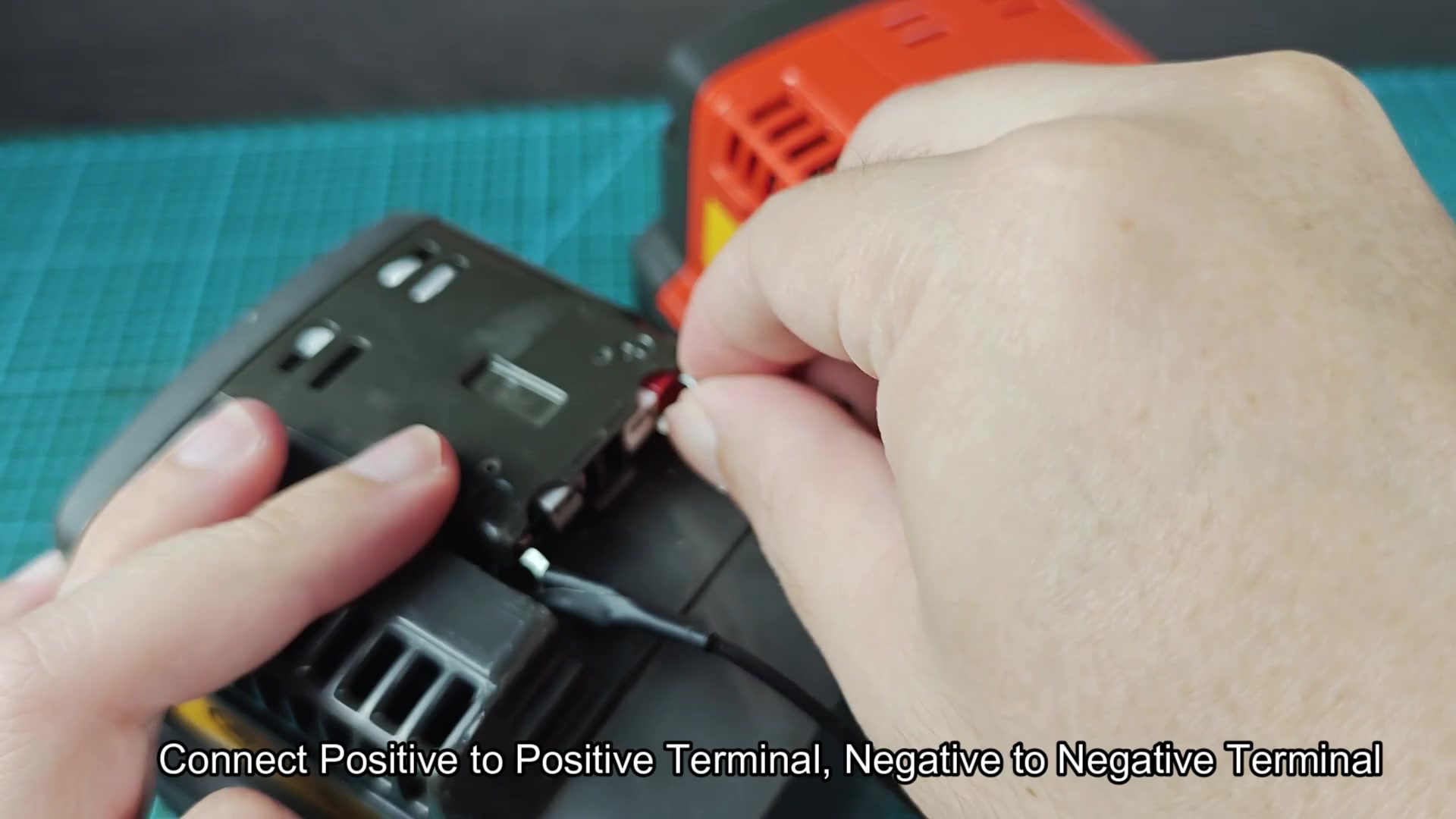
I left the two batteries connected for about fifteen seconds. Fifteen seconds was enough to allow the good battery to provide enough voltage so the charger can recognize the dead battery. No need to provide a full charge.
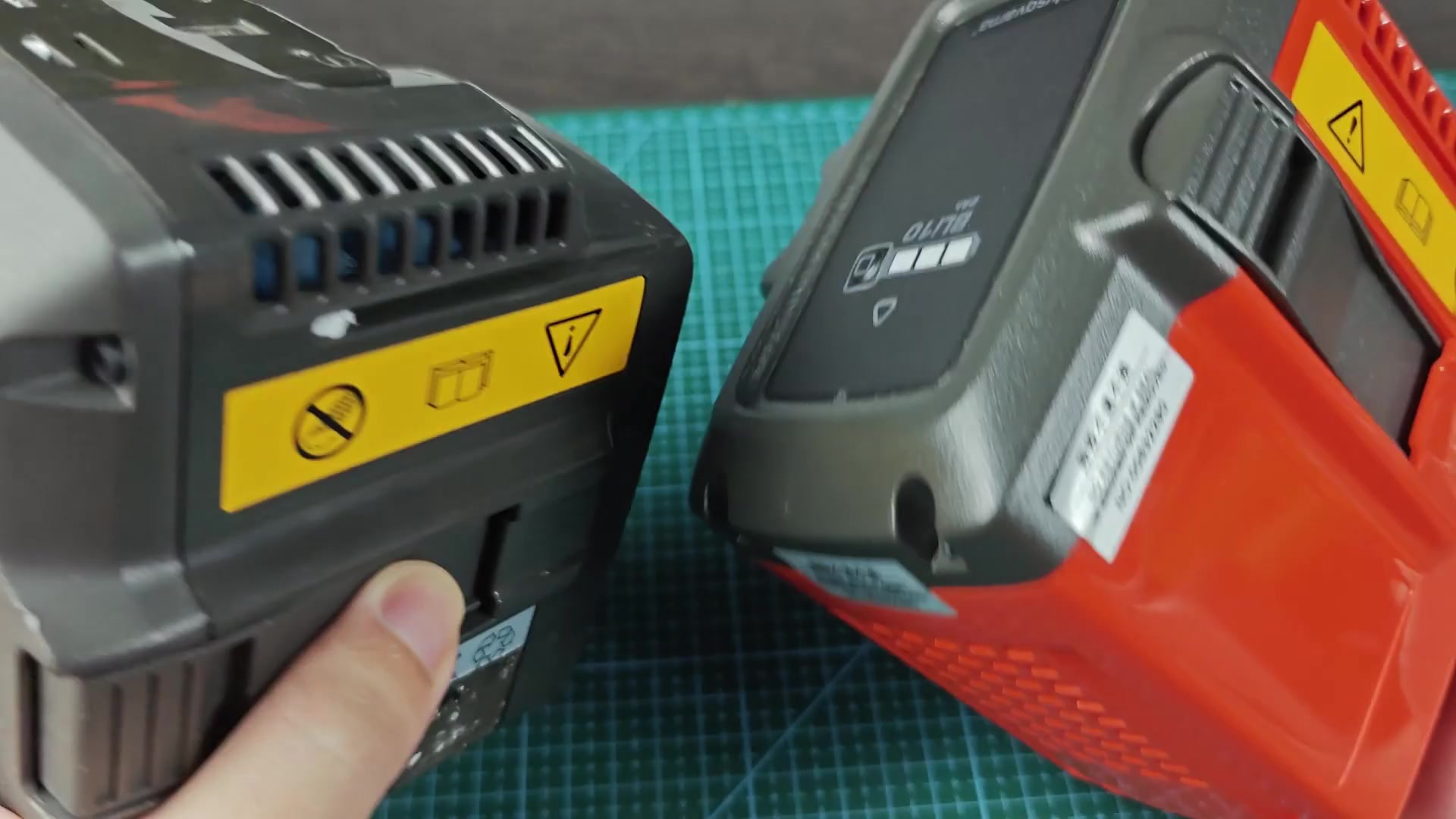
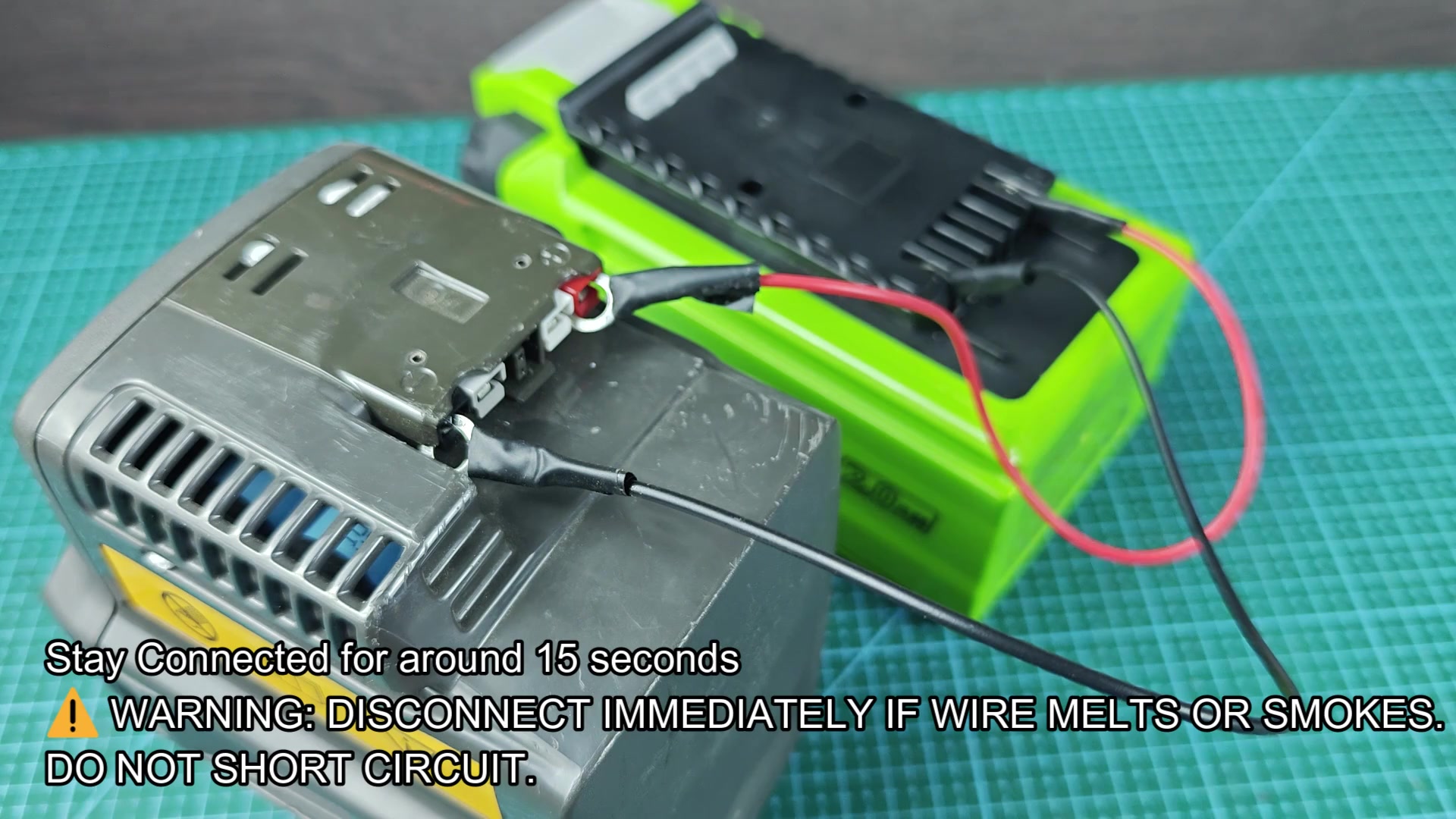
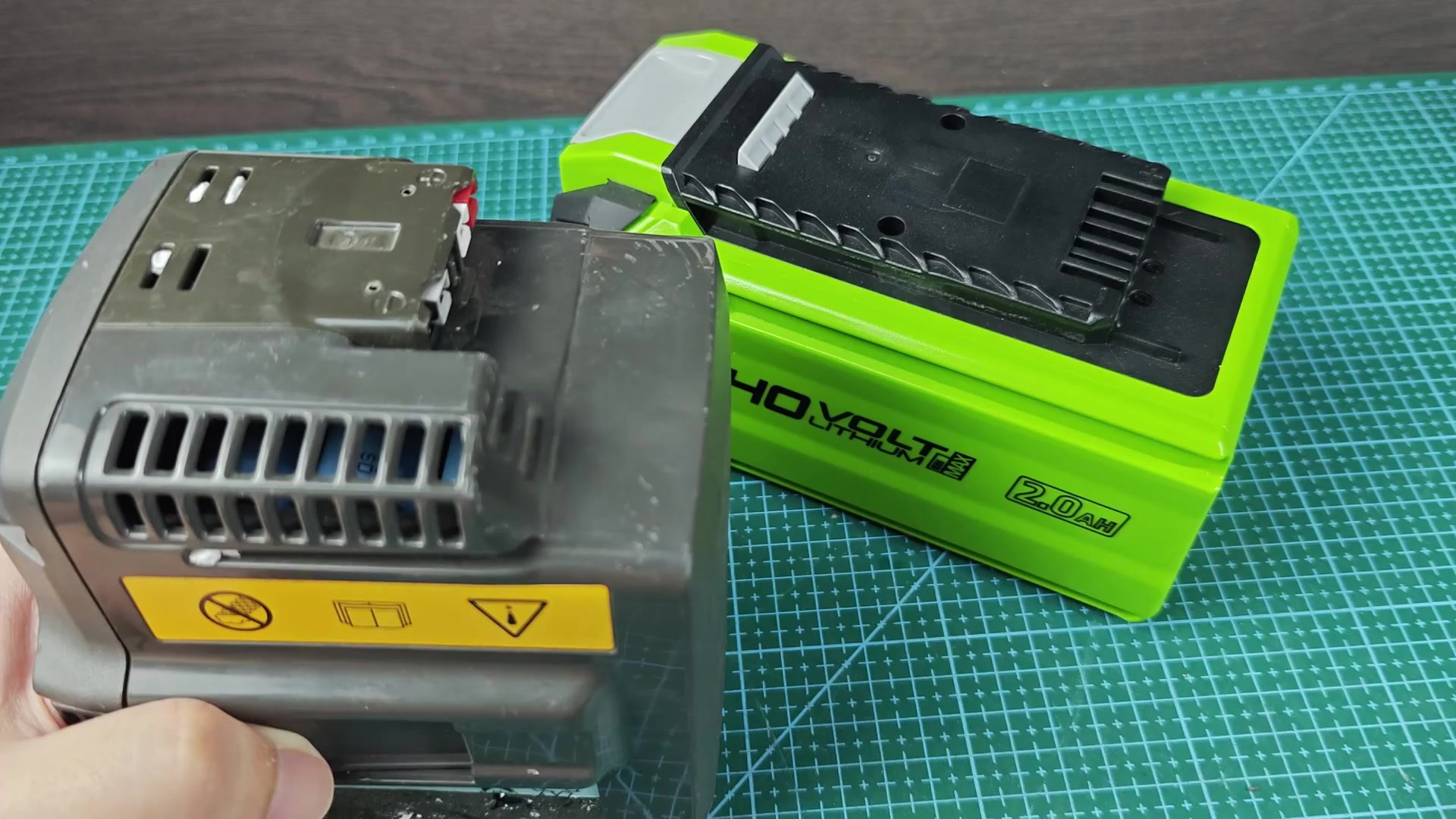
The second method I used was using a battery from a completely different brand of electric tools. For this example I used a Greenworks 40 volt battery because the voltage is within the range of the Husqvarna tools (36-40 volts). Any brand battery within this voltage range should work.
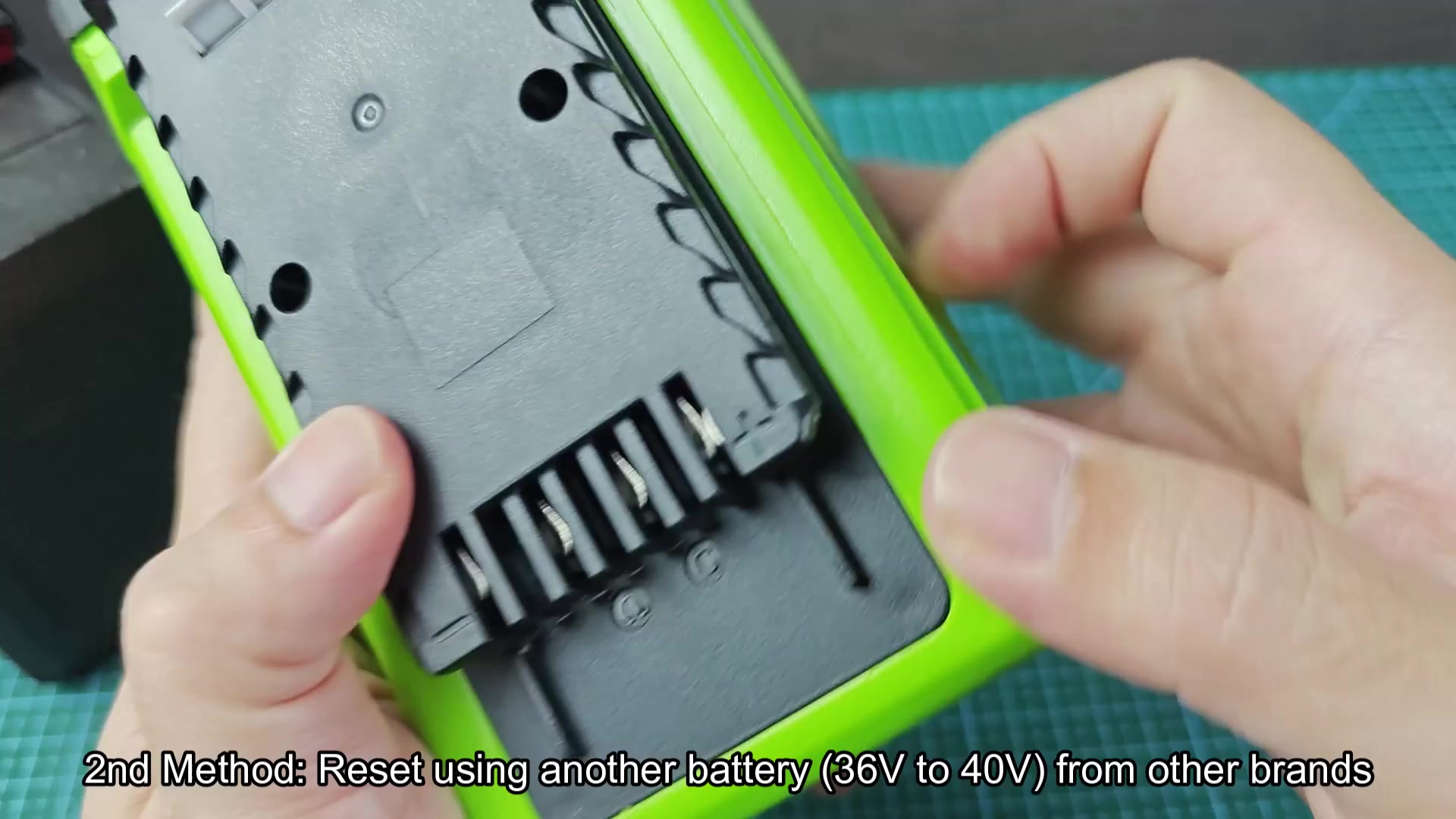
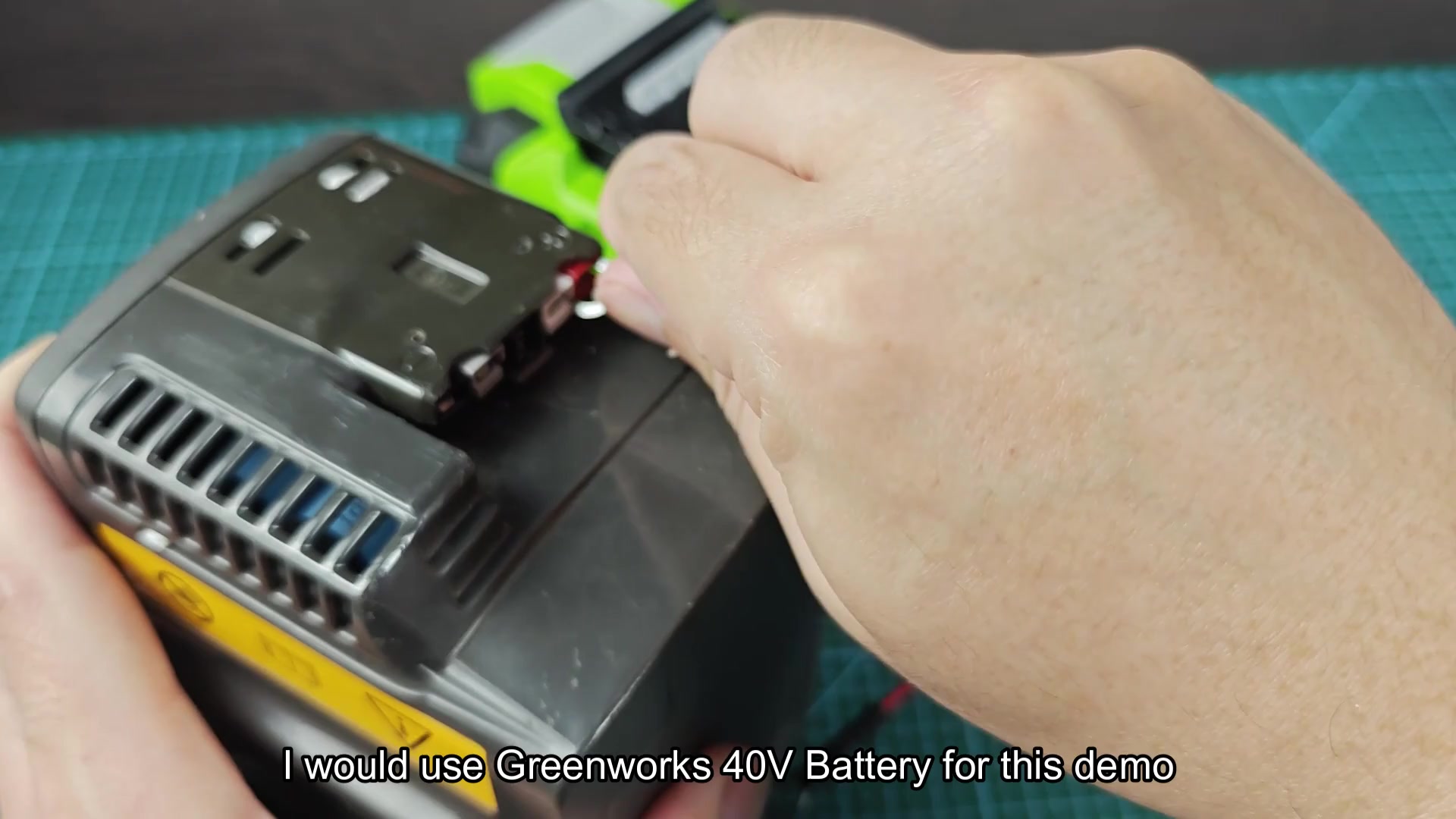
Connected the Greenworks battery to the Husqvarna tool battery the same way as the other method. The positive terminal to the positive terminal on the dead battery and the negative terminal to the negative terminal on the dead battery. The voltage difference between brands of batteries dont matter in this situation. Again I allowed the two batteries to remain connected for fifteen seconds.
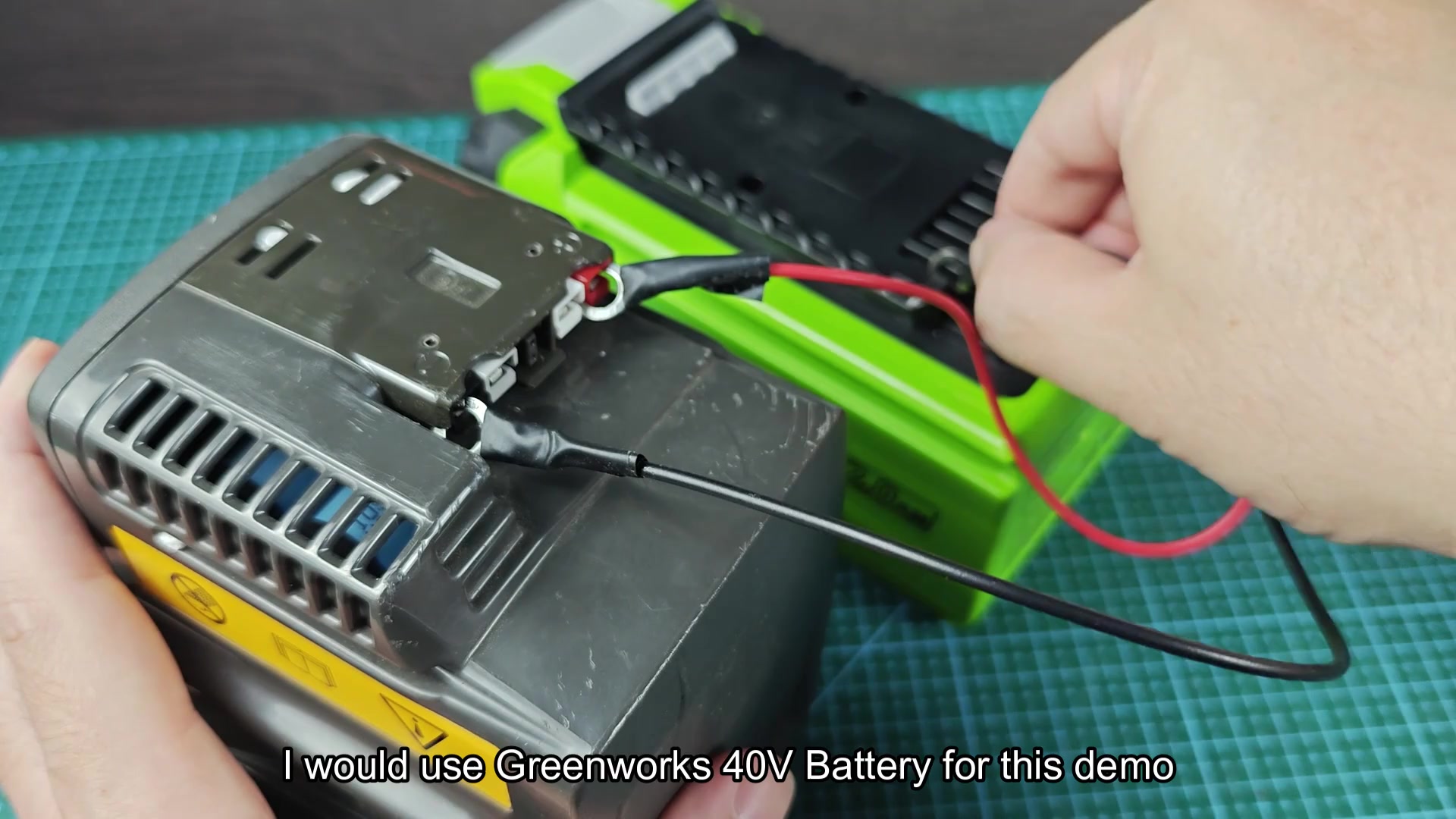
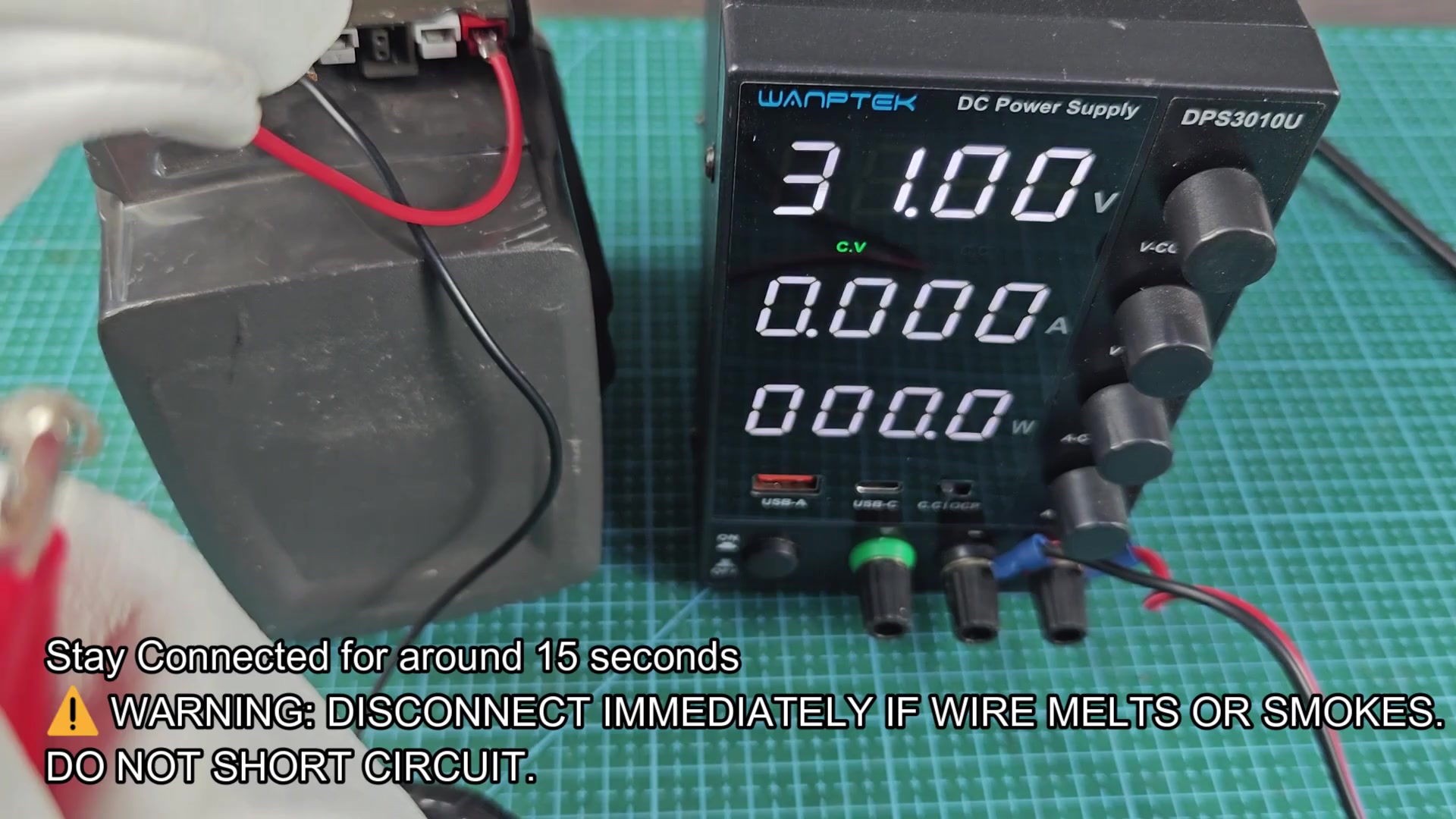
The third method was to employ the use of a DC power supply. This allowed for alot more control over the voltage that the power supply was providing to the dead battery. I set the DC power supply to output between 30 and 40 volts with a current limited to 1 amp to avoid damaging the battery.
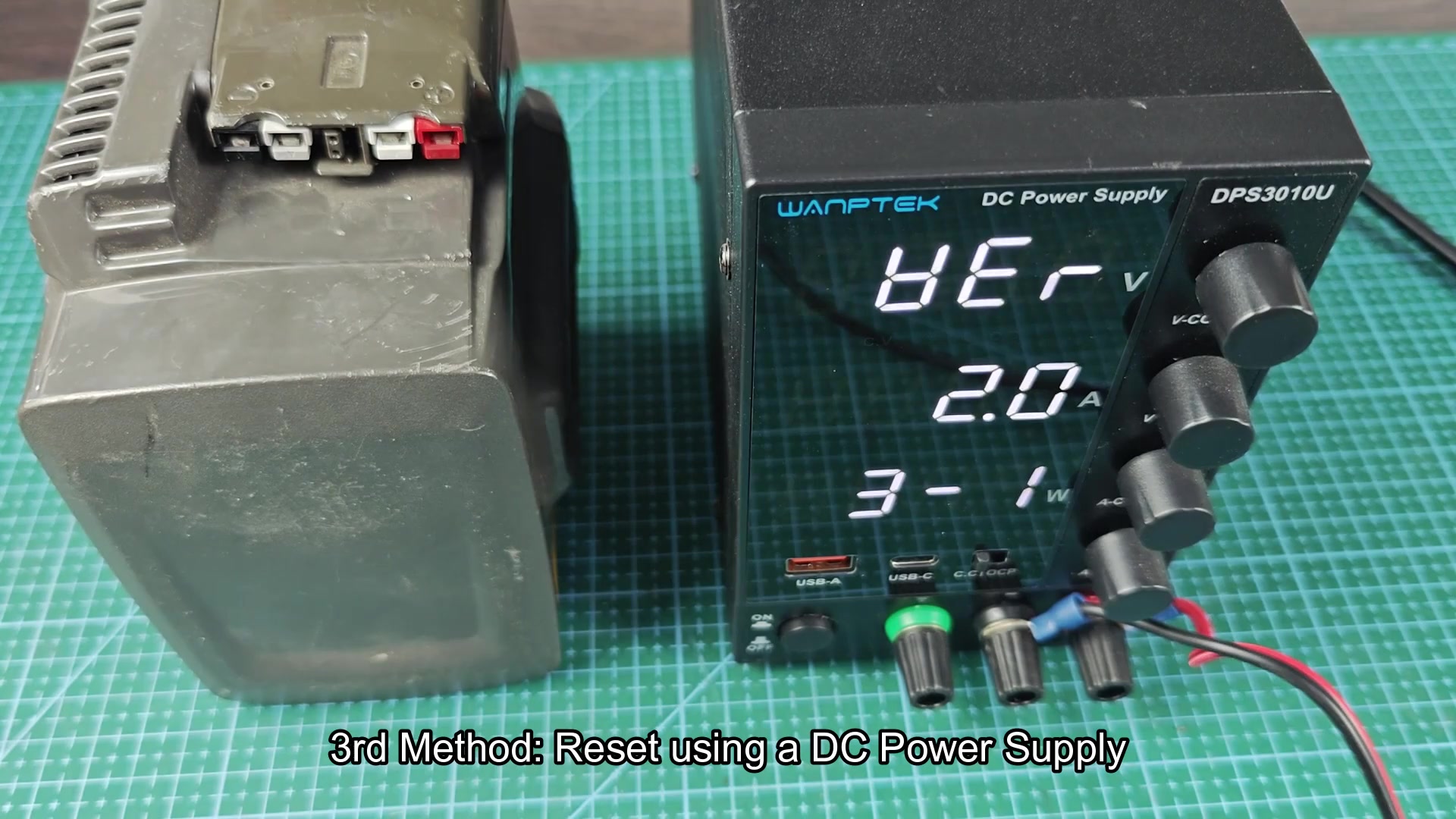
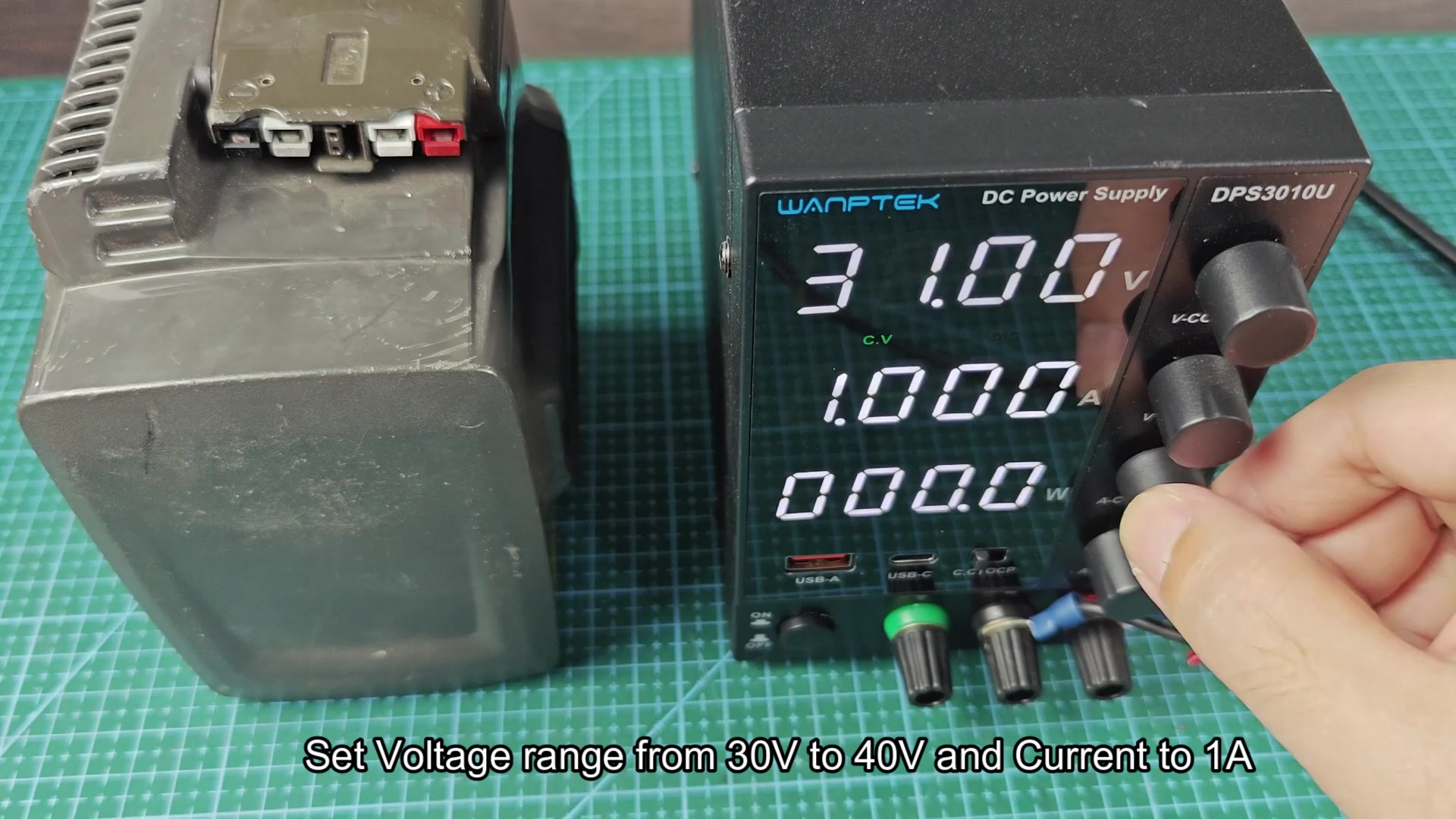
Connected the DC power supply leads to the dead battery leads in the same way as the other two methods. The positive lead from the DC power supply to the positive terminal of the dead battery, the negative lead to the negative terminal of the dead battery. The DC power supply display showed the voltage being provided to the dead battery.
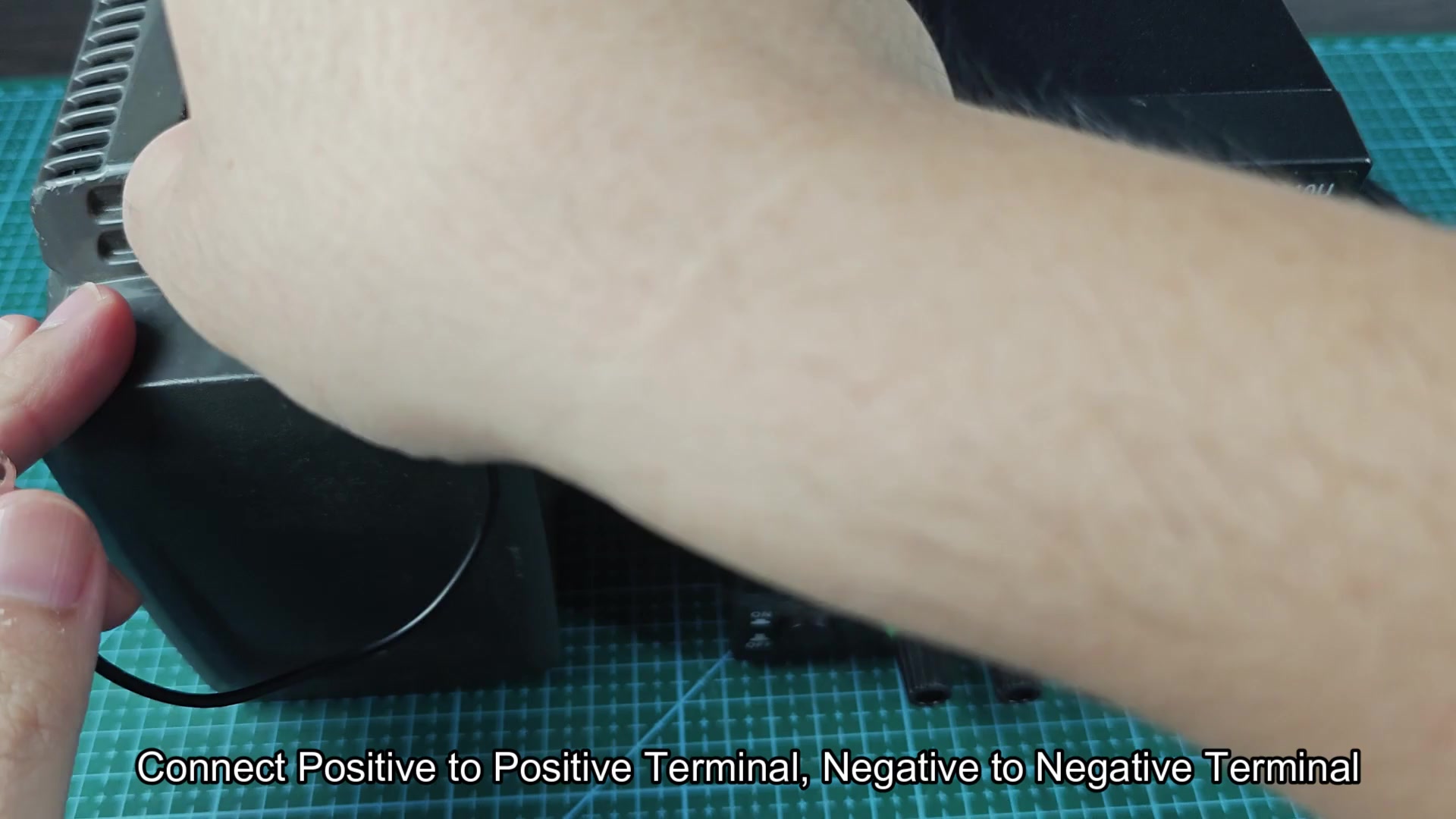
Connected the dead battery to the DC power supply for around fifteen seconds to allow for the voltage to increase within the dead battery. This method seemed like the most controlled method to provide the voltage needed to allow the charger to recognize the battery. This is an easy fix.
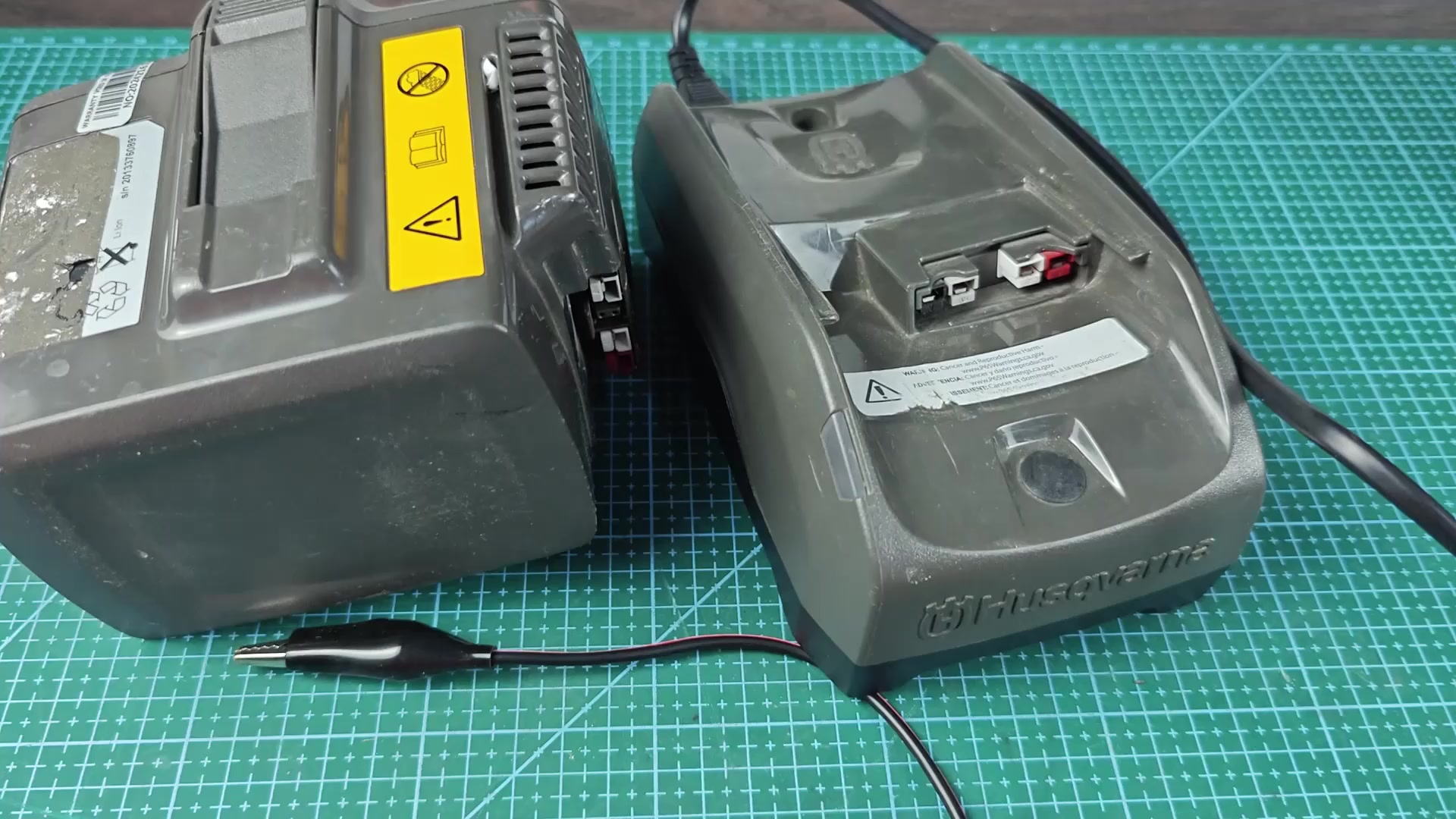
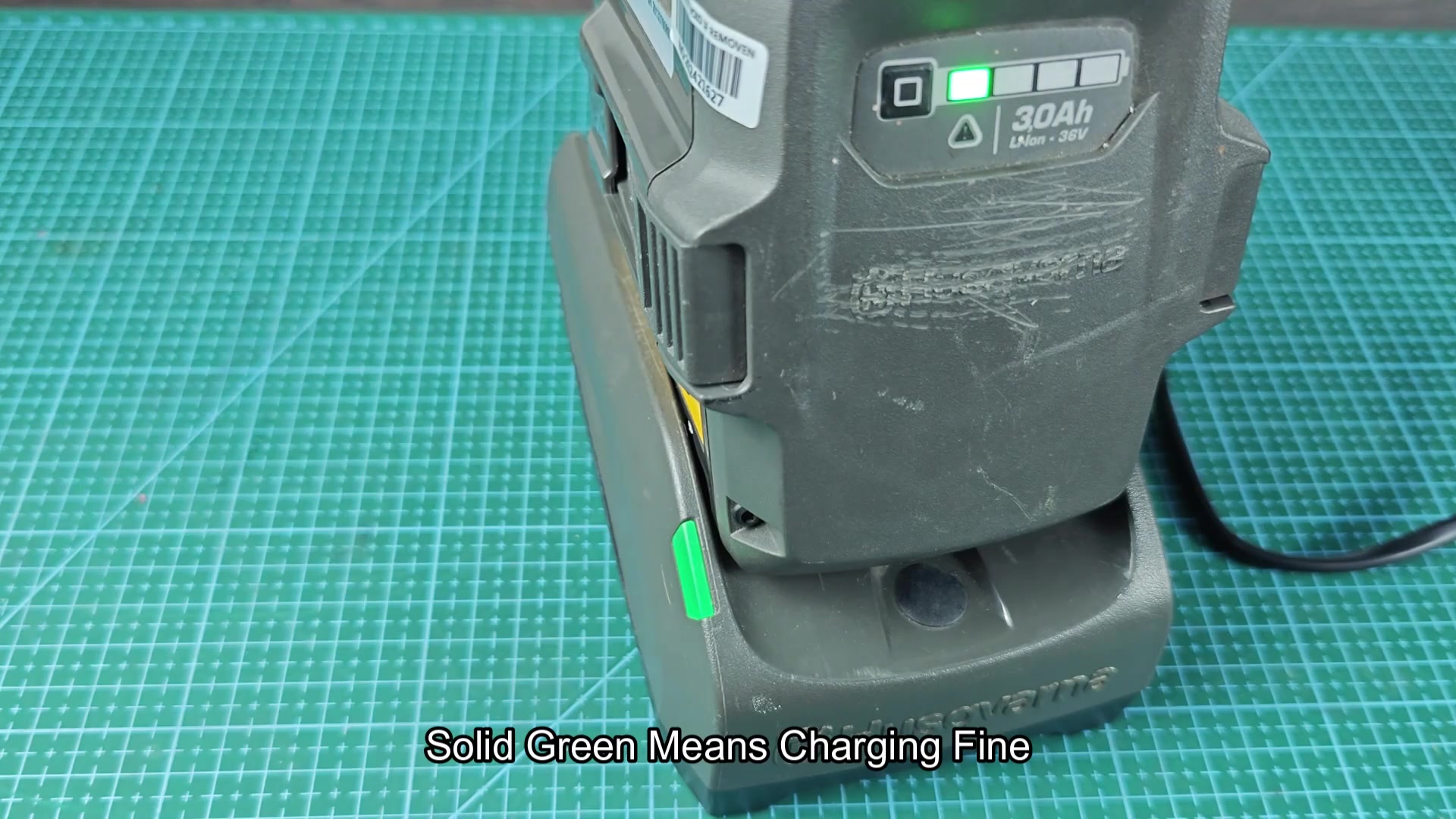
After one of these three methods, I placed the battery back onto the Husqvarna charger to see if the battery was recognized. This time the battery charger did not blink red indicating it recognized the battery.
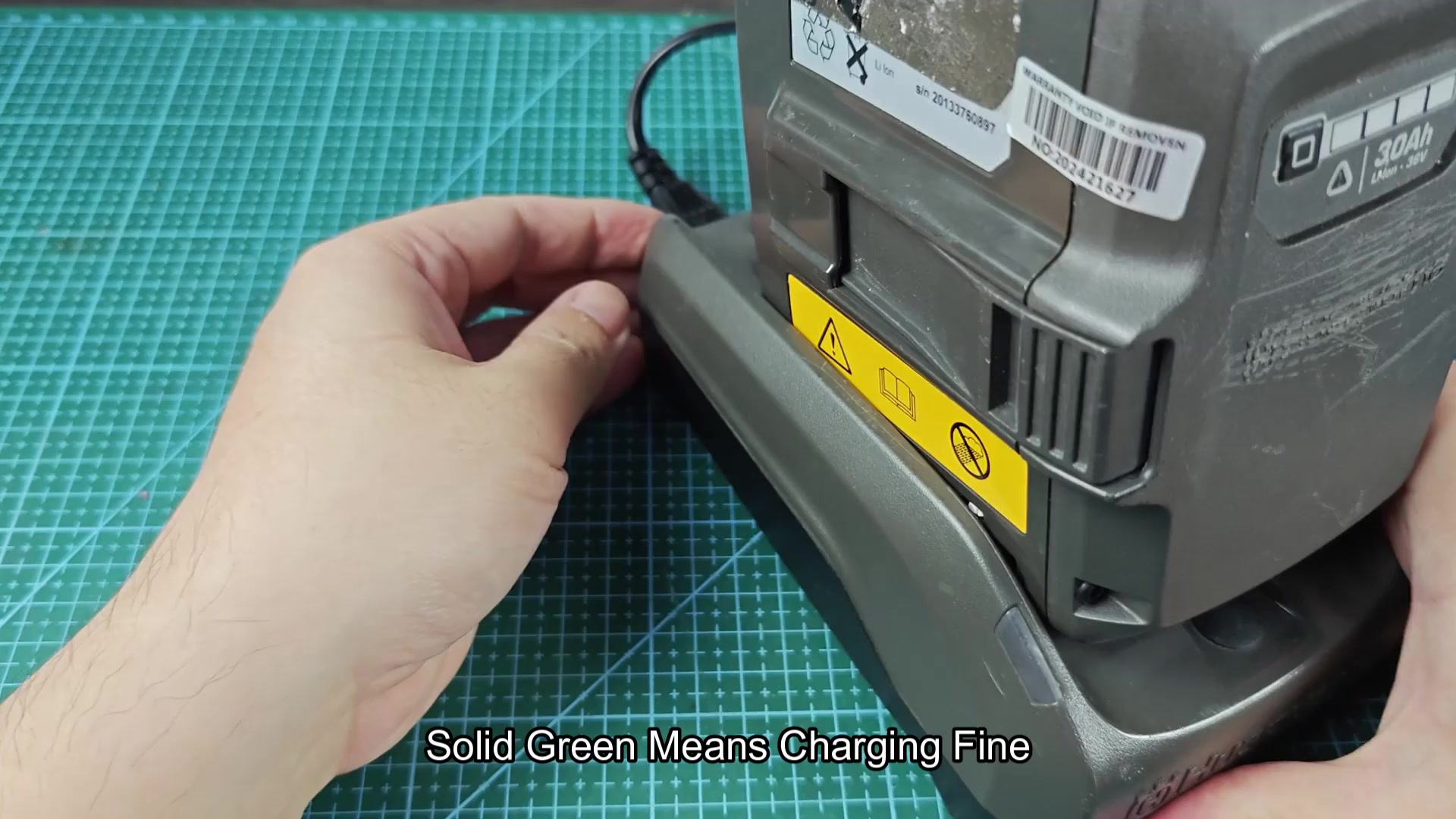
The charger indicated when the battery was properly placed onto the charger with a solid green light. This means the charger recognized the battery and began to charge it back to full power. The battery that was not recognizing earlier is now working again. Worked great.
All three of these methods work in the same way. Each method works to raise the voltage of the battery just enough for the charger to recognize the battery. Each method takes less than a minute and saved a dead battery.
