
Fastener clips are important tools for holding many different objects together. Fastener clips are a subset of the group of fasteners that hold objects like car interiors and kitchen cabinets together. Find fastener clips in any workshop or factory floor.
Fastener clips can accomplish tasks that screws or bolts cannot accomplish. Fastener clips are able to snap into place without the use of tools, they can release from the object that they are attached to when necessary, and they can withstand vibrations that can loosen ordinary fasteners. While many people may reach for the first type of fastener clip that they find in a hardware store, there are different varieties of fastener clips available that can be selected according to the needs of the object that is to be fastened.
The appropriate fastener clip can save a company many hour of assembly time for its products. In addition, the right fastener clip will prevent rattling of assembled products, and will stand the test of many decades of temperature changes and other mechanical stress. The wrong fastener clip will result in loose panels, broken fastener clips, and the frustration of the employee who must reattach those clips.
The following is information that describes the different families of fastener clips.
Different Common Types of Fastener Clips
1. Spring Steel Fastener Clips
Spring steel fastener clips utilize a type of metal that has been tempered to allow it to flex and snap back into place. These types of fastener clips are the type that are found on the interiors of many cars.
Each spring steel fastener clip typically has two or more barbs that insert into a square hole found on sheet metal products. After the clip passes through the hole, the spring action of the fastener clips locks it in place. Despite the simplicity of this fastener clip design, it has lasted for decades in the auto manufacturing industry for a reason.
The spring tension of these fastener clips compensate for misalignments in the panels that are fastened with these clips, and ensure that the panels maintain even pressure when exposed to different temperatures. Use spring steel fastener clips when you need a fastener clip that creates a permanent join between two objects, but which can later be serviced. Items like dashboards, headliners, and wheel arch liners all use spring steel fastener clips.
If the panel that is fastened with spring steel fastener clips is removed too many times, the barbs of the fastener clips will bend and the grip of the fasteners will weaken over time. However, spring steel fastener clips are often the best choice for original equipment manufacturers for the automotive industry because they are inexpensive and fast to install.
2. Plastic Retention Clips
Plastic retention clips have, over time, taken over some of the jobs that metal fastener clips once performed.
Plastic retention clips are made of materials like nylon or acetal materials, which provide corrosion and electrical insulation to the fastener clip. The most common shape for retention clips is a Christmas tree shape wherein the clip has multiple rings of decreasing diameter. Pushing on the clip forces the rings to collapse into the round or square hole of the item that is to be fastened.
After forcing the clip into the item, the rings expand outward of the hole and lock the fastener clip into place. Plastic fastener clips are common in items like electronics enclosures and office furnitures. In these cases, metal fastener clips would cause electrical short circuits or lead to rust on the furniture components.
Because plastic fastener clips have a very low weight, they are an important feature in the shipping of thousands of units of a product. However, plastic fastener clips have a disadvantage in that if the clip is exposed to high levels of heat over time, the plastic will weaken, and the fastener clip will no longer have enough grip on the items to which it is attached. However, choosing the correct grade of plastic will ensure that the clips will last longer than the products that it fastens.
3. Push-on Nut Fastener Clips
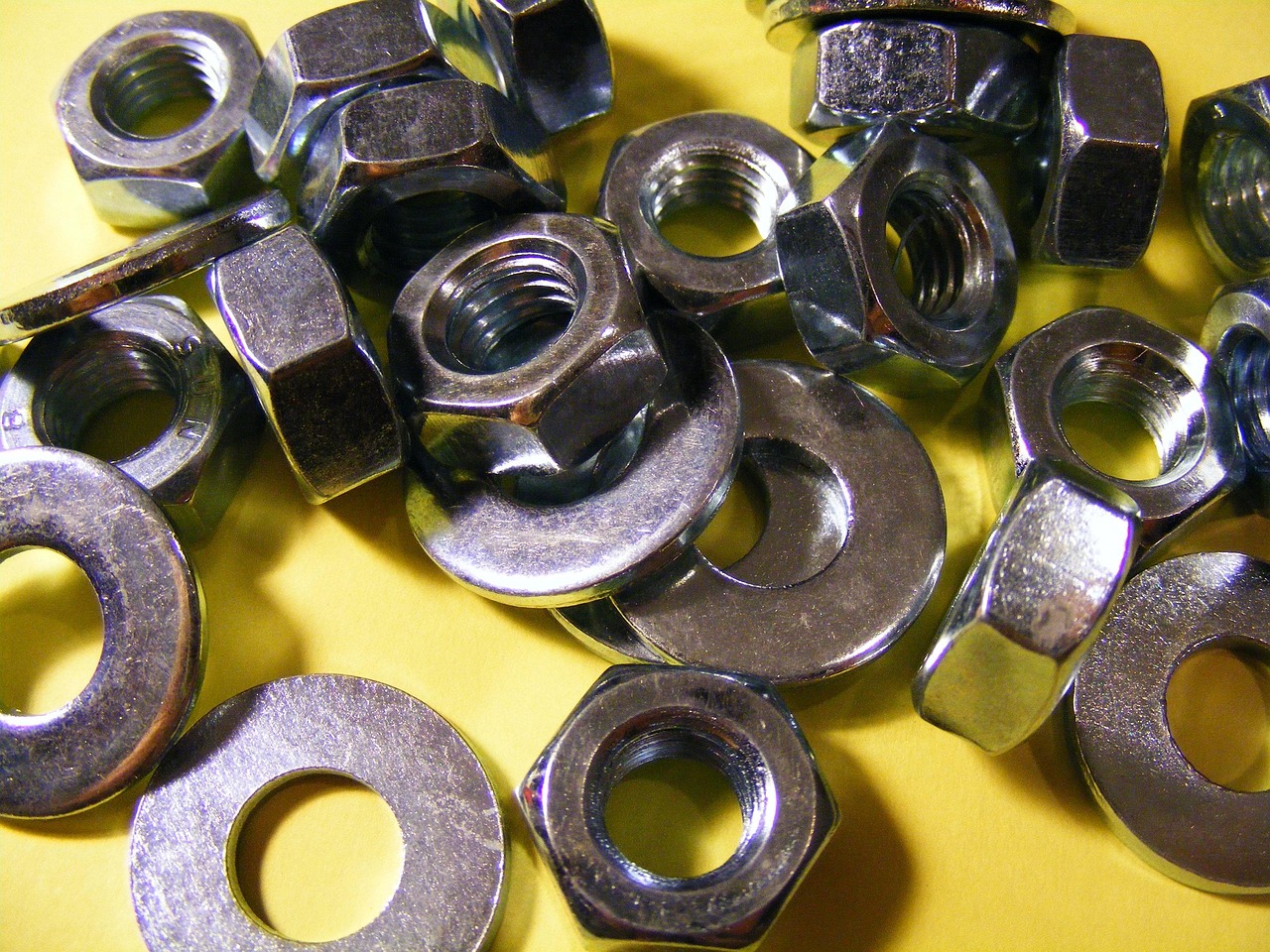
Push-on nut fastener clips incorporate a threaded insert into a spring steel fastener clip. These clips can be slid over the end of the sheet metal or plastic panel that is to be fastened. When the fastener clip is placed over the panel, the nut portion will align with a hole in that panel.
With the alignment established between the fastener clip and the panel, it is possible to drive a screw without having to gain access to the backside of the panel. Appliance manufacturers often use these types of fastener clips because the appliances are often assembled from only one side. The spring steel fastener clip grips the edge of the panel so that it prevents the nut from rotating when the screw is being tightened.
The benefit of push-on nut fastener clips becomes apparent when the tolerances between the sheet metal or plastic items is not perfect. The spring portion of the fastener clip allows the nut portion of the fastener clip to float to one or two millimeters from its proper position. This allows the screw to be able to properly find the threads in the items to be fastened together.
This feature has helped many assembly lines for these appliance manufacturers, even if the engineers who created those assembly lines do not often admit it. However, care must be taken when using push-on nut fastener clips because they are directional in their function. If they are installed upside down, the fastener clip will not be able to provide the floating action for the screw.
4. Cable Management Fastener Clips
Cable management fastener clips have two main jobs; securing the fastener clip itself, and securing the bundle of wires that are attached to the fastener clip. One style of cable management fastener clip includes a flexible loop that snaps into place, while the other style of fastener clip includes a lid that opens and closes like a hinge. These fastener clips are often used in places like server racks and car wiring harnesses.
Many fastener clips of this type also include a mounting foot that pushes into a mounting hole in the rack or car panel. This mounting foot prevents the fastener clip from becoming untitled if the attached cable is pulled. Quality cable management fastener clips allow the user to open the fastener clip by lifting a tab with one finger.
Cheap fastener clips require the use of a screwdriver to open them, and they will often break during the opening process. This reusability of quality fastener clips is especially important in locations like engine bays where reapplying the fastener clips is unavoidable.
5. U-nut Fastener Clips
U-nut fastener clips have a body that is shaped like a U, and made of spring steel.
These clips slip over the edge of the sheet metal or plastic panel to be fastened to. Each of the two legs of the clip can grip the sheet metal or plastic panel. Each of the legs also includes a threaded hole or a floating nut.
These fastener clips are often used to join two sheets of metal or plastic at right angles to each other, or to join a panel to another component that must be removed from the product from time to time. These fastener clips are often seen being used by HVAC installers. The spring tension that is incorporated into quality U-nut fastener clips will create a tightening of the two panels that are joined by the fastener clip as the screw is tightened with a screwdriver.
This created tightening of the panels is why U-nut fastener clips can survive vibrations better than many other fastener clip types. However, limitations of these fastener clips is the thickness of the materials to which they are attached. Most U-nut fastener clips are only able to attach to sheets of metal or plastic that are no thicker than three millimeters.
If these fastener clips are forced to attach to a panel of this thickness or more, the spring of the fastener clip loses its leverage, and the fastener clip will no longer be able to retain its grip on that sheet metal or plastic panel.
6. Rivet-style Blind Fastener Clips
Rivet-style blind fastener clips are used to attach an object to another object even if the second object cannot be accessed from the side that is attached to the blind fastener clip. These fastener clips use a mandrel that breaks off after the fastener clip expands to secure the blind fastener clip behind the object to which it is attached.
Plastic versions of blind fastener clips do not use the mandrel but use heat staking or ultrasonic welding to attach to the sheet metal object. Blind fastener clips are extensively used in the manufacturing of aircraft interiors because weight is a concern, and the interiors must appear finished from the passenger side of the aircraft. One of the costs of the use of blind fastener clips is that they are often single use.
If your product requires that the fastened objects are able to be disassembled in the future, blind fastener clips are not the best option for attaching those objects. You will have to drill out the blind fastener clips when you need to remove the objects. However, in some cases, such as aircraft dashboards where replacement of a single component requires disassembling the entire dashboard, the use of blind fastener clips is worth the effort of drilling out the fasteners.
7. Edge Fastener Clips
Edge fastener clips include a spring steel or plastic component that grips the raw edge of sheet metal or plastic. These fastener clips do not require a hole in the sheet metal or plastic to be attached to it. However, clips of this type are used in items like wire harnesses, sheet metal weather stripping, and decorative trim.
Edge fastener clips are beneficial for assembly lines because they do not require any preparation of the sheet metal or plastic components to which they are attached. To ensure reliability of edge fastener clips, it is important to understand the thickness of the sheet metal or plastic components. Edge fastener clips are engineered to work with only a narrow range of thicknesses, often only half of a millimeter in thickness.
Using an edge fastener clip on sheet metal or plastic of the wrong thickness will either cause the fastener clip to fall off the sheet metal or plastic, or it will distort the edge of the sheet metal or plastic.
8. Speed Fastener Clips
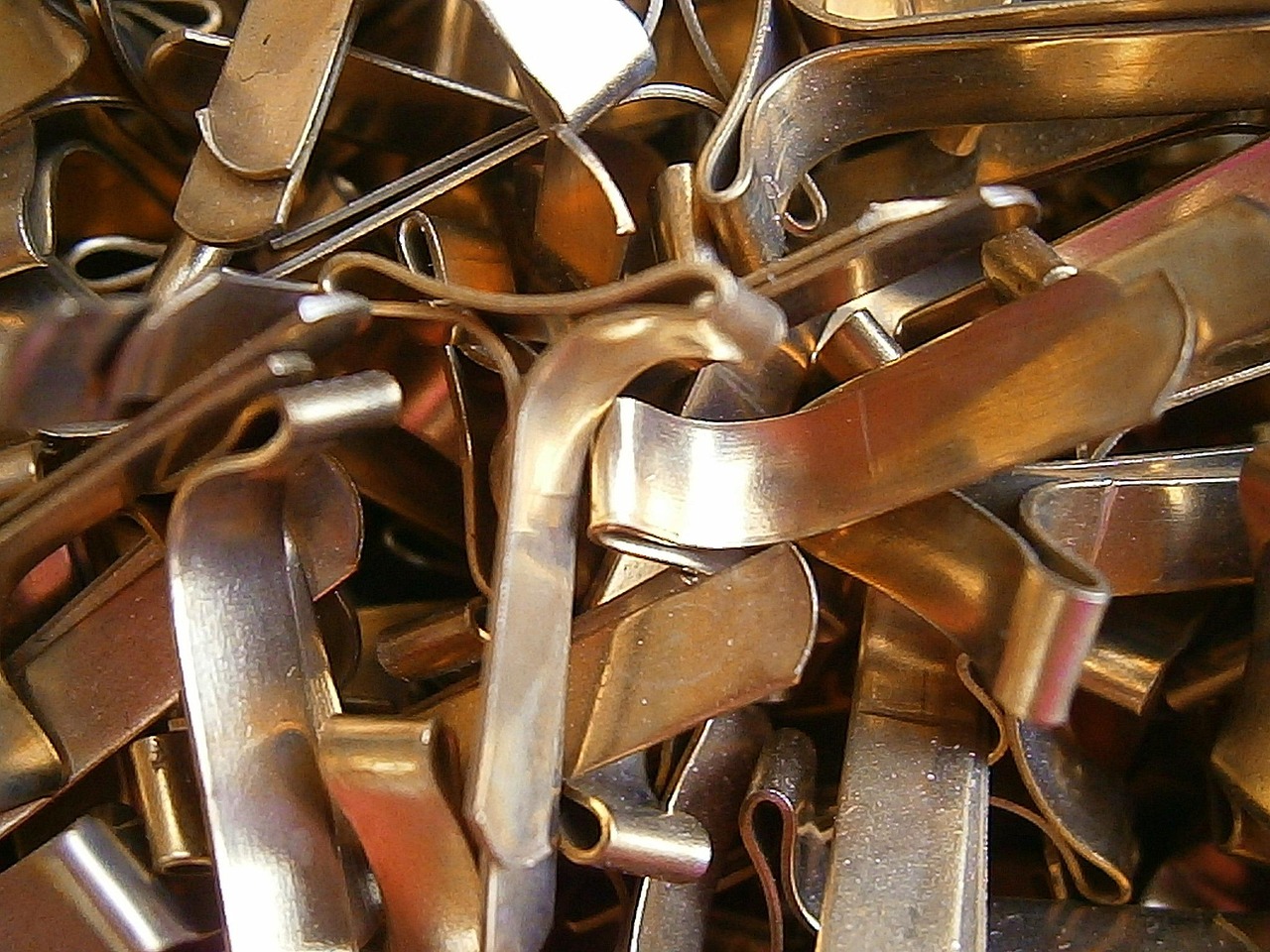
Speed fastener clips earned their name due to their ability to reduce the time required to install the fastener clip into the objects to which they are attached. Many speed fastener clips require only a single tap with a hammer or a push with one’s thumb to permanently attach the clip to the sheet metal or plastic item.
One style of speed fastener clip forms a miniature horseshoe with inward-pointing teeth. If the speed fastener clip is tapped with a hammer on a stud, for instance, the teeth will bite into the shank of the fastener clip, preventing it from becoming loose. These types of fastener clips are often used on nameplates, mirrors, and light fixtures.
The permanent nature of these fastener clips makes them among the fastest types of fastener clips to use. However, the permanent nature of these fastener clips makes them difficult to use if one makes a mistake in positioning the component that is to be attached to the speed fastener clip. If the component is even slightly misaligned with the speed fastener clip, the fastener clip will be destroyed during the attempted removal of the component.
Despite their difficult usability, speed fastener clips are still often seen in high-quality manufacturing facilities. Each of the fastener clip types discussed in this article was developed to solve a specific problem. Some fastener clips are created to work quickly.
Others work best when the fastener clip must be reusable. Still others must be invisible to the user when attached to an object. By understanding these options, and the various problems that they solve, companies will be able to save money and employees many hours by avoiding the purchase of the wrong type of fastener clip.
The next time you encounter an object that has
