
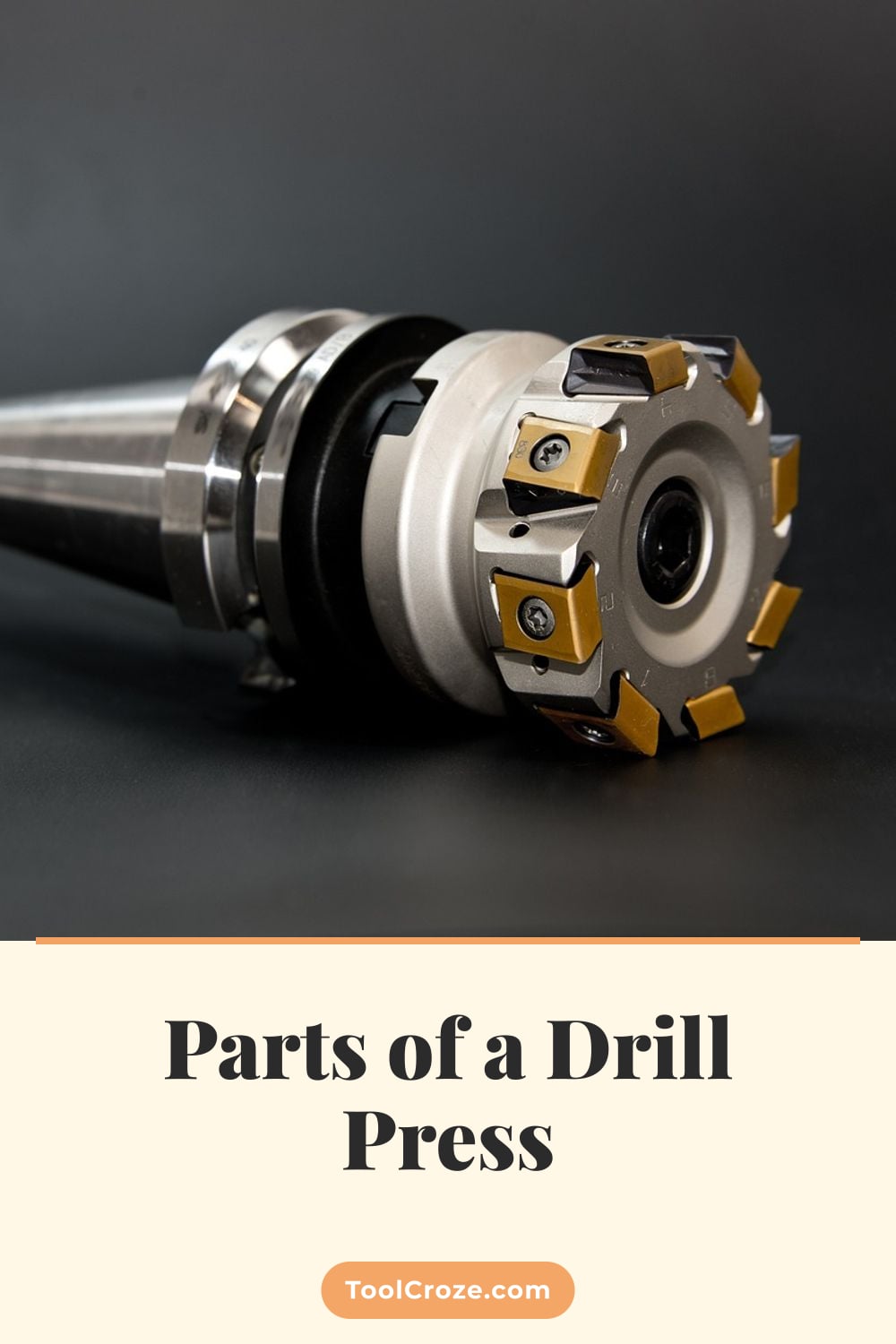
A drill press is a piece of equipment that sits in many workshops. The drill press looks like a serious piece of industrial equipment that many workshops need. As a drill press, it promises precision to the job that it do.
A person could never achieve the same level of precision with a handheld drill. Furthermore, it is the most trusted tool in the workshop for those who understands each of the parts of the drill press. In any logical system, each component perform a specific function.
Drill press components work together to allow you to work efficiently and to complete the project that you have imagined. If you become very familiar with the parts of the drill press, you will eventually find yourself working with the tool instead of fighting against it. When working with drill press components, there is a significant difference between the outcome you get from a respected drill press as against a ruined piece of work.
Do not view the drill press as just another tool with a motor and bit. View the drill press as a coordinated assembly of machine component. Each section of the drill press plays a critical role in allowing the tool to function as intended for you to achieve your desired result.
Furthermore, each component also plays a role in the safety of the operator when using the drill press. When you go through each component from left to right or in the order in which they is encountered when working with the tool, the drill press will reveal itself to be a well-thought-out machine. The base for the drill press will form the foundation for the tool.
Essential Components of a Drill Press
1. The Base
Usually, the base is constructed out of heavy iron or steel castings. This base will serve to anchor the column of the machine and also absorb the vibrations that are created during the drill press operation. The base must be wide enough so as to prevent the drill press from tipping over when you are working with some of the awkward positions for the workpiece.
Many drill press bases will feature slots into which you can insert bolts to secure the machine to a stand or bench. A solid base prevents the tallest drill press machines from wobbling at high speeds of rotation. Any wobbling of the machine results in ruined drill bits and premature wear on the bearings.
2. The Column
This component will never get credit for the excellent performance that the drill press model can achieve. However, it is the component that allows the other parts of the drill press to work at their best. The column section of the drill press will connect the base to the head.
The column should remain perfectly straight from base to head for the drill bit to maintain its precision. The manufacturers of the drill press specify the diameter and the thickness of the walls of this machine component. Larger drill press machines will have a larger diameter for the column to allow it to accept thick steel plate.
Additionally, the column section will carry the rack that allows the table of the drill press to move vertically. The larger the diameter of the column of the machine, the smoother the finish of the tool will feel when you run your hand along it. Furthermore, this finish will allow the table and the head of the drill press to move smooth without any binding.
3. The Drill Press Table

Next in the components list is the drill press table. The workpiece will rest on the table. Most tables allow for tilting movements of up to forty-five degrees to allow for the creation of angled hole in the workpiece.
T-slots will be found on the edges of this table. These slots will allow for the placement of work fixtures such as vises to hold the workpiece in place during operation. Most tables will feature a central hole in the center of the worktable so that through-drilling can occur in the workpiece.
Some tables feature a replaceable insert in the center of the table so that you can swap the bit that ruined your workpiece. Do not underestimate the importance of this component. The head of the drill press contains the motor, the spindle, and most of the control switches.
4. The Head
This is the main work area of the drill press. You will find a powerful induction motor in the head. Benchtop models of drill press tools will have a motor with a power output of one-half horsepower.
Floor-standing models will have motors with a power output of two horsepower. The motor will turn the spindle. A stepped pulley system and a belt will be used to control the rate at which the spindle rotates.
By changing the position of the belt on the pulleys, you can alter the drill press speed. Drill press speed determines the rate at which the drill bit will move through the workpiece. Different materials will have different recommended speeds for the drill bit to rotate.
For instance, aluminum will require high speeds, whereas wood and mild steel will require moderate speeds. The spindle will hold the drill bit. Additionally, it will travel within high-quality bearings.
5. The Spindle and Quill
These bearings are what will make the drill press feel as smooth and responsive to your work as when you bought the tool. The quill will surround the drill bit and will be able to move in and out of the drill press. The rotation of the handle that is attached to the quill will allow you to feed the bit into the workpiece.
Many drill presses will feature a depth stop on the quill so that you can set the depth from which the drill bit will exit the workpiece. This component is extremely useful during operation. Attached to the quill of the drill press is a feed handle also called a star wheel or a crank.
6. The Feed Handle
The handle features three or four levers to which you can place your fingers to gain leverage when feeding the drill press into the workpiece. Some drill presses will have a manual feed handle that you can use to manually move the quill. In some cases, there will also be a power feed that will automate the downward movement of the drill bit.
The spring within this component will allow the quill to return to its starting position when you release the handle. By adjusting the tension of this spring, you can make the drill press feel like new again. If the spring is too tight, the bit will remain within the workpiece.
Alternatively, if the spring is too loose, you will fight the machine every time you attempt to crank the handle. The most recognized component of a drill press is the chuck. The chuck will secure the drill bit.
7. The Chuck

The three jaws will close around the drill bit when you turn the handle or use a key to tighten them. Some drill presses will feature keyed chucks, while others have a keyless chuck that still functions well. To ensure precision in your workpieces, it is a habit to check the runout of the chuck with a dial indicator.
Even the tiniest deviation from perfect alignment will result in the drill bit creating enlarged holes within your workpiece and break small drill bits. Depending on the make of the drill press, you may have different sizes of chucks. For example, there may be a three-eighths-inch drill bit chuck used for precision work and a five-eighths-inch drill bit to allow the attachment of large Forstner bits.
8. Speed Control Systems
Most older drill presses will have a selection of speeds with which you can operate the tool. These speeds are obtained by moving the drive belt on the machine from one set of pulleys to the next. Each movement of the drive belt will select another speed for the drill press.
Most machines will feature speeds between 500 RPM and 3000 RPM. Moddern drill presses have an electronic variable speed control to allow for better selection of rotational speeds without the need to change the position of the drive belt. Both speed controls have their merits.
The stepped pulley system forces you to think about the speed of your drill press prior to use. The electronic speed control will let you select your desired speed while the drill bit is still spinning. This feature is helpful when trying to find the perfect speed to work with a new material.
The goal is to achieve the right cutting speed for your workpiece so that the drill bit will cleanly shear away at the material instead of rubbing against it and overheating. The depth stop will feature a threaded stop rod that prevents the drill press from drilling beyond a set depth. The depth can be set once with the stop rod, and any subsequent holes drilled will stop at the same depth.
9. The Depth Stop
This component transforms a drill press into a production machine. Production lines depend upon the accuracy of the depth stop feature of the machine. Woodworkers will use it to drill dowels.
Cabinetmakers will use it for shelf pins. Metalworkers will use it for making counterbores in a workpiece. Additionally, the best depth stops will feature a scale so that you can set the depth of drilling.
However, you should still use calipers to verify that the depth of your workpiece is as accurate as desired. The drill press features a large switch so that you can turn the power off of the machine by just tapping it with the knee or elbow when something undesirable happens during operation. Some newer models will feature a built-in work light that will shine on the workpiece with a focus on the drill bit.
Some models will have a laser crosshair that will aid in drill placement. Some models will have digital depth readouts for the workpiece. These features are helpful during operation.
10. Safety Guards and Accessories
However, they are of less importance than the soundness of the drill press machine components. You should always respect the built-in chuck guard so that you are protected from flying bits of metal. Alternatively, you can add a aftermarket chuck guard if the built-in one isnt to your satisfaction.
The guard will prevent metal chips and broken drill bits from hitting you. By understanding each component of the drill press, what it does, and how it works together to complete a project, you will have transformed the intimidation factor of the drill press into a precision tool for your workshop. Once you have a firm understanding of the drill presss components, you can finally conquer any project that you take on with this tool.
The next time you enter your workshop, dedicate a few minutes to reviewing the components of the drill press. By doing so, you will have effectively paid homage to the machine that makes your workshop function. You will have given your workshop a precision tool that you can count on to do the job that it was designed to do.
