
Now you may be asking yourself if the voltage rating is such that you can use all of these tools together. Both Ryobi and DeWalt label their packs at 18V and 20V MAX respectively. Seems pretty close so maybe it’s some sort of common standard? Nope. That didn’t work out to well when I attempted a direct switch.
I set everything up side by side. There’s a Ryobi impact driver. Then there is a DeWalt impact driver. They is in the same work area and both look about the same in size and build quality. It is not even close.
Testing the Adapter Performance
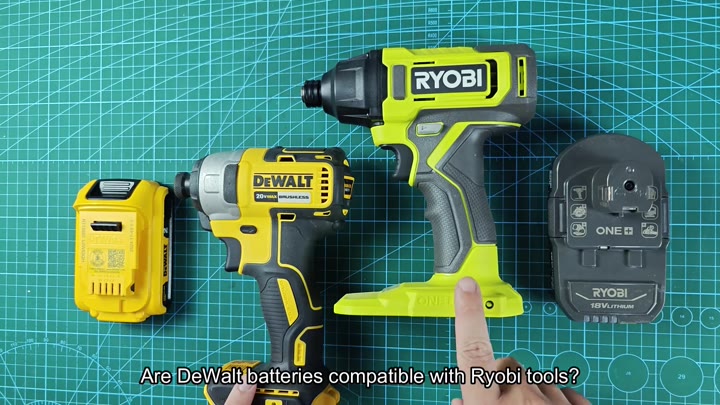
Short answer: No. They don’t fit on there right out of the box.
Here’s why: The Ryobi has a completely different system for its power source, with a tower and stem-type design. There’s a unique foot shape to DeWalt batteries that don’t align with that tower.
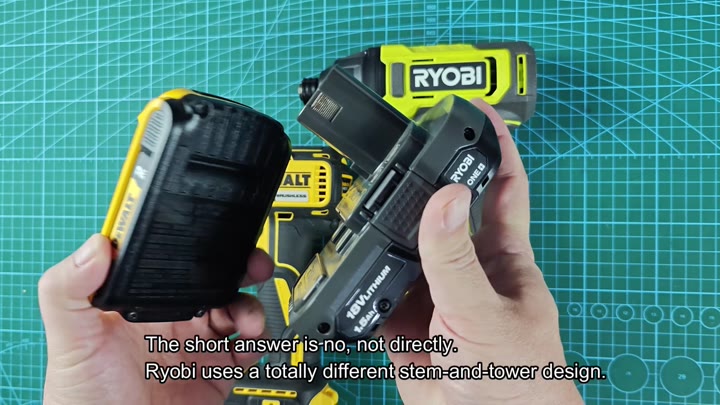
If you try to force it, you’re probably going to ruin both.
Let’s look at the actual physical limits though. They don’t line up on the connection points. Nothing mechanically obvious can close the gap. It doesn’t matter that the two has matching voltages in this situation. So, it forces them into their own ecosystem by default.
Therefore, I sought a workaround.
There are aftermarket adapters that bridge the gap in question. In other words, it will let you run your DeWalt pack on your Ryobi tool. At first glance, it sounds like a perfect solution. Why bother buying two sets of battery if you can just share one?
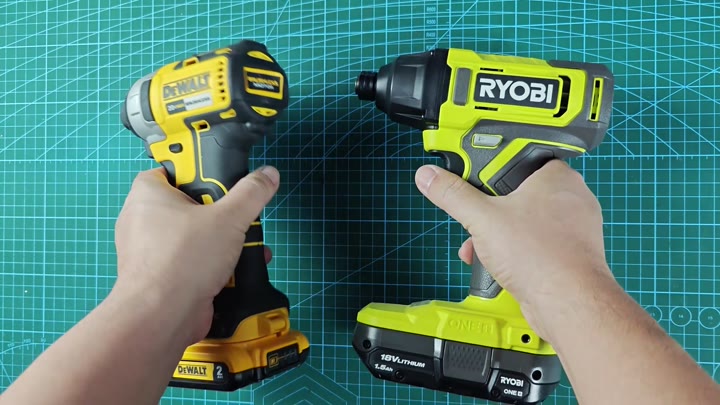
So I pulled out a common one for the experiment. It says it converts from 18V to 20V right there on the label. Even more important is the warning, “Not for use in chargers.” That battery will never go back onto a Ryobi charger.
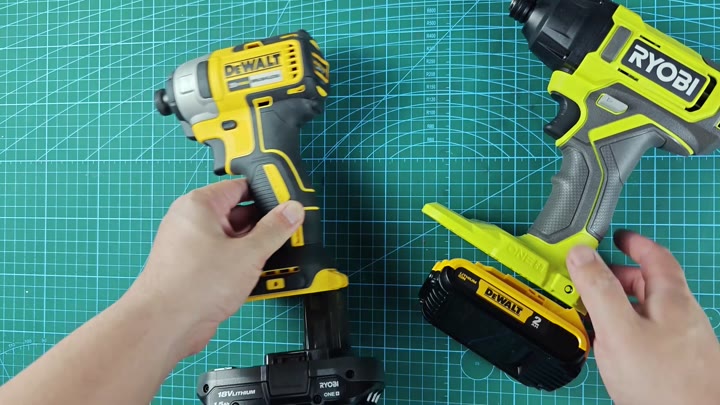
That’s a pretty severe shortcoming from the get-go.
I found it to be fairly secure when attaching the battery. The adapter fits onto the Ryobi tool’s battery port. And then the DeWalt pack snap on to the adapter. It feel secure when you first handle it.
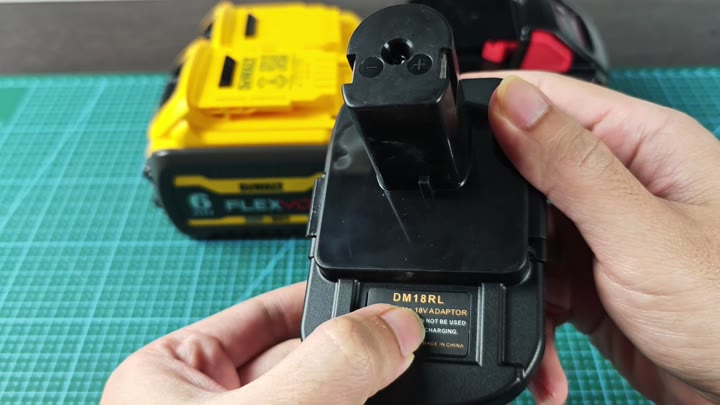
Initially, I tried doing a few lightweight chores. There was no problem drilling holes in softwood. The trigger functioned as it should. It provides a satisfying amount of torque for light assembly chores. If you do a lot of medium duty chores, you could of gotten away with only having one set of batteries and still have some left over.
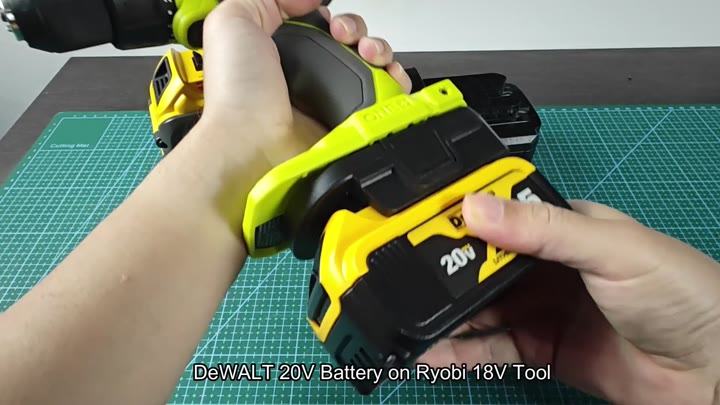
I did however overload the device and that’s where things went bad. It was noticeable how much the performance suffer from all of the heavy drilling. The motor seemed to struggle under pressure. This adapter is not designed to perform well under heavy loads.
This makes it unsuitable for any sort of demanding construction projects. So there are two big compromises here. You don’t get to use your Ryobi stations to charge the battery. And you don’t get full power when heavily loaded.
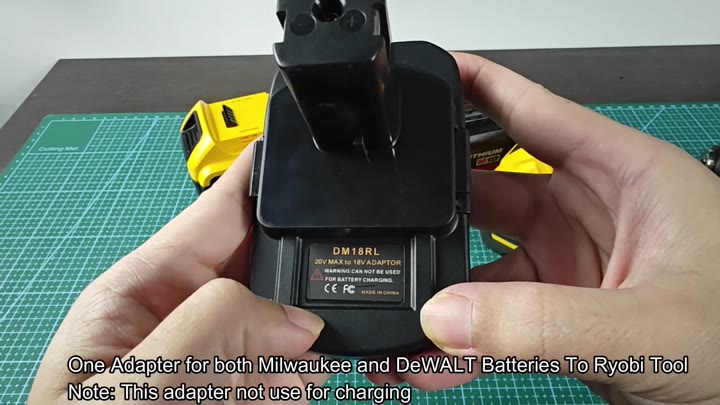
That’s a substantial set of tradeoffs for pros. For lighter work? Sure, it’ll do the job. Don’t count on max output, though.
And that’s why the systems stay distinct. There is a price to pay for interchangeability. Ultimately I found myself leaving them apart when it realy mattered. Ugh. Use native packs. Spare yourself some coin. Finito.
