
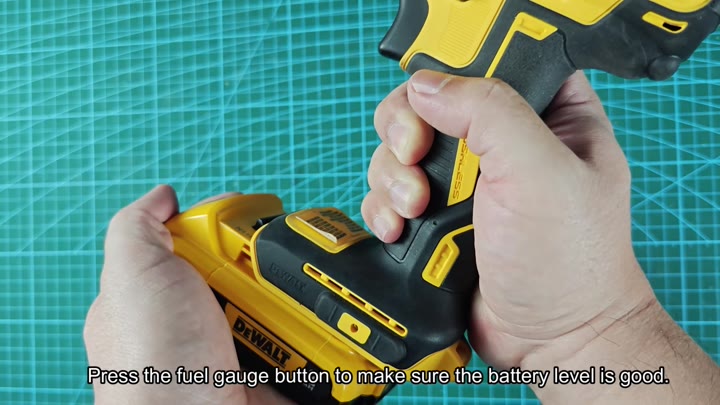
The DeWalt DCD777 drill-driver feature a 20V battery that simply slides into place and locks in snuggly. Before getting started on your project, it’s a good idea to press the fuel gauge button to ensure it have sufficient charge so you don’t lose power halfway through working.
Understanding Modes and Settings
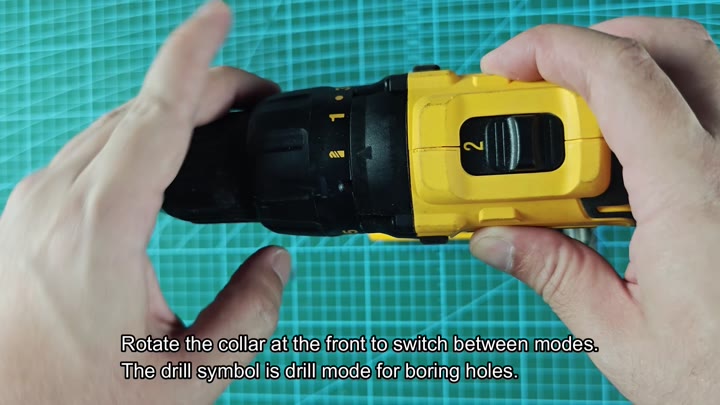
Next, choose the right operating mode, which is controlled on this tool through rotation of the collar up front. There are two modes: The first is the hole-boring mode; the symbol for that are the drill symbol.
This is distinct from the numbered torque-clutch settings used when you’re driving screws into something, since you don’t want to strip the head off a screw and you also don’t want to damage whatever it’s screwed in. Those numbers let you adjust the fastening process to prevent stripping screw heads or damaging material. Lower-numbered ones gives you more control over the screwing process.
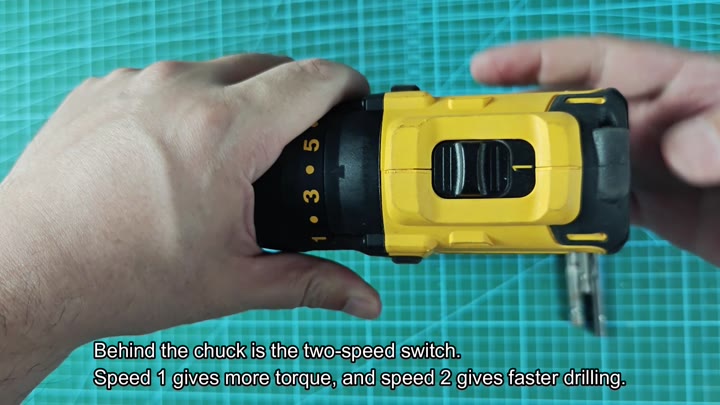
But there’s another little gem inside the tool too. Behind the chuck is a two-speed selector which adjust to suit the job. For example, it give you more torque when driving those stubborn screw on speed 1. It provides a higher speed on speed 2 for easier drilling in softer materials such as wood.
The lever situated above the trigger switch the drill from forward to reverse. This feature not only helps remove embedded screws but removes them effortlessy in reverse without much fuss or force.
To screw something in, you select a bit for the screw size and then put it into chuck. Turn the handle clockwise, tightening the chuck onto the bit. It’s messy and inefficient if your bit isn’t tight.
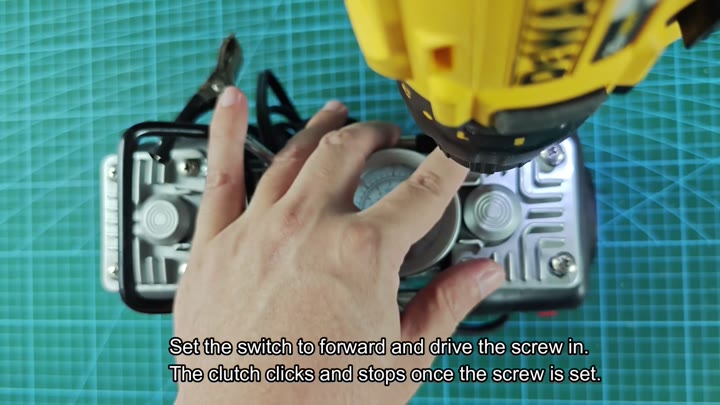
To screw in, switch the drill to forward position; as soon as the screw seats itself, the clutch kicks in stopping the screw. That lets you know not to continue turning on the drill.
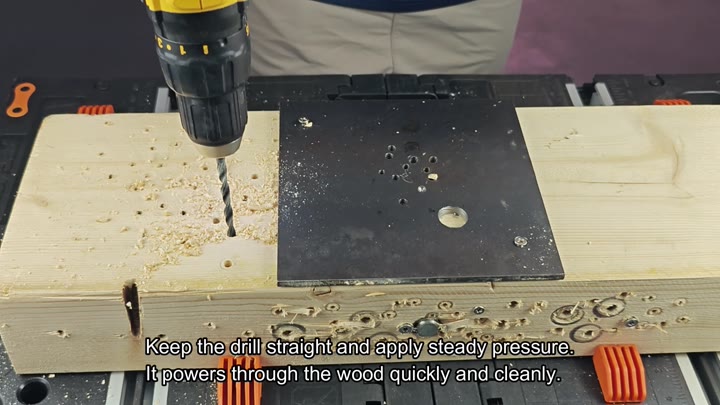
Drilling holes is a piece of cake. You want to use constant downward force while keeping the drill perpendicular to surface. It doesn’t bind up but it rips right through the wood very fast. As the hole gets deeper, shavings of wood will start coming out and you’ll have total control over the drill.
Let’s look closer at hammer drills to see how they work with concrete. Unfortunatley, the DCD777 does not feature a hammer mode; therefore, it will not be an effective option if you’re doing really tough masonry projects.
It would of been enough for occasional light masonry work, but if you need something more robust on really hard concrete, go get yourself a real hammer drill. Lighter duty around the home is where this tool fit in better.
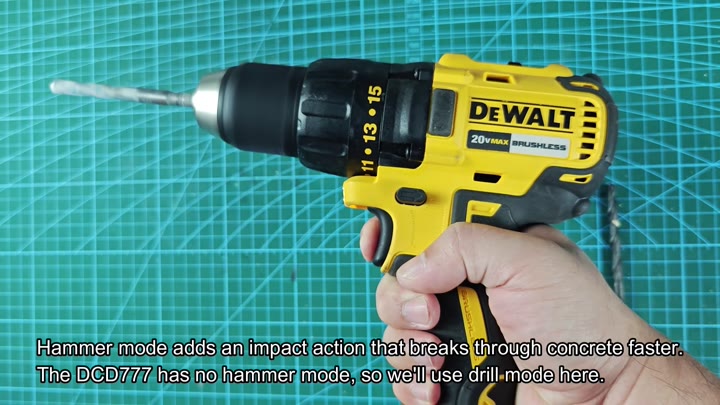
In terms of use across different materials it’s good up to a point. Drilling and driving screws into wood are no problem. However, because it lacks a hammer setting, its use in heavy masonry work are limited.
Knowing how the modes operate will help you get most out of this tool. Set your drill speed to make drilling easier and use the clutch for different sized screw. Overall it does what it needs to do in a workshop without letting down in practice.
