
A well-finished concrete pour provides numerous benefits that go beyond merely providing an excellent-looking concrete pour. A well-finished concrete pour will be resistant to cracking, it will shed water that lands on the poured concrete, it will be safe to walk on, and it will stand the test of time for many decades longer than a sloppy pour of concrete. The difference between a professional concreting job and a dusty, uneven slab of poured concrete usually comes down to the tools that the concreter use.
Using the correct finishing tools will ensure that the poured concrete provide all of the benefits listed above. Using the correct tools will save a concreter time in that they will avoid becoming frustrated at encountering problems that could have been avoided had the proper tools were used during the pouring of the concrete. The following tools will have an impact on the outcome of every residential and commercial pour job.
Essential Tools For Professional Concrete Finishing
1. The Bull Float
The bull float comes out first while the poured concrete is still in its plastic state. This tool has a wide magnesium blade or a wide aluminum blade. The tool works to push the aggregate beneath the poured concrete and allow the cream (the mixture of cement and sand) to come to the surface.
The magnesium bull float is the preferred tool in that the magnesium is less likely to stick to the poured concrete than wood, and the magnesium tools are also lighter than those made of steel. A wooden float will create problems on a large slab of poured concrete because it will tear at the poured concrete. The bull float will prepare the concrete for the remaining steps in the pouring process.
2. Hand Float
If this tool is skipped or performed poorly, there will be bumps and low spots in the poured concrete that could of been avoided. When the bleed water has evaporated and the poured concrete can support the weight of a concreter without sinking below an inch in thickness, the hand float will be used. The hand float has a rectangular blade that is typically made out of magnesium or wood.
This tool will further compact the poured concrete and fill the pores in the poured concrete. The magnesium hand floats are the moddern standard because they do not react with the cement like wooden tools can react with the cement. Wooden hand floats will leave a slightly rougher texture on the poured concrete because wood will create more drag when being used in these ways.
However, exterior poured concretes may need that slightly rough texture. The motion used with the hand float will be the same for both magnesium and wooden tools. The motion will use half-circle arcs to compact the poured concrete to cover each square foot of the pour site.
3. Darby Tool
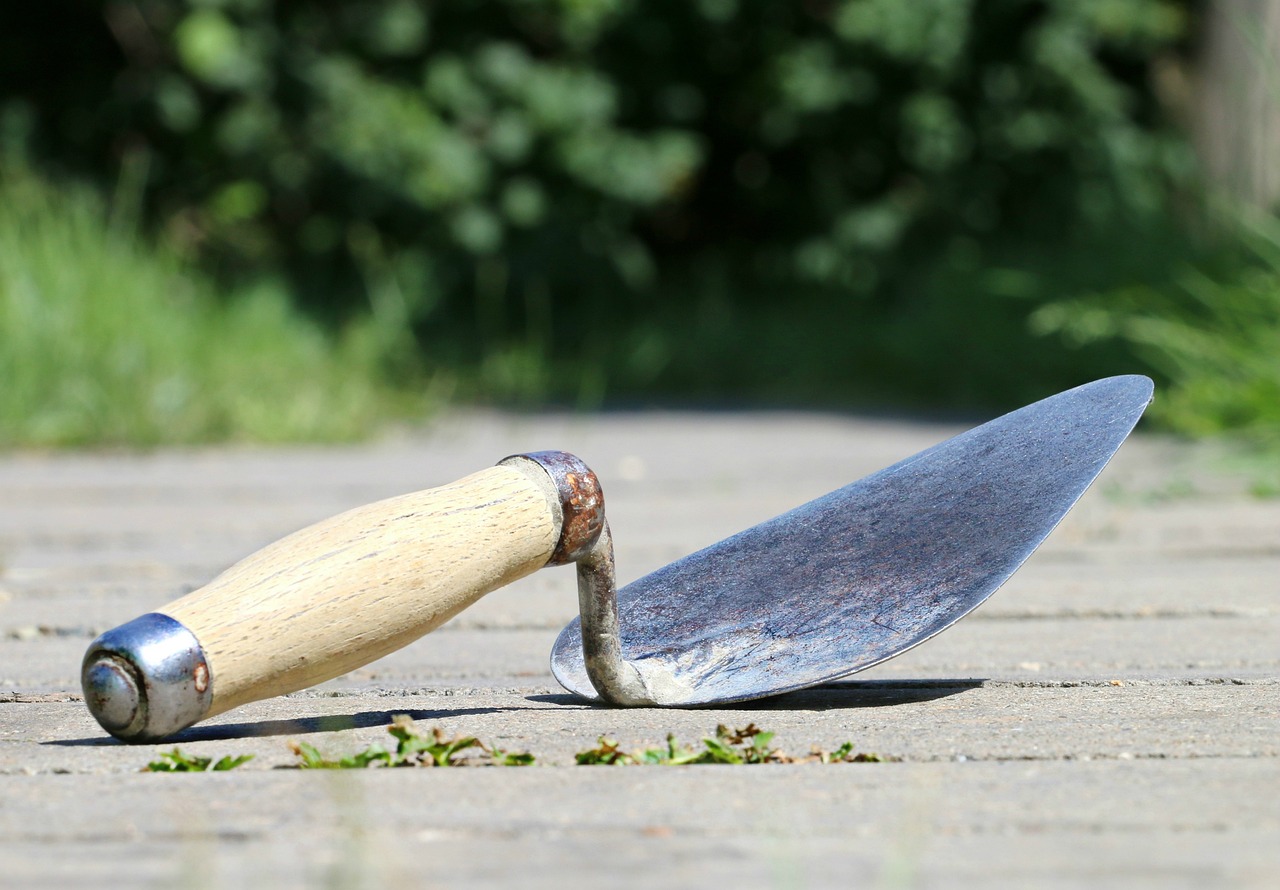
The darby tool works similarly to the bull float but on a smaller scale. The darby is a longer hand float and typically ranges between 2 and 4 feet in length. The darby will be used after screeding but before using the bull float when setting concretes in tight spots, such as steps.
The darby tool is rigid with handles on the tool that allow more pressure to be applied to the poured concrete where it is needed. The darby will be used when the poured concrete is still soft enough for a bull float to create waves in the poured concrete. The darby will help smooth high spots in the poured concrete and help level the low spots.
However, unlike a bull float that has a flexible metal blade, the darby will not create the slight bow in the poured concrete.
4. Edger Tools
The edger tools are used to produce the margins of the poured concretes. These tools are typically hand tools that have a curved lip that allows them to shape the poured concretes margins and the flat body portion of the tool helps to float the poured concretes margin that butts against the poured concretes edges.
Most crews will carry both a one-half inch radius edger for paved driveways and a one-fourth inch edger for sidewalks and patios. The one-fourth inch edger will produce a less prominent edge for sidewalks and patios. Additionally, stainless steel models are preferred because they will stay cleaner over time and do not rust when hosed off at the end of the day.
If the edgers are used too soon the poured concretes will produce a rounded and weak edge that flakes over time. Additionally, using the edger too late into the concreting process will meet resistance from the poured concretes. Thus, using the edgers at the appropriate time is crucial for success with concreting.
5. Groover Tool and Concrete Saw
The control joints will prevent the poured concretes from cracking in random spots. The control joints that are cut into the poured concretes can be tooled with a groover tool or they can be saw-cut later in the pour with a concrete saw that incorporates a diamond blade. The groover tool is a handheld V-shaped tool that is attached to a handle that will be used to cut the control joints in the poured concretes.
The three-quarter inch deep groover tool attached to a long handle will allow the concreter to walk the joint rather than having to kneel on the poured concretes. For deeper cuts, a concrete saw will be used once the poured concretes have cured enough to allow the use of a concrete saw. The decision of how to create the control joints will depend on time constraints and desired appearance of the poured concretes.
Tooled joints will be softer than saw cuts.
6. Trowel Tools
The trowel tools will create the dense and smooth concretes that are desired. These trowels have flat blades that are flexible that are of different sizes and have different degrees of polish.
Beginners use the larger trowels to learn the steps so that they can master the smaller 12-inch trowels. The first pass will be used with the poured concretes once the concreting has been floated with the trowel. The first pass will allow the poured concretes to even out and create a matte finish.
The second passes will use more pressure with a slightly worn trowel to burnish the poured concretes. Burnishing will further compact the poured concretes to create a dark sheen to the poured concretes that will shed water and resist abrasion. Over-troweling will create popped air bubbles in air-entrained concretes so care must be taken when using trowels.
7. Power Trowels
The power trowels will dramatically reduce the time that is required to pour concretes of large size. Power trowel machines use multiple steel blades that spin in circles to burnish and compact the poured concretes. These power trowel machines can apply the pressure that cannot be provided by hand.
A walk-behind power trowel models has adjustable pitch that allows the blades to be flat for the initial floating of the poured concretes and for tilting the blades for burnishing of the poured concretes. The ride-on models are used for large areas such as warehouses and parking lots where time is money. The additional weight of these tools and the learning curve that is required to efficiently use the power trowels may be a downside to their use.
However, once the worker has become proficient with the power trowel, it will be the quickest way to produce a flat concretes floor.
8. Fresno Trowel
The fresno trowel model is used for the creation of medium-sized pours. The fresno trowel has a large blade that is attached to a long handle.
Additionally, it has a swivel head that allows the worker to change the angle of the blade. Since the fresno trowel is lighter than a power trowel and faster than a hand trowel, many residential concretes use the fresno tool for pouring concretes for garages and basements. The fresno trowel can both float and finish poured concretes depending on the angle of the blade and the pressure that is applied to the tool.
Once they learn to use the tool the fresno trowel feels easy to use for the worker.
9. Texture Mats, Rollers, and Brooms
Texture mats and rollers are used for poured concretes that are meant to have traction. For outdoor concretes, a broom finish is typically poured.
For other concretes that are meant to have more traction, stamps, exposed aggregate or sand will be poured. The best time to incorporate texture mats will be right after the first pass with the trowel. If incorporated too soon the texture mats will disturb the aggregate in the poured concretes.
If added too late the poured concretes will not take the texture of the mat. A broom with stiff bristles will be used to create traction on the poured concretes and a stiff-bristled broom will not collect dirt that can be created with texture mats that are too deep in texture. Even though they are not tools in the traditional sense, the sprayers for compounds and sealers are essential for the poured concretes.
10. Sprayers for Compounds and Sealers
For very small jobs a cheap pump sprayer will do the trick. For poured concretes of larger sizes a low-pressure airless sprayer will be used. Using the sprayers to apply curing compounds and sealers will lock the moisture in the poured concretes.
Without proper curing the poured concretes will dust and crack over time. Many finishers will have a second sprayer that is dedicated to applying release agents when they are stamping poured concretes. This will ensure that the compounds do not get cross-contaminated.
Each of the tools described will have its place in the concreting process for a specific reason. The bull float and darby tools will prevent gross imperfections. The float and trowel tools will ensure that the poured concretes are even out and compacted.
The edgers and groovers will create the boundaries of the poured concretes and control the cracks in the poured concretes. The power tools will ensure that the poured concretes of large sizes are leveled and finished without losing quality. The texture tools will help to create concretes that are non-slip and attractive.
Finally, the curing compounds will protect the poured concretes once the concreting process is over. The skills required for each of the tools will require some practice to become proficient in the skills required to use them. However, the outcome will provide a poured concrete that looks better and lasts longer in the future with less maintenance.
Thus, the next time that you see a crew of concreters the next time that they are pouring a concrete it is likely that you will pay closer attention to the tools that they use. Using the proper tools will allow them to create a poured concrete that will be noticed for all of the appropriate reasons and not because it is falling apart. Thus, if the workers can find the proper tools and learn to master their tools, the poured concretes will be successful for many decades.
