

C-clamps have held many a woodworking project together for longer periods of time than exist the existence of most power tools. C-clamps may appear to be simple tools with somewhat crude looking designs yet remain one of the most reliable tool for securing a wooden project either while it is drying with glue or when you drive screws into the project. The right clamp can assist with a frustrating glue-up but the wrong C-clamp can create misaligned joint or even permanently dent a wood board, such as a walnut board.
What separates a good C-clamp from a bad C-clamp is not easly seen until one has amassed a collection of dozen or so C-clamps and has become accustomed to the different brands, sizes and feature that offer the most benefit to a woodshop and its woodworkers. With time and experience in the shop, an individual develops a ranking of the different style and sizes of clamps that are worth adding to their shop. These are the types of C-clamps that earn their keep.
Essential Types Of C-Clamps For Woodworking
1. Standard Six Inch Clamp
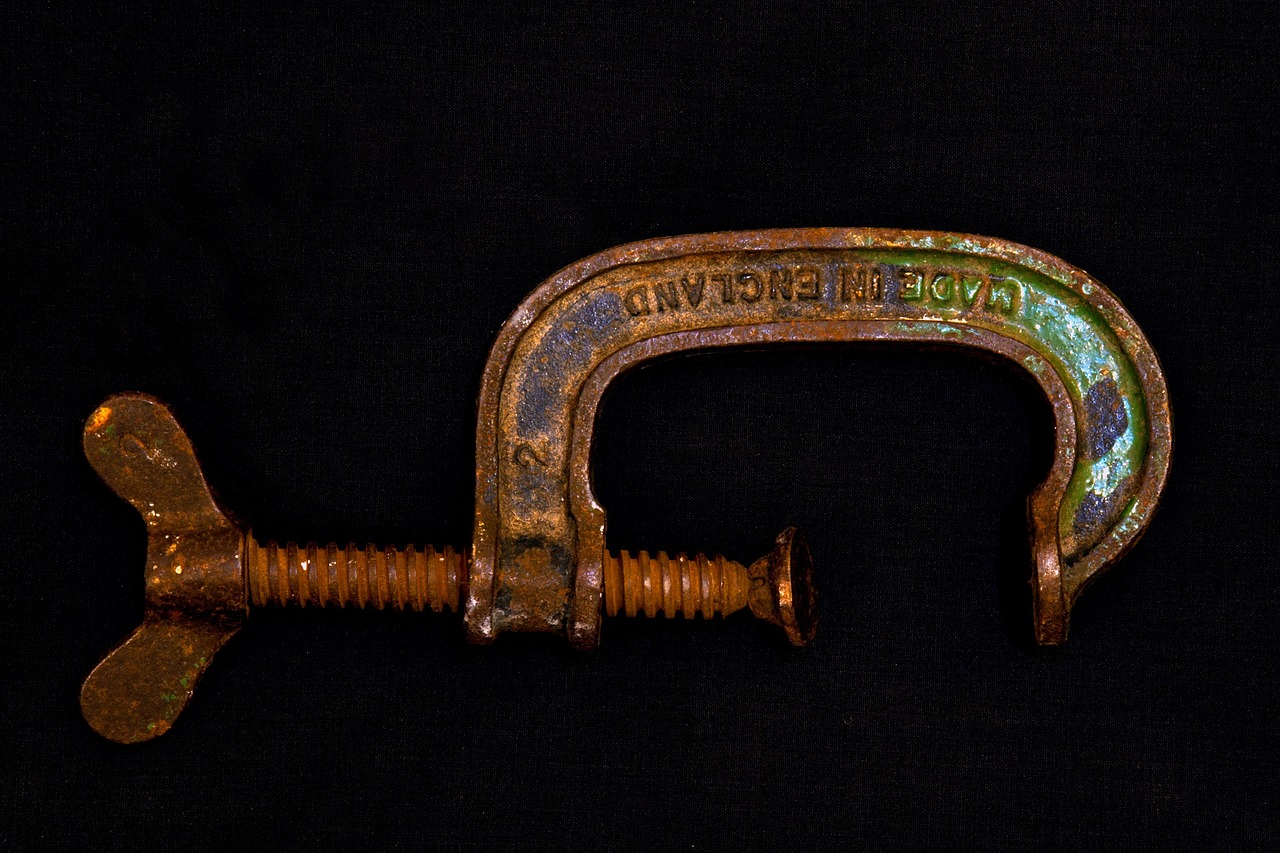
The best place to start with C-clamps is with the standard six-inch clamp. Woodshop professional wield this model C-clamp most commonly. A six-inch clamp provides enough capacity to clamp across the width of most cabinet components yet small enough to fit within the space provided by bench dogs.
The throat depth of a six-inch clamp is deep enough to fully clamp to the edge of the workpiece yet not so deep as to allow the clamp to flex under the pressure of clamping heavy workpieces. C-clamps with six-inch jaws typically utilize acme-style threads that provide both quick advancement of the clamp while still remaining non-slip under pressure. Six inch clamps can also be tightened with only two fingers yet still remain reliable overnight.
The only real downside to the six-inch clamp is that the cast iron clamp may leave marks on the light wood species unless you wipe it after use on machinery that contains oil.
2. Eight Inch Clamp
An eight-inch clamp is the next model to acquire if an individual works with furniture components. Eight-inch clamps allow for a tabletop clamp to be secured to the legs of a table.
The longer handle also allows for easier straddling the workpiece and metal components of the workshop. The longer handle allows for more leverage when clamping. This leverage however does encourage overtightening of the clamp.
The half-turn required to secure the clamp is all that is needed since overtightening may damage soft wood species like pine or poplar.
3. Deep Throat Clamps
Deep-throat clamps with cork or leather pads are required for delicate workpieces. The deep-throat clamp allows for clamping into the middle of the workpiece without the screw hovering over the joint.
Cork pads are inexpensive and effective yet leather pads will last longer. These deep-throat clamps add to the total weight of the tool which limits their use for overhead work or for long glue-up sessions. These types of clamps, however, are required for laminating curved work or for inlay work.
4. Three Inch Micro C-Clamp
The three-inch micro C-clamp may seem like a toy but is helpful in many situations. A three-inch clamp can clamp onto a dovetail jig or used to attach hardware to a workpiece. Three-inch clamps are helpful when drilling pilot holes for hinges.
The three-inch clamp allows for the clamp of a hinge without the need for two set of hands. The limited throat depth and pressure of the three-inch clamp limits its use but with proper care it can last many years.
5. Twelve Inch Clamp
For working with stock boards or for clamping into large glue joints, the twelve-inch clamp is the best choice.
Twelve-inch clamps have stiffer frames that do not allow the clamp jaws to flex when heavy amount of pressure are applied. The twelve-inch clamp is heavy in weight though which can become an issue when moving the clamp from one part of the workshop to another. Two or three twelve-inch clamps may be kept in the assembly area yet the rest of the clamps may be hung on the wall until a heavy project is to be built on the bench top.
The quality of the threads on a C-clamp can separate lifetime tools from those that become paperweights. The best clamps utilize either acme or square threads instead of V-threads that may be found in imported clamps. The acme threads allow for a clamp to gain even more tightening with less turns of the handle.
The difference will be seen when racing against the glue pot to secure four clamps quickly. Cheap threads wear down over time. They will loosen overnight.
This may ruin a hairline miter on a workpiece. The facing of the clamp jaws can separate serious woodworkers from those occasional woodworkers. Metal jaws are strong and often useful for metalwork projects.
Yet they will leave marks on cherry and maple wood. Some clamps come with swivel pads to allow the clamp to accept slightly out-of-parallel workpiece edges. Other clamps take plastic caps that can be snapped on the clamp jaws.
The best clamp pads are wooden and cut from scrap poplar. These wooden pads will absorb moisture from the wood species. They will prevent staining the wood and will take only thirty seconds to replace when they become dinged up.
This small habit ensures that woodwork will be clean when finished.
6. Edge Clamp
Another often overlooked clamp is the edge clamp. These clamps have an additional screw that is perpendicular to the clamp screw allowing for application of pressure to the edge of the workpiece.
These clamps may look awkward but are helpful in gluing on a thin strip of banding without lifting the edge of the workpiece. They are best acquired and positioned in the specialty clamp section of the woodworker’s rack.
7. Fourteen Inch and Larger Clamps
For those who work with large workpieces, the fourteen-inch clamp and even larger clamps have their place in the woodshop.
Large clamps are not the preferred tool for most projects but are required for situations where a pipe clamp would be too heavy or for situations where the clamp needs to perform both as caul and press. Because the clamp’s frame is large and long it may flex if clamping thin stock. The purchase of a large clamp from a reputable company ensures that the clamp’s frame will not flex when much pressure is applied to it.
Regardless of the size of clamp an individual owns, appropriate storage will extend the life of the tool and the lumber. Hanging clamps on a French cleat will keep the threads from being crushed yet the clamps will not clang against each other when passing another workshop workpiece. A quick wipe down of the clamps with a rag that has been dampened with mineral oil will keep the clamps from rusting.
This wipe down will not leave behind any residue that may be transferred to a workpiece. The last skill to learn with C-clamps is how to apply the proper amount of pressure with the clamp’s jaws. The joint should be as tight as possible with the glue line between the workpieces nearly invisible yet the fibers of the wood should not be crushed between the clamp jaws.
A skilled woodworker develops a sense of the quarter turn to the clamp handle that will seat the workpiece without applying too much pressure. Until this sense of pressure is learned a small torque wrench may be used to avoid damaging figured maple or exotic woods. The beauty of C-clamps is that once a person owns the proper tools there presence is not felt.
They will appear when they are required yet be silent most of the time. It is this type of silent reliability that allows these clamp tools to remain on the wall in every woodshop decades after the woodshop professional retired the toggle clamp or the vacuum bag. As long as the proper sizes of C-clamps are owned with the proper care and protection for the jaws and threads these humble tools will remain with a woodworker till the end of their shop life.
