
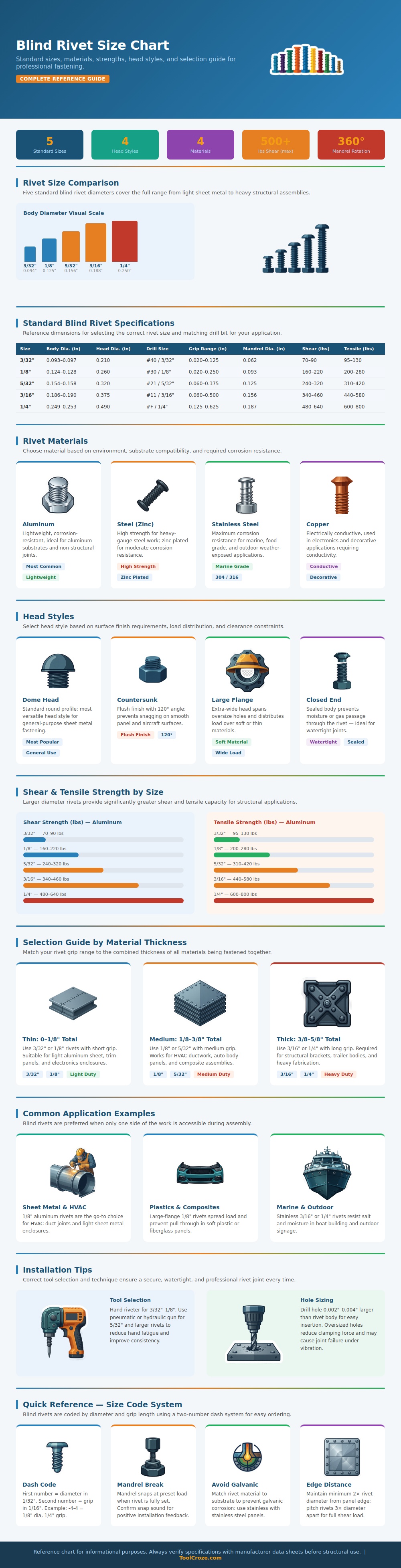
“Your grip requirement is based off the total thickness of all the materials you are clamping together. That combined depth tell you what size rivet to use so it holds well without punching through material too much. For instance, if you’re using some plastic trim or very thin sheet metal, a three-thirty-seconds diameter rivet is enough for that load. Heavy gauge steel brackets needs a larger diameter because the little rivet is going to shear off from vibration. As the chart shows, the shear strength increase with diameter. An aluminum rivet one-quarter inch in diameter can hold almost eight hundred pounds in tension. This means that when it’s moving down the road the joint isn’t going to rattle loose but will stay tight. Size the fastener for load, not just the hole.”
For corrosive environments, such as exposure to moisture, material selection are important. Light-weight, corrosion-resistant aluminum is good for most general purpose applications indoors. For outdoor projects exposed to regular rain or salt water, stainless steel is required. Galvanic corrosion attacks the joint from within and will damage an aluminum joint used in a moist marine application. Electrical grounding requires copper rivet that conduct electricity. Heavy industrial frame joints where weight is less critical benefit from zinc-plated steel add for strength. Choose the metal best suited for conditions of your job.
How to Choose the Right Rivet
Fastening location: The type of head used influence the way it rests against the material. By default, dome heads ride above the material, creating a big bearing surface. This way, the rivet won’t pull through thinner materials. For applications that require the rivet to be flush (such as aerodynamic parts) or where exposed rivets can catch your tools, you’ll use countersunk heads. When working with oversized holes or soft plastics, you may opt for a larger flange head. These spreads out the load across more of an area. Each style solve a particular geometry requirement within the assembly.
The amount of force used ensure the mandrel breaks cleanly so you know it’s solid. Rivet tools like hand riveters do fine with small ones. Pneumatics is best for larger sizes (greater than five-thirty-seconds). Using more power ensures the mandrel breaks off completely which confirms the rivet is solid. For good quality control, you want to hear the snap. When you don’t hear it, the rivet isn’t set all the way and must be removed and done again. A partial installation are weak.
Drill holes big enough to slip in easily, just bigger than diameter of the body. Not enough room is hard to assemble; too big doesn’t hold them as tight. Choose the rivets. To select an appropriate blind rivet, use environment, load and thickness as your guide. The proper diameter will do the trick on the metal. However, if the material is prone to corrosion or the head doesn’t hold in soft plastic, the joint would of broken. Having some reference information handy ensure ordering the proper rivets every time. It saves time by avoiding mismatches when assembled. When done properly, it’s quiet, reliable and keeps things together for years. Riveting creates a strong yet almost unseen connection.
