
Band saws is essential tools that can be found in most workshops. Depending on the type of workshop, band saws can perform tasks that is impossible to do with a circular saw. For example, band saws have the precision to make a cut in the wood that allows an object to have an exact amount of curvature to that object.
Additionally, metal band saws can sever metal bar stock into the lengths that a metalworker need for another task. However, there are many types of band saws, and some workshop professionals will feel overwhelmed by the different types of band saws that is available to purchase. The different types of band saws include horizontal band saws, vertical band saws, benchtop band saws, floor-standing band saws, wood-specific band saws, metal-cutting band saws, portable band saws, and stationary band saws.
Each saw has a specific job that it performs best. If a professional woodworker purchase the wrong type of band saw, it will result in both wasted money and time. Additionally, it will teach the woodworker about the various shortcoming of a specific type of saw.
The differences between the various types of band saws can be seen when the tools are observed in action. By understanding the different types of band saws, a workshop professional can effectively match the saw to the types of task that will be performed. The following is an overview of each of these types of band saws.
Common Types of Band Saws to Use
1. Benchtop Band Saws
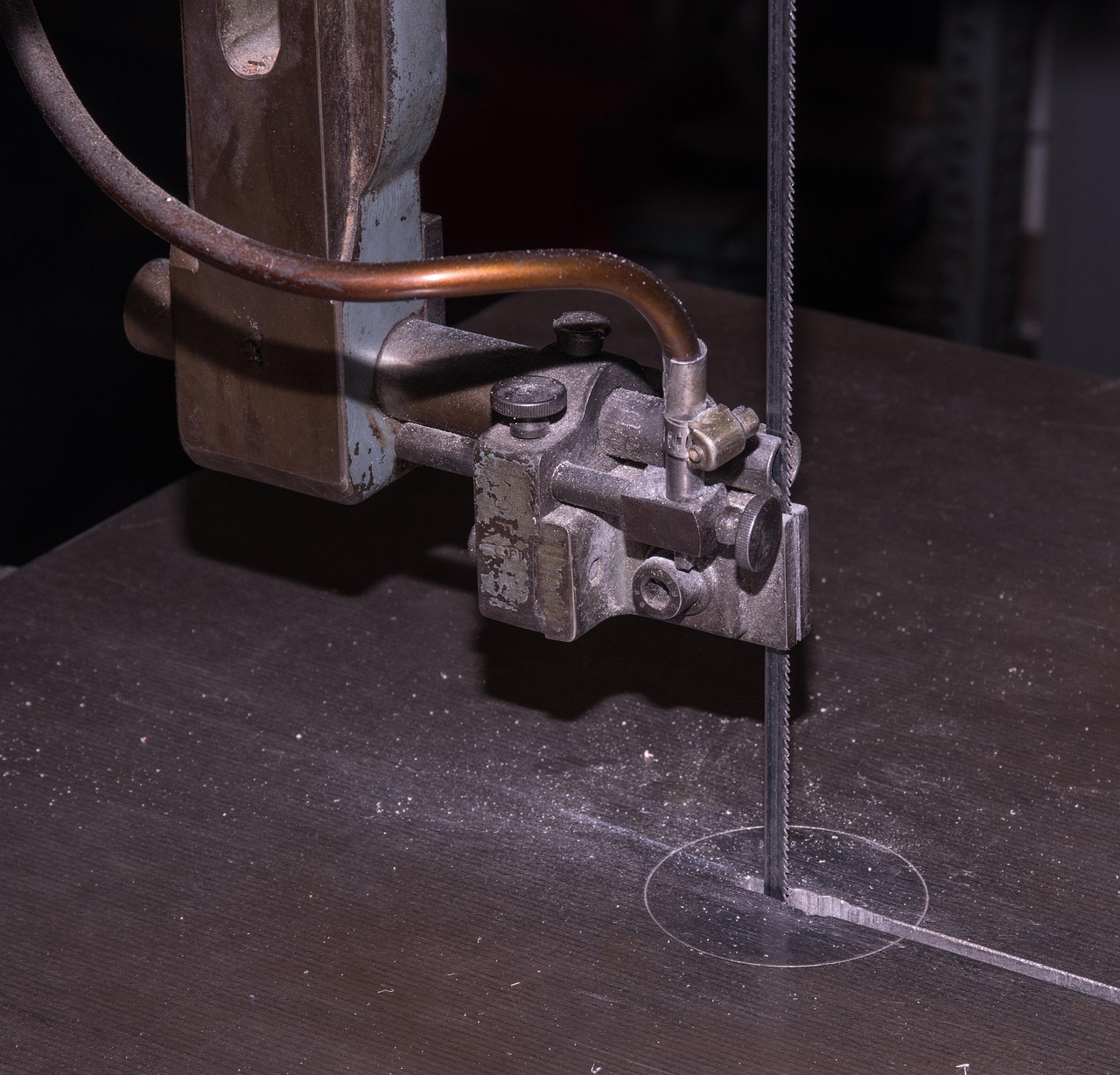
Benchtop band saws are among the most common type of band saws manufactured for home workshops. Benchtop band saws are relatively small tools, and they come with blades between 1/8 inch and 1/2 inch in width. These saws can be used in a variety of workshops to perform different types of sawing task.
A saw’s throat depth refers to the maximum depth at which the saw will sever material. Benchtop band saws has a throat depth of between 9 and 10 inches. Additionally, their resaw height is limited to only 6 inches in height.
This makes them ideal for small workshops, apartments, and the classrooms of woodworking and metal fabrication teacher. Additionally, one person can move their compact size into a workbench area. However, their smaller size limit their strength.
When cutting thick wood species, the frame of the saw will flex, and the saw motor will struggle to provide enough power to sever large amount of wood. Despite these cons, benchtop band saws are ideal for cutting pattern into wood, sawing small furniture parts, and for beginners to gain familiarity with the saw.
2. Floor Standing Band Saws
Floor-standing band saws are a tool that a hobbyist woodworker or a small shop that have limited wood fabrication tasks may purchase.
These band saws have a throat depth of 14 inches or 17 inches. The cast iron frame of these saws reduces the vibrations that are often felt when sawing thick wood planks. The resaw capacity of these saws is between 6 inches and 12 or 14 inches if riser blocks are added to the plank.
The floor-standing saw has a large work surface area for the sawyer’s hands to move when cutting large wooden planks. Additionally, its large frame is necessary for supporting the wide band saw blade without the worktable vibrating excessively. These saws are constructed with a blade speed between 150 and 600 feet per minute with a power between 3/4 horsepower and 2 horsepower.
This floor-standing saw is suitable for cutting hardwood species like cherry and maple. The cons of a floor-standing band saw are that it will never move from one location, and two person are necessary to move the heavy tool. However, once placed in one workshop, a floor-standing saw can last for many year.
3. Portable Band Saws
Portable band saws are tools that are built with the intention of solving specific problem that can occur when using larger band saw models. Portable band saws are manufactured for metal fabricator. These portable tools feature a clamp that holds the metal object and a narrow blade that move in a continuous loop.
Individuals like plumbers, electricians, and metal fabricators who need to cut metal such as rebar in one location use these tools. The best portable band saws will weigh less than 15 pounds and run on 120-volt motors or cordless battery. These saws accept various types of blades that are suitable for cutting rebar or metal tubing.
The cons of a portable band saw are that it sacrifice some of the precision of a larger band saw. Additionally, the depth of the cut with a portable saw will be limited to only 4 or 5 inches in maximum depth. These tools are not manufactured for woodworker.
However, portable band saws will come in very useful for metal fabricators who need to make cut in difficult locations.
4. Horizontal Band Saws
Horizontal band saws are simply the vertical design of a band saw moved horizontally on the work surface. These saws are used for metal fabrication.
The blade run horizontally across the metal workpiece, and a vise holds the metal while a component lowers the saw head. These components can be gravity or hydraulic powered. Metal fabrications shops use horizontal band saws where many metal square tube must be cut to the same lengths every day.
These saws are excellent for cutting long straight length of metal. Most horizontal band saws also feature coolant systems to keep the blade from wearing out quickly while making metal cuts. A con of these saws is that they cannot make curved metal cut and cannot sever wooden board.
However, if the shop features only metal fabrication task, the horizontal saw will save the metalworker time and effort.
5. Vertical Metal Cutting Band Saws
Vertical metal-cutting band saws may look similar to a wood band saw; however, there are a few critical difference. Vertical metal saws have slower blade speeds between 50 and 300 feet per minute compared to wood band saws that can reach 3000 feet per minute.
Additionally, the frames are much heavier to handle the high-tension steel saw blade. Vertical metal saw table can tilt more to accommodate compound metal angles. Additionally, vertical metal saw blade have blade welder-grinders that allow the sawyer to replace blade without leaving the saw.
Vertical metal saw blade cut aluminum, brass, mild steel, and stainless steel. Woodworkers use these saws to cut tight curve in thick wood. The downsides of vertical metal-cutting band saws are that they tend to be very loud, create alot of metal fabrication fluid, and require more power than wood cutting task require.
However, if a workshop feature metal and wood project, this saw will be useful.
6. Cabinet Style Band Saws
Cabinet-style band saws are high-end band saws built for wood professional. These saws have massive frame out of which 1-inch blade can emerge.
The resaw capacity can exceed 20 inches. The massive saw flywheel will allow for a resaw cut to continue despite hitting a knot in the wood. The blade drift in these saws is minimal due to their massive frame.
The dust collection port will effectively channel the wood chip out of the saw. These saws can cost several thousand dollar. However, the time and the amount of lumber saved with resawing figured maple will cover the cost of such an expensive saw.
Cabinet-style band saws are not purchased on impulse. However, if a workshop perform resawing task, these saws will save the woodworker both time and effort.
7. Specialty Band Saws
Specialty band saws include scroll saws, meat-cutting saw, and timber saw.
Scroll saws use blade that are pinned to the saw and table that can tilt to cut intricate design. Butchers shop use meat-cutting band saws. These saws are made of stainless steel to clean up blood from meat and have wide teeth to cut through frozen meat.
Timber mill use giant band saw that are mounted on saw carriage system that move the saw along the tree log to cut the log into lumber. Each of these saw has a specific job that it is design to do. These tool may seem unnecessary for the general band saw task; however, they are helpful in their specific environment.
There will never be a saw that can do every task in a shop, so knowing the difference between the type of band saws will help a professional to make the best purchase for their workshop task. By understanding the different type of task that they must complete in their workshop, a professional will be able to match the saw to those task. By understanding that each saw will have trade-off to its capability, a workshop professional will accept the difference between each saw.
When using a well-tuned blade to cut intricate design in wood or making a resaw cut to reveal the figure within the lumber, the professional will find their task to be complete worthwhile. Once they see the result of using these saw to complete their task, they will feel as if the saw are an extension of their own hand.
