
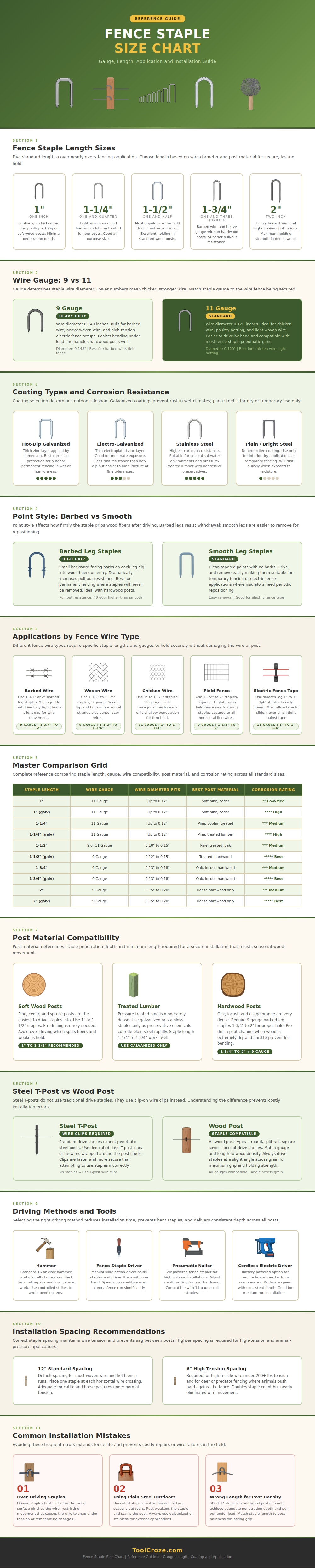
Selecting an correct fence staple is another necessary step in building the fence. However, selecting an correct fence staple will ensure that the fence remains stable. A fence staple is a U-shape piece of metal that is used to secure wire to a wooden fence post.
If the fence staple that you select for the fence projects is the wrong size for the wire or the fence post, the wire may sag and become detached from the fence post altogether. In order to ensure the stability of the fence, you must select the fence staple based off the thickness of the wires and the density of the fence post. There are also difference in the length of the fence staple that should be used for different projects.
How to Choose the Right Fence Staples
For projects that involve lightweight materials, such as chicken wire and pine fence posts, you should use short fence staples. For these projects, the shorter fence staples are sufficient to secure the fence wire to the fence posts. For projects that involve heavy-duty materials, such as barbed wire and dense wooden fence posts, you should use long fence staples.
These long fence staples can penetrate deeply into the wooden fence posts, ensuring that the fence staple sink at least halfway into the fence post to secure the fence wire effectively. Another factor to consider when selecting fence staples is the thickness of the staple in comparison to the fence wire that you will secure to the fence posts. For projects that involve thick wire, such as barbed wire, thick fence staples should be used to avoid the fence staple bending when secured to the fence posts.
For fence projects that involve lighter wire, such as wire mesh, you can use thin fence staples as they are easier to drive into the fence posts by hand. Using thin fence staples will not cause them to deform when hit with a hammer, and using thick fence staples wont make them difficult to drive into the fence posts. Finally, another factor to consider is the coating that covers the fence staple.
For fence projects that will be exposed to wet environments, use fence staples with a thick zinc coating to prevent the fence staple from rusting. Using plain steel fence staples for fence projects outdoors will cause the fence staples to rust quick when it rains. These rusting fence staples will eventually weaken, and the fence will eventually fail to hold the fence wire securely to the fence posts.
Additionally, use galvanized fence staples if you are using treated lumber, as the chemical in the treated lumber can cause uncoated metal to corrode quicky. The design of fence staple legs determines the fences grip on wooden fence posts. Barbed fence staples has a design that allows the legs of the staple to dig into the wooden post.
This provides a high level of grip that is necessary for permanent fences. Smooth fence staples do not have barbs on their legs. These are used for situations where it is necessary to easily remove the insulators that are placed on electric tape.
The type of wood used for fence posts dictates the type of fence staple to be used. If the fence post is made of soft woods, short fence staples dont have to be pre-drilled into the wood. For hardwoods, long barbed fence staples bite into the wood.
To drive the fence staples into the wooden fence post, use the correct technique. For small fences, you can use a hammer to drive the fence staples into place. For larger projects, a fencing staple gun or pneumatic tool will increase the speed at which you can drive the fence staples into the fence posts.
The staples should be driven at an angle across the grain of the wood. Additionally, the fence staples should be spaced approximately 12 inches apart. For high-tension fences, the fence staples should be placed closer than 12 inches apart.
Ensure that there is a small amount of space between the fence staple and the wire. This allows for the wire to expand and contract according to the changes in temperature. When driving fence staples into fence posts, avoid common errors.
Do not drive the fence staple so hard that the wire crimps or bends. The crimping of the wire may lead to the wire snapping on the fence. Using fence staples that are too short for the hardwood fence posts will not provide enough grip on the wood.
Use plain steel staples for indoor projects only, as they will rust and cause stains on the fence posts. Do not hammer fence staples into steel T-posts. Instead, use metal clips for these type of fence posts.
By using fence staples that match the requirements of your project in terms of length, thickness, and coating, you can ensure that your fence will remain secure and stable.
