
A well-equipped garage workshop will allow a person to have successful and satisfying weekend with there projects. The difference between a botched repair and a professional looking result is usualy the presence of the right tools within a person’s workshop when they begin to feel inspire to create something. Conversely, if a person does not have the right tools to perform a given task, they will have to use whatever is at the disposal of the individual to complete that project, a necessity that usually comes with extra time, money, and aggravation.
The good news is that a person does not necessarly need a warehouse of tools to begin to create and perform tasks within there workshop. A few essential tool will allow a person to complete the majority of projects that will come along within there workshop, leaving some room within there budget and within there available floor space within the workshop. A person who intends to utilize there workshop should purchase the tools including a workbench (which will allow for each task to be completed upon its surface), hand tools (which will last for decades if bought in quality), a cordless drill and impact driver combo kit, safety equipment, lighting, a decent miter saw or chop saw, clamps, a random-orbit sander, tool storage, a multimeter, and finally, a good bench vise.
Essential Tools For Your Garage Workshop
1. Workbench

The first tool that should be purchased for a workshop is a workbench. Each task will be performed upon the workbench, so it should be a solid and sturdy piece of furnitures with a six-foot length and a hardwood top that is two inch in thickness. Additionally, you should purchase it at a height that allows the elbows of the person to be at there natural angle.
It is helpful to purchase a workbench that also includes a lower shelf (for power tools) and a backboard (for hand tools) to allow a person to avoid having to search for tools while performing a project. Finally, a good workbench will allow for the installation of vises and bench dogs for added clamping power. Next that a person should buy are hand tools.
2. Hand Tools
The hand tools that will be purchased will last for decades if bought in quality. Such hand tools include a 16 ounce claw hammer (with a fiberglass or wooden handle), a set of screwdrivers (flathead, Phillips head, and square drive), a 25 foot tape measure, a combination square tool, and a utility knife (with replaceable blades). These hand tools will be stored on an apron or pegboard to ensure that they are within the individual’s reach.
These hand tools will save a person time; without these tools they would of had to travel to the tool cabinet three minutes out of every five to find a particular tool. A cordless drill and impact driver combo tool kit will allow a person to complete projects without having to hunt for an electrical outlet to power one of the tools. Additionally, the cordless drill will allow a person to drill holes and install screws, while the impact driver will allow a person to focus upon the installation of heavy duty fasteners.
3. Cordless Drill and Impact Driver Combo Kit
A set of two batteries will be purchased so that one battery charge while one is being used. The convenience of these tools is likely to be worth the purchase for an occasional garage workshop user. The batteries will wear out with time, however, so the eventual cost of purchasing new batteries should be included into a person’s long term budget.
4. Safety Equipment

Safety equipment should be purchased for a person’s body; there body is the only tool that they cannot replace if something happens to it. The safety equipment that they should purchase includes safety glasses (that accommodate any prescription lenses that a person may wear), hearing protection (rated for at least 25 decibels of noise reduction), a dust mask or half-face respirator with replaceable filters, a first aid kit, and a fire extinguisher for electrical and flammable liquid fires. The first aid kit can be stocked with bandages, tweezers, antiseptic wipes, eye wash, and burn gel.
Additionally, the fire extinguisher should be rated for electrical fires and flammable liquid fires and should be mounted near the door to the workshop. While these items of safety equipment may seem unnecessary, the alternative to wearing safety glasses or using a dust mask will likely come in the emergency room. Tool lighting will prevent eye strain and will allow individuals to focus upon the details of the project that they are performing.
5. Lighting
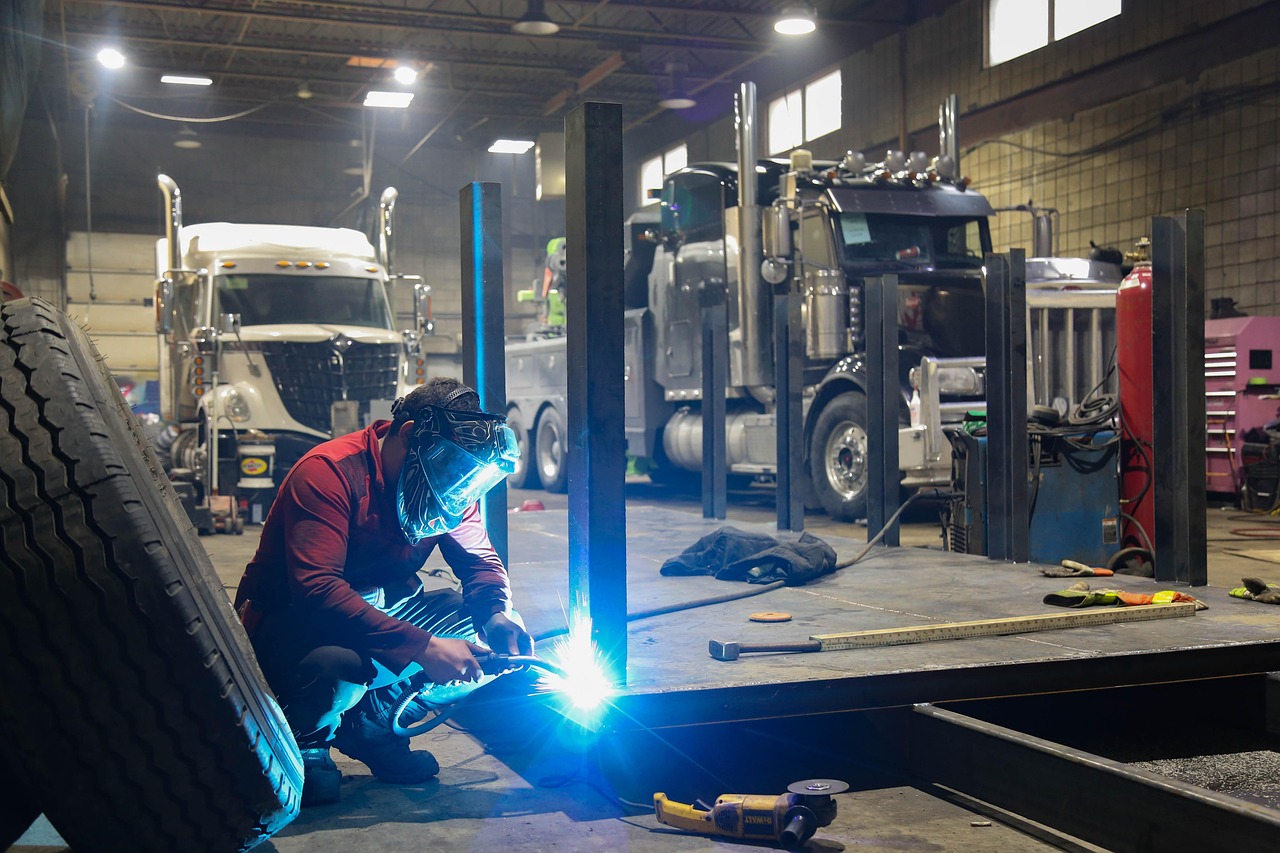
Overhead lighting sources (fluorescent or LED lights) can be utilized for general lighting within the workshop, but task lighting may be necessary for focused work. An LED work light that can be magnetic or that sticks to metal may be required for lighting specific areas that require the attention of a person that is performing tasks. Additionally, LED work lights will have rechargeable batteries.
Good lighting will allow for a person to focus upon there work effective. A decent miter saw or chop saw will earn its place within a workshop if the individual desires to cut items such as trim, shelving, and lumber for framing. A 10-inch model will allow the saw to both crosscut and make precise angles for items like picture frames or crown molding.
6. Miter Saw or Chop Saw
The saw can be mounted on a stand with extension wings to allow for the sawing of longer pieces of lumber. Additionally, if a person’s space within the workshop is limited, the stand that is manufactured for a miter saw can be purchased as a foldable stand. Finally, since the use of a miter saw will create dust within the workshop, a shop vacuum that allows for adapters to be attached to the saw will keep the shop (and the individual) cleaner.
7. Clamps
Clamps are useful for holding an item in place while screws are being driven into wood, or while a joint is drying with wood glue. A person will never have too many clamps. A few bar clamps (in 24-inch and 36-inch lengths), a few spring clamps, and a few C-clamps will be needed.
Additionally, the clamp should be able to perform as a parallel-jaw clamp if the saw or wood items to be clamped will be used in the creation of cabinetry items. These types of clamps will not change the angle of the item being clamped to the clamp. Using a few scraps of wood as cauls (pieces of wood used to allow clamps to distribute the even pressure that they exert upon an item) will prevent any damage to the item that is being clamped.
Clamps of this type will allow a person to set items together proper and avoid any issues with items not being square with one another. A random-orbit sander is a tool that allows a person to sand smooth finishes to an item. These sanders work faster than orbital sanders and belt sanders.
8. Random-Orbit Sander
The random-orbit sander can be bought with a variable speed control and a hook-and-loop paper attachment. The sander will have a dust port to allow for attachment of the shop vacuum (to reduce dust), and it will come with a range of sandpaper of different grits (from 80 grit to 220 grit). A random-orbit sander with these features will allow a person to complete sanded projects by placing the item into the vise of a workbench (with a saw or other cutting tool) or into the clamp.
9. Tool Storage

Tool storage will limit the loss of tools within the workshop and ensure that each tool is always within the reach of an individual that utilizes the workshop. Tool storage can be achieved with the purchase of a rolling tool chest with ball-bearing drawers, pegboard or French cleat systems for hand tools and wrenches (to allow for a quick inspection of the location of any tool), and clear plastic bins for small hardware tools (so that an individual will know when they are low on a certain tool). Tool storage will allow for each individual to have a place for each tool, and for each tool to have a place within the individual’s workshop.
Thus, there will be less time required for each project because an individual will not waste time searching for there tools. A multimeter will be an essential tool for any individual’s workshop, even if they are not an electrician. A multimeter will allow an individual to test the continuity, the voltage, and the resistance within an electrical circuit.
10. Multimeter
A multimeter will help to determine the reason why a light fixture within the workshop is not functioning, for instance. Additionally, a digital multimeter will be less expensive than an analog model. Moddern digital multimeters will also include features that allow them to be easier to operate for the individual; auto-ranging is one such feature.
It will take an individual around ten minutes to learn how to use the tool, and it will prevent numerous unnecessary tool and part replacements. Finally, a person should also purchase a good bench vise. The bench vise will allow for a person to have both two and a third hand for certain tasks.
11. Bench Vise
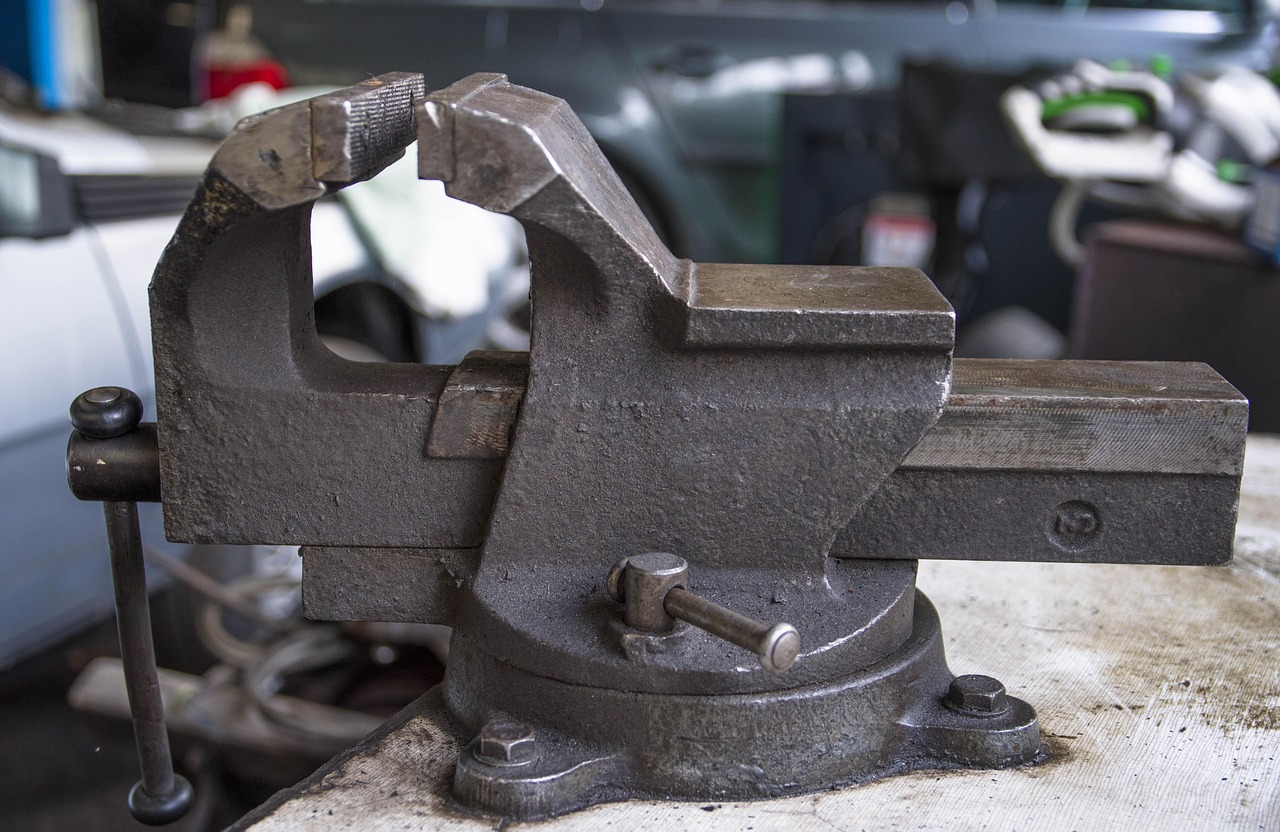
A bench vise with a four-inch (or five-inch) jaw will earn a person enough space to clamp a majority of tools and workpieces. Additionally, it is beneficial for a person to purchase a vise with replaceable jaws; the jaws may be changed from smooth to allow for the clamping of finished items, or to the serrated jaw that will work with raw stock. Finally, mounting the bench vise to the end or corner of the bench will allow for long pieces to dangle from the vise without the risk of the piece of wood or other material hitting the floor of the workshop.
The bench vise will allow for the workshop to become a true workstation; one that is capable of sawing, filing, sanding, and holding odd-shaped items securely in place. These essential workshop tools will allow a person to both create and fix the majority of items within there workshop. While there will be other tools that will be bought in the future for specific hobbies or projects, the tools described in this article will be sufficient for most needs of an individual who creates within there workshop.
The satisfaction that a person feels from using there workshop will come from finding and using that exact right tool to complete there project. Thus, while the purchase of each of the tools in this article may seem small, they will be the source of the individual’s satisfaction within there own workshop.
