
A table saw can rip sheet goods, cut perfect miter, and handle joinery that would require a cabinet shop full of machinery. However, whether you find yourself fighting the table saw or letting it do the work comes down to the accessory that you purchase for your table saw. Skipping accessories will cost you time, burn your wood, and place your fingers in danger.
Adding a few quality accessories to your table saw will improve the saw in three distinct ways: it will be more precise, it will be more repeatable, and it will be safer. Many table saw accessory gadget are marketing fluff. However, a few genuinely will change the performance of your table saw.
The accessories that you should purchase for your saw and there benefit will be discussed in order of importance and cost.
Essential Table Saw Accessories to Improve Performance
1. Zero-Clearance Throat Plate
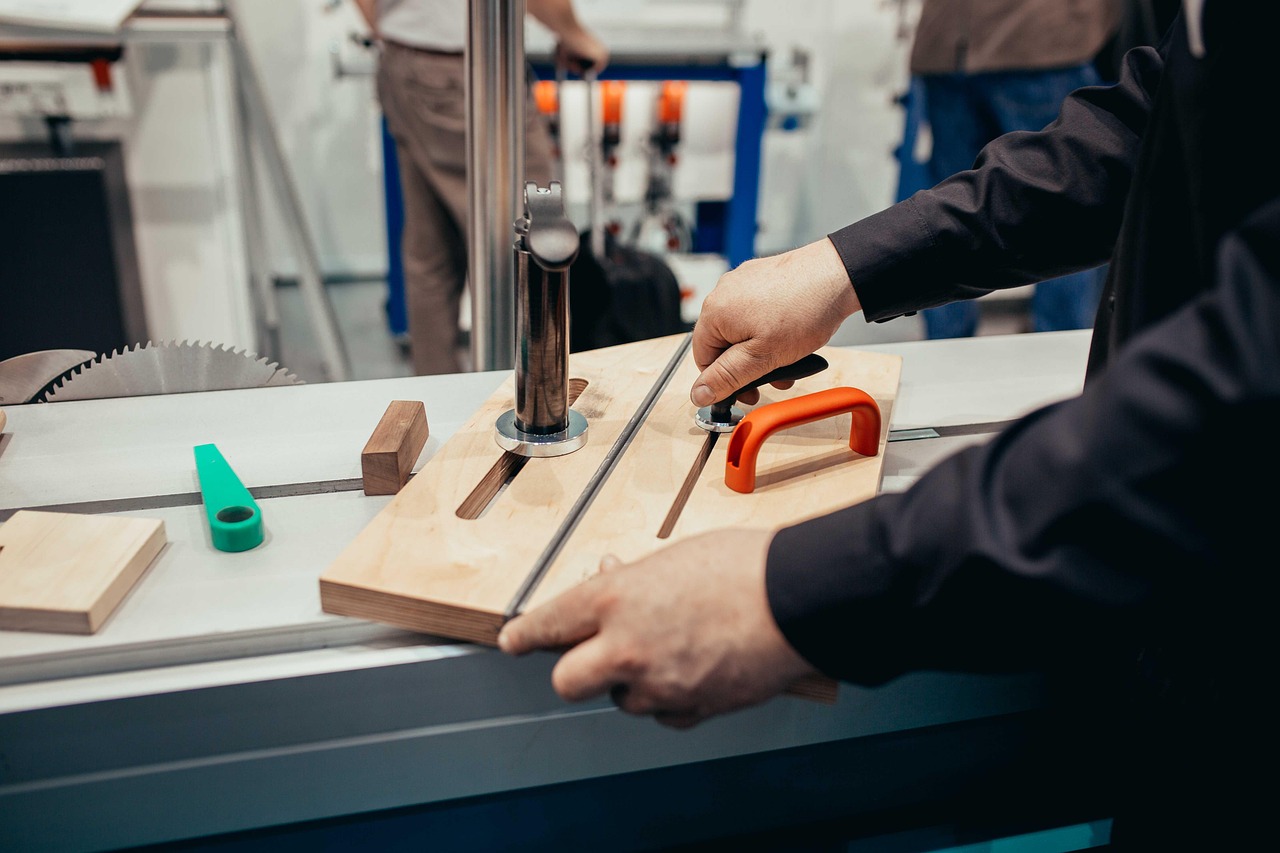
A zero-clearance throat plate is an insert that will fit into the saw’s throat plate. This insert will be customized to your saw’s blade.
Many saws currently manufactured include a throat plate that allows the underside of the wood to tear out of the saw. A zero-clearance throat plate will make it so the underside of your wood will not tear out during use. A zero-clearance throat plate will allow for cleaner cuts on melamine, veneered plywood, and cross-grained hardwood.
These throat plates can be made from Baltic birch or purchased as a machined aluminum version. Using the zero-clearance throat plate will also reduce the chance of kickback caused by small offcuts getting into the saw. However, you must purchase a throat plate for each width of saw blade that you own.
2. Push Stick or Push Pad
Eventually, you will no longer notice the takes up space on the saw table. A decent push stick or push pad is the cheapest insurance you can buy for your finger. Push sticks come in two types: shop-made or commercial.
Shop-made push sticks are made out of scrap wood in two minutes when you need them. Commercial push sticks come with non-slip pads and adjustable heights. The importance of a push stick comes from the fact that you will use it every time you use the saw.
The best push sticks allow you to apply both downward and forward pressure at the same time. This will reduce the chance of a board climbing onto the spinning blade teeth. After experiencing a close call with a board that climbed onto a saw blade, you will never again use a push stick that you feel uncomfortably using.
A push stick is the last line of defense between your fingers and a saw blade.
3. Featherboards
Featherboards will allow for better control of the workpiece when the saw is cutting it. Featherboards will press the workpiece against the table or against the saw fence.
The flexible finger on the featherboards will allow the workpiece to move forward but not allow the workpiece to move backward. On ripping and crosscutting operation, featherboards will allow the workpiece to be fed through the saw but will significantly reduce the chance of kickback. In situations where the saw fits the workpiece into a jig, such as a spline-cutting jig, the featherboard will allow the workpiece to be pushed against the saw but will not allow it to shift between passes by the saw.
Adding featherboards to your saw will take up some time in the setup of your saw. A poorly placed featherboard will cause more of a drag on the workpiece than it will aid in moving it through the saw.
4. Rip Fence
A good rip fence will help you to perform ripping operation without having to read your saw’s rip fence scale constantly.
Commercial saws come with stock rip fences that flex and lose their parallelism over time. A good aftermarket rip fence will be solid, stay square, and remain parallel with the worktop of the saw. A good rip fence will allow for ripping operations of uniform thickness without having to measure each board.
It will allow your saw to be finely tuned to.125-inch movements of the rip fence to allow for fine adjustments on the thickness of your boards. Some saws will feature digital displays for tenths of a millimeter. However, most woodworkers will find a solid rip fence to be one of the most essential saw accessories.
5. Outfeed Table
An outfeed table will allow your saw to safely handle ripping operations on long boards. Long boards will drop out of the saw once they have passed the back of the saw without an outfeed table. An outfeed table will prevent such drops out of the saw.
An outfeed table that matches your saw table height and extends well beyond the saw blade will allow one person to handle the ripping of long stocks of wood. An outfeed table doesnt have to be fancy to provide the best results. A simple table made of plywood or a torsion box screwed into a frame will do the job.
The outfeed table must be level with the saw table and extend beyond the center of gravity of the workpiece. Once you have purchased an outfeed table, you will no longer fear ripping long boards with the saw.
6. Miter Gauge
The saw’s miter gauge can be purchased or replaced with an aftermarket gauge.
The miter gauges that come with saws are generally inexpensive, loose, short, and inaccurate. An aftermarket miter gauge will have a solid bar for the saw’s miter slot and an adjustable protractor that will lock into exact degree. Many woodworkers will also find it helpful to have an auxiliary fence on the saw’s miter gauge.
A well-tuned miter gauge will allow you to set your saw to cut perfect picture frame or compound angle on turnings. A good miter gauge will have stops at the most common angle so that you can set it to 45 degrees without having to measure it each time. The only downside of aftermarket miter gauges is their weight.
The heaviest miter gauges will be made of cast iron and will weigh alot when used in long session of cutting small parts. Some woodworkers will own both a heavy miter gauge for large projects and a lighter gauge for trim work.
7. Crosscut Sled
A crosscut sled will allow your saw to cut end grain and panel work with accuracy.
The sled will have runner that will slide through the saw’s miter slots and a fence that will be square to the saw’s rotating blade. A crosscut sled will allow the workpiece to be carried through the saw instead of balanced on the miter gauge. A crosscut sled will give you glass-smooth ends on your sawn wood.
These crosscut sleds will take up some storage space when they are not in use. However, they will provide a much better saw experience than using a miter gauge to hold wide panels of wood.
8. Blade Guard
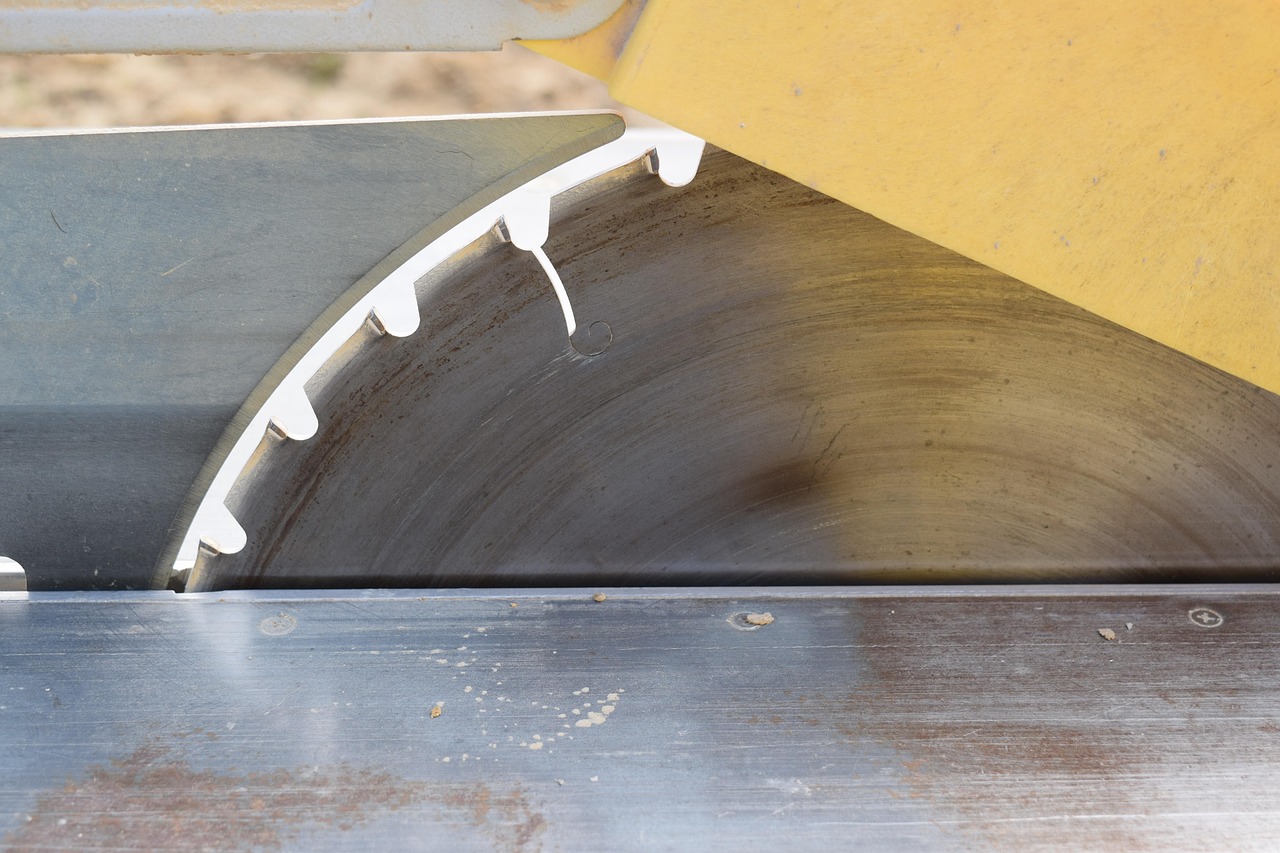
A blade guard under your saw’s blade is one of the most essential saw accessories.
Factory blade guards get removed due to their interference with certain saw operations and due to the accumulation of sawdust on the guard. An aftermarket blade guard will have overhead port for the removal of sawdust, anti-kickback pawls, and quick release for the removal and installation of the blade guard. The guards will be on springs to allow them to ride on the workpiece.
Once you have a blade guard that you are used to seeing, the guard will significantly reduce the chance of accidental contact between your body and the saw’s blade.
9. Sacrificial Back Fence
A sacrificial back fence will work well with a blade guard so that you have two line of defense between yourself and the saw.
10. Mobile Base
A mobile base for your saw will allow the saw to be repositioned for different operation.
Most mobile saw bases have two fixed wheel and a retractable swivel caster so that the saw will be rock-solid when in position but easily movable when needed. If you have a saw in a garage or a shared workshop, a mobile base is a must-have tool. The saw can be moved out of the workspace when you are working on big project or moved aside so that you can use the floor space in your workshop.
The downside of a mobile base is that it raises the height of the saw. This may interfere with the alignment of your outfeed table. It is essential to measure your saw and your outfeed table before purchasing a mobile base under your saw.
11. Sawdust Collection System
A saw sawdust collection system will dramatically change your table saw experience. A shroud positioned under the saw blade will connect to a vacuum or dust collector to remove sawdust before it can leave the saw. Another sawdust collection system will be overhead and connected to the blade guard.
Breathing less fine sawdust is the benefit most visible with a sawdust collection system. However, another benefit is the reduction in static electricity that builds up on plastic saw part. Static electricity can significantly impact the visibility in the saw’s miter gauge.
Lastly, grit will not wear down the saw fence or miter slot. A sawdust collection system that uses an under-table port will create a noticeable difference when cutting your next project.
12. Dado Blade Set
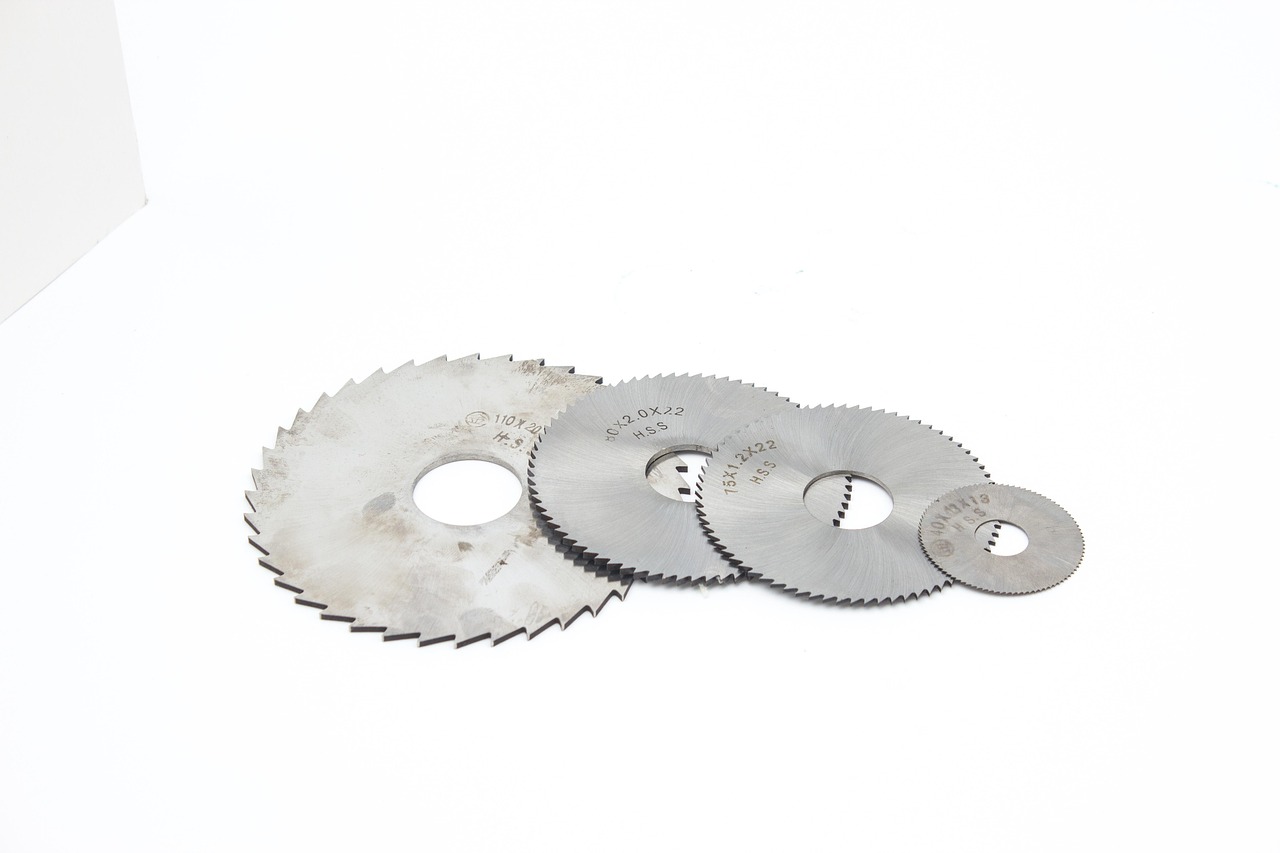
The dado stack and wobble dado blade attachments let you cut dado and rabbet groove without having to change out saw blades for each different dado width. The dado blade set comes in various chippers that allow you to make cut between one-quarter inch and seven-eighths inch wide, perfect for cutting cabinet joints or shelf dados in quantities. However, dado blades require a throat plate with a wider opening to accommodate the dado blades. This prevents the dado blades from enjoying the benefits of zero-clearance when cutting dado groove.
Some saw shops use a separate zero-clearance plate for dado work. Others use an auxiliary fence to cover part of the dado groove. Once you own a dado blade set, youll find yourself using the dado blades for various projects instead of using multiple router pass to mill these dados.
13. Tenoning Jig
The tenoning jig might be the last project that most hobby woodworkers will purchase for their table saw. A tenoning jig can be clamped to the miter gauge or the saw fence. These hold short tenon upright in a position where you can cut the tenon cheeks and shoulders precisely to fit the mortises on the boards.
The best tenoning jig allow the woodworker to micro-adjust the tenon thickness so that the tenons will fit perfectly into the mortises. The best tenoning jigs feature hold-down clamp that hold the tenons in place while they are cut. Once properly set up, the tenoning jig can make mortise and tenon joint with the same ease as a commercial woodworking shop.
Any woodworker building pieces of furniture with mortises and tenons will find a place for this tool on their table saw. These tool will significantly change the way you work with your saw. You wont have to fiddle with your saw as much.
Your time will be better spent thinking about your project. While your saw will remain the same saw of cast iron and steel, the dado and tenoning jig tools will change how willing your saw will be to work for you. Start with the saw accessories that will fix the frustration you have the most with your saw.
Add the remaining saw accessories as your skill and ambitions with your saw increase. Ultimately, the best table saw does not necessarily have the newest or most powerful saw blade on the market. However, the best table saw has the fewest well-chosen tool that work alongside it.
