
Extension cord are used to transmit electricity from a power source to an electrical device. You must chose the extension cord that you use according to the electrical requirements of the device that you are using. Many people knows that extension cords come in different size and that the plug for the extension cord must match the socket for the electrical device.
However, extension cords also must match the electrical load requirements of the device that is to be use. If the extension cord is too thin for the electrical load of the device, the extension cord will generate heat due to the resistance of the thin copper wire in the extension cord. Because resistance in a copper wire generate heat, the thin extension cord will overheat.
How to Choose and Use Extension Cords Safely
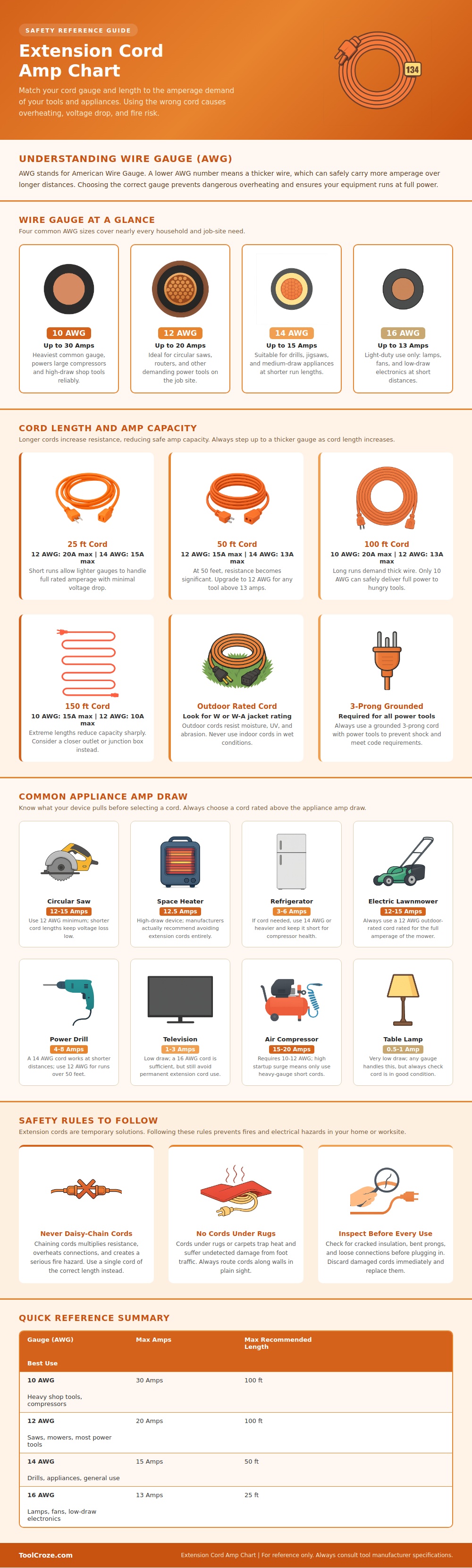
In order to avoid overheating the extension cord, an understanding of the American Wire Gauge (AWG) for extension cords is require. The American Wire Gauge number the thickness of the copper wire in the extension cord. However, the numbers on the extension cord work in a reverse manner.
A small number on the extension cord mean that the copper wire in that extension cord is thick. Because thick copper wires allow electricity to easy flow through the wires, a small American Wire Gauge number will allow extension cords to transmit more electricity to the device. A high number on the extension cord mean that the copper wire in that extension cord is thin.
Thin copper wires contains more resistance to the flow of electricity through the wires. Because thin wires create more resistance to the flow of electricity, thin wires will heat up more more than thick wires when the electricity flows through those thin wires. For devices that require high amperage, a lower American Wire Gauge number is required for those device.
Using a high American Wire Gauge number for a device that require high amperage can cause the device to receive the wrong voltage and can damage the device. Another factor to consider in purchasing an extension cord is the distance between the power source and the device to be use. Due to the nature of electricity, the voltage of electricity will diminish as it travels through an extension cord.
As the length of the extension cord increases, the voltage loss increase. An extension cord that is twenty-five feet in length may be sufficient for the requirements of a device. However, using that same extension cord one hundred feet from the power source may not provide the same voltage to the device.
In order to combat voltage loss in extension cords that are long in length, you should purchase an extension cord with thick copper wires. Additionally, as the length of the extension cord increases, the amperage that the extension cord can handle in safe amount decreases. The environment in which the extension cord will be used also determine which extension cord should be purchased.
If the extension cord is to be use in damp area, extension cords that are exposed to the rain, or extension cords that will be exposed to sunlight, then you must use extension cords with weather-resistant jackets. These jackets are often rated with a W in the extension cord designation. Indoor extension cords are not designed to handle exposure to moisture or sunlight.
Extension cords with indoor-rated jackets may crack if those cords are exposed to sunlight for extended period of time. When using power tools, a three prong grounded extension cord must be used. When electricity faults in a power tool, the three-prong grounded extension cord provide a path for the electricity to travel to the ground.
This path to the ground prevents the electricity from traveling through an individual using the power tool. Another factor to consider when purchasing an extension cord is the power requirement of the device to be use. Devices such as lamps require very little electricity to perform their task.
However, devices such as space heater require large amount of electricity to perform their tasks for long periods of time. Extension cord manufacturers often recommend against the use of extension cords with space heaters because the amount of electricity that the space heater requires can heat the extension cord beyond safe level. Additionally, extension cords should not be used under rugs because rugs can trap the heat generate by extension cords and the foot traffic on rugs may damage the insulation of the extension cord.
Additionally, extension cords should not be daisy-chain. This means that one extension cord should not be plugged into another extension cord. Each extension cord adds resistance and heat to the electrical circuit created by extension cords.
Furthermore, you should inspect extension cords periodically to ensure the cord is safe to use. Frayed edges on the extension cord or bent prongs on the extension cord can create electrical faults. If the extension cord becomes warm to the touch while performing its task, you should immediate throw the extension cord away.
The heat in the extension cord means that the copper wire in the extension cord is too thin to handle the electricity of the device being use. By ensuring the extension cord has the correct American Wire Gauge, length, and amperage, the extension cord will remain safe to use.
