
Heat shrink tubing is a tool that can be used to insulate wires. Heat shrink tubing is also used as a tool to protect electrical connections. Problems can occur with the electrical connection if the heat shrink tubing is the wrong size or the wrong material.
For instance, if the heat shrink tubing is too large, it wont be able to grip the wire tight. Alternatively, if the heat shrink tubing is too small, you cant place it over the electrical connector. Thus, ensuring that the correct heat shrink tubing are used will ensure that the electrical connection is secure and that the wire will not melt.
How to Choose and Use Heat Shrink Tubing
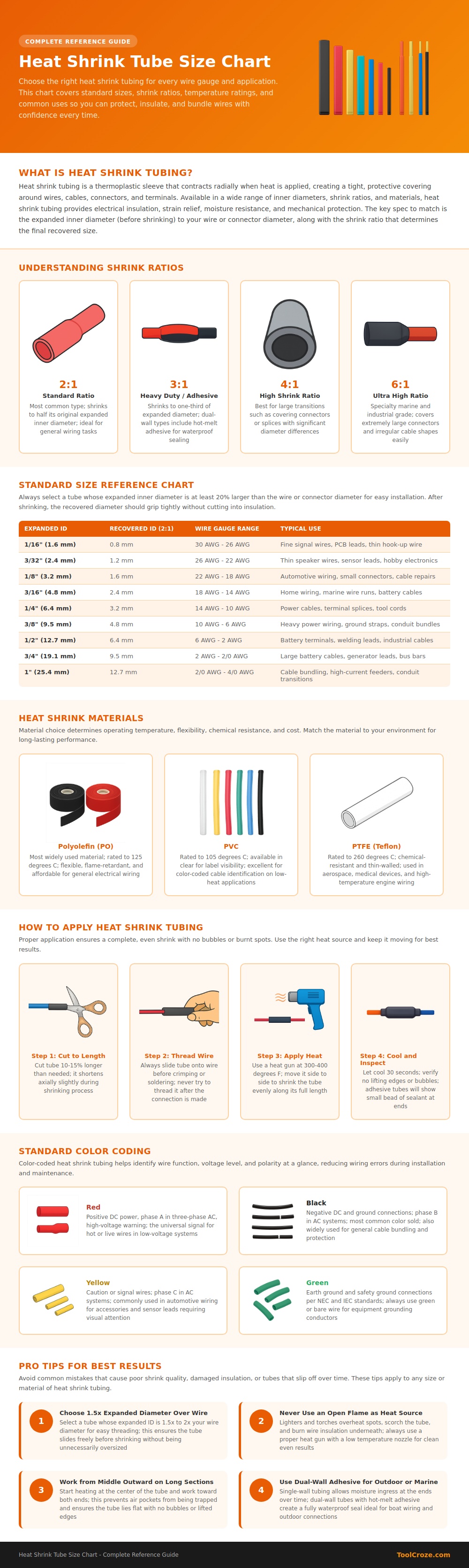
In order to properly use heat shrink tubing, it is important to understand the shrink ratio of the tubing. Most heat shrink tubing have a standard shrink ratio of two to one, indicating that the tubing will shrink to half of its original diameter when you apply heat to the tubing. A two to one shrink ratio is often sufficient for simple electrical connections, but isnt sufficient for covering a large electrical connector and a thin wire at the same time.
In these cases, high ratio heat shrink tubing should be used. High ratio heat shrink tubing will allow the tubing to fit over a large electrical terminal while still being able to tightly grip onto a thin wire. In addition to understanding the shrink ratio, it is also important to make sure that you choose the correct initial diameter of the heat shrink tubing.
In most case, the initial diameter of the heat shrink tubing should be approximately one and a half to two times the diameter of the wire that the heat shrink tubing is to cover. If the initial diameter of the heat shrink tubing is too large, it may not fully cover the wire after heat is applied to the tubing. If the initial diameter of the heat shrink tubing is too large, it may become slipped off of the wire.
A sizing chart can be used to ensure that the wire and heat shrink tubing have the appropriate diameter to ensure a good fit. Another factor to consider when purchasing heat shrink tubing is the material that the tubing is made of. The material of the heat shrink tubing is important to consider in regard to the environment in which the electrical connection will be used.
Common material for heat shrink tubing include polyolefin. Polyolefin tubing is flexible and has excellent resistance to heat. However, polyolefin may be inappropriate for applications that experience extreme heat, such as the engine compartment of a car.
Instead, materials like PTFE can better resist these high temperatures, despite the higher cost of tubing with PTFE. Another factor that is to be considered is the moisture in the environment in which the electrical connection will be made. Standard heat shrink tubing will provide insulation to the electrical connection, but does not provide a seal that will prevent moisture from entering the connection.
In locations that may be exposed to moisture, such as on a boat, or in locations outside in the weather, dual wall adhesive heat shrink tubing should be used. This type of tubing contains an internal layer of adhesive that melts when heat is applied to the tubing. This melted adhesive create a seal around the wire connections, preventing moisture from entering the connection.
Preventing moisture from entering the electrical connection will prevent the growth of corrosive materials on the wires. The method in which you apply heat to the heat shrink tubing on the wire is also important. In some cases, it may be necessary to use a lighter to heat the tubing.
However, lighter flames are too hot and can scorch the heat shrink tubing or melt the insulation on the wire. Instead, a heat gun can be used to heat the heat shrink tubing. The heat gun should be moved constant while heating the tubing, and should begin heating the tubing at the center of the connection, moving towards the ends of the heat shrink tubing.
If heat is applied to only one end of the heat shrink tubing, air bubble may become trapped within the heat shrink tubing. By heating the tubing at the center of the electrical connection, the air bubbles can escape from the tubing prior to heating. One of the methods of color coding the wires is one of the methods that can be used to identify the wires at an electrical connection.
For instance, red heat shrink tubing can be used to cover positive wire, while black heat shrink tubing can be used to cover the ground wires. Using a specific color for specific wires will allow the wires to be easily identified should the electrical connection be opened in the future. Additionally, using specific colors for specific wires will prevent mistakes, such as accidentally blowing a fuse.
Thus, color coding the electrical connections will make them easy to understand, and provide an additional means of maintaining the safety of the electrical system. Finally, another factor that you must consider is to ensure that the correct shrink ratio is selected for the correct material and initial diameter. By ensuring that the correct shrink ratio is used in conjunction with the correct material for the electrical connection, the heat shrink tubing will both provide strain relief to the wire, as well as provide permanent protection for that wire.
Proper planning of these factor will ensure that the heat shrink tubing fits the electrical connection correctly.
