
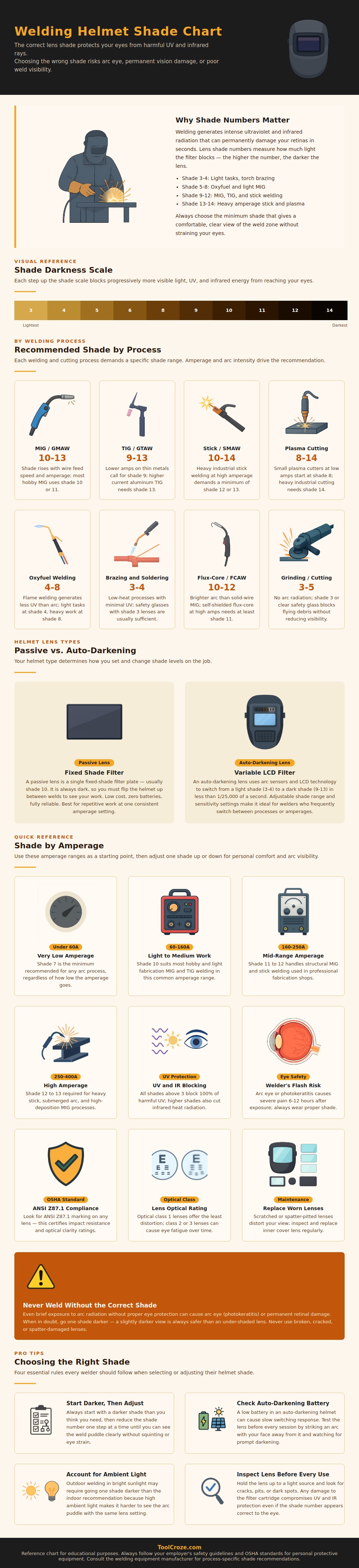
Arc eye is an condition that occurs when the ultraviolet light damage the cornea of the eye, and arc eye can lead to pain in the eyes. Arc eye can happen because a welder utilize a lens that has more light of a filter, or because the welder is using a damaged filter for they’re welding mask. If the welder use a lens with too light of a filter, then the welder allow too much of the harmful ultraviolet light into their eyes.
Therefore, the welder must ensure that the lens that is use has enough protection for their eyes to avoid this issue. A welding lens must allow for a balance between the safety of the welder and the welders ability to focus on the weld. The welding lens need to be dark enough to protect the welder from the ultraviolet radiation from the welding arc, but it also must be light enough to allow the welder to focus on the weld.
Protect Your Eyes When Welding
If the welding lens is too light, the welder can suffers damage to their retina. If the welding lens is too dark, the welder will have to squint at the weld, and may even lean too close to the weld which could result in sparks hitting the welders face. Thus, the welder has to find a perfect shade of welding lens to provide safety and visibility for welding.
The shade level for the welding lens is dependent upon the welding process and the amount of amperage that is use during that welding process. Welding processes like gas welding or brazing will require lower amperage then welding processes like MIG welding, TIG welding, and stick welding. The intensity of the welding light is determined by the amperage that is use during the welding process; higher amperage will create more light than lower amperage levels.
Thus, processes that create more light require higher amperage to create that much light; more amperage means a darker welding lens. Many people who use welding lenses makes mistakes with the shade level of the lens. For instance, a welder will use a different shade of welding lens for a light TIG job on thin stainless steel than for a heavy industrial stick weld on a structural beam.
Thus, the welder must adjust the shade settings for the welding lens according to the welding process that is to be perform. There are two different types of welding lenses. The first type of welding lens are passive lenses.
Passive welding lenses are lenses made of dark glass that does not require batteries to function. The disadvantage to passive welding lenses is that they is difficult to use; the lens does not allow the welder to focus on the workpiece until they begin welding. The welder will have to move the lens up and down from the weld to allow the welder to focus on the workpiece.
Auto-darkening welding lenses use sensors to detect when welding is about to begin and switch from a light mode to a dark mode. Auto-darkening lenses are convenient because the lens will darken automatically when the welder begin to weld. However, auto-darkening lenses are prone to failure; their batteries can run out of power, and their sensors can become block.
Therefore, the welder must test auto-darkening lenses before the welder begins to weld to ensure that the lens is functioning correct. When selecting the shade of welding lens that will be use during welding, the welder should begin with a shade that is darker than the recommended shade for that welding process. Then, when the welding arc is struck and light is emitted from the weld spot, the welder can darken the lens to a lighter shade until they can focus on the weld puddle.
The darkness of the welding lens should be the minimum level to provide comfort to the welders eyes; too much darkness will cause the welder to have to squint to see the welding metal. Additionally, the welder must consider the environment in which the welder will be welding. For instance, if the welder is welding outdoors, the bright sunlight will make the arc appear to be more less intense than it actualy is.
Thus, the welder may have to use a darker shade of welding lens when welding outdoors. Finally, the welder must also take care of their welding equipment. The welding lens can be scratched or cracked which would compromise the filter that protect the welders eyes from the ultraviolet light.
Therefore, the welder should replace their welding lens frequently to ensure that there eyes are protected. Finally, the welder must keep their welding gear and equipment clean and ensure that their shade settings are properly set to provide the proper amount of protection for their eyes. Thus, taking care of the welding gear is a necessity to provide protection to the welders eyes.
