
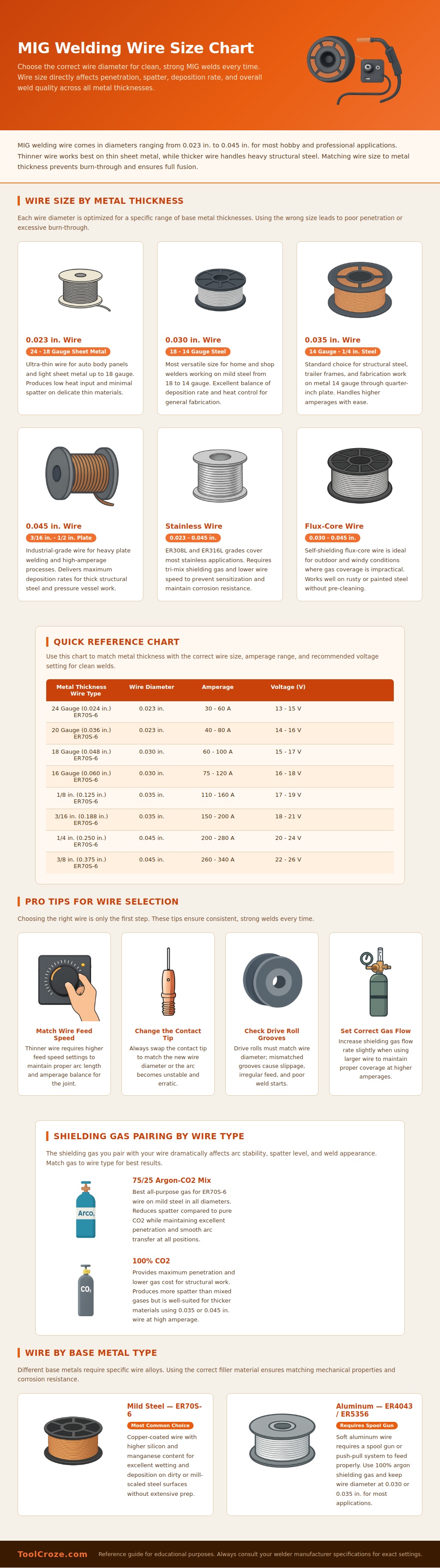
When welding thin sheet metals, the wire diameter has to be chosen to match the thickness of the metal. If thin sheet metal is to be welded, there are common error that may occur during the welding process if the wire diameter isnt chosen correctly. If sheet metal of an chosen thickness is welded with a wire that has a diameter that is too large for that metal thickness, the problem that may occur is that the wire will transmit too much heat to the metal, and thin sheet metal may burn through the metal.
Alternatively, if the sheet metal is welded with a wire with a diameter that is too small for that metal thickness, the wire will not provide enough metal to weld to the sheet metal, and the wire will fail to provide enough penetration into the sheet metal. Thus, the welder should choose wire diameters to balance the heat and the deposition of the metal, such as choosing a wire diameter that match the thickness of the sheet metal. Certain wire diameters is used for specific metal projects.
Choose the Right Wire Size for Sheet Metal Welding
For thin sheet metal projects, thin wire diameters are used since thin wire diameters will emit less heat and create less spatter onto the thin sheet metal projects. For medium sheet metal projects, medium wire diameters are used since these wire diameters will provide enough metal to create a strong weld without damaging the sheet metal project. For heavy duty sheet metal projects, thick wire diameters must be used to carry the high amount of amperage necessary to melt the thick metal sheet metal.
The thicker the wire diameter, the more thicker the sheet metal project. Thus, the thickness of the wire diameter should increase along with the thickness of the sheet metal project. The wire diameter is only one of the many factor that must be considered when performing sheet metal welding.
The wire diameter must be considered in conjunction with the correct voltage and amperage setting for the sheet metal project. The wire diameter cannot be changed without also changing the voltage and amperage settings on the sheet metal welder. If the welder changes the wire diameter but leaves the voltage and amperage settings at the same setting, the weld may lack penetration or may have an unstable arc that splashes the metal sheet project.
In addition to the wire diameter and voltage and amperage settings, other components of the sheet metal welder must also be changed. The contact tip must be changed to one that match the sheet metal wire diameter. If the contact tip is too large for the sheet metal wire diameter, it may create an unstable arc.
The drive rolls on the sheet metal welder must also be changed to those that match the sheet metal wire diameter. If the drive rolls does not match the sheet metal wire diameter, it can cause the sheet metal wire to slip or tangle in the sheet metal welder. Finally, another important sheet metal welding factor is the type of gas that is used during welding.
For mild steel sheet metal projects, many welders use a mixture of argon and carbon dioxide gas. However, pure carbon dioxide gas can also be used for sheet metal projects that use mild steel. Carbon dioxide gas will create a deeper penetration into the sheet metal projects than argon and carbon dioxide gas mixture.
However, carbon dioxide gas will also lead to a messier sheet metal weld. For sheet metal projects that use aluminum or stainless steel, the welding rules is different. For instance, aluminum sheet metal projects require the use of a spool gun since the wire that is used for aluminum sheet metal is too soft to push through the liner on a standard sheet metal welder.
Thus, to successfully weld sheet metal projects, the thickness of the sheet metal project should be matched with the sheet metal wire diameter, the sheet metal wire diameter should be matched with the voltage, amperage settings, and the sheet metal machine contact tip and drive rolls, and the type of sheet metal should be matched with the correct type of welding gas.
