
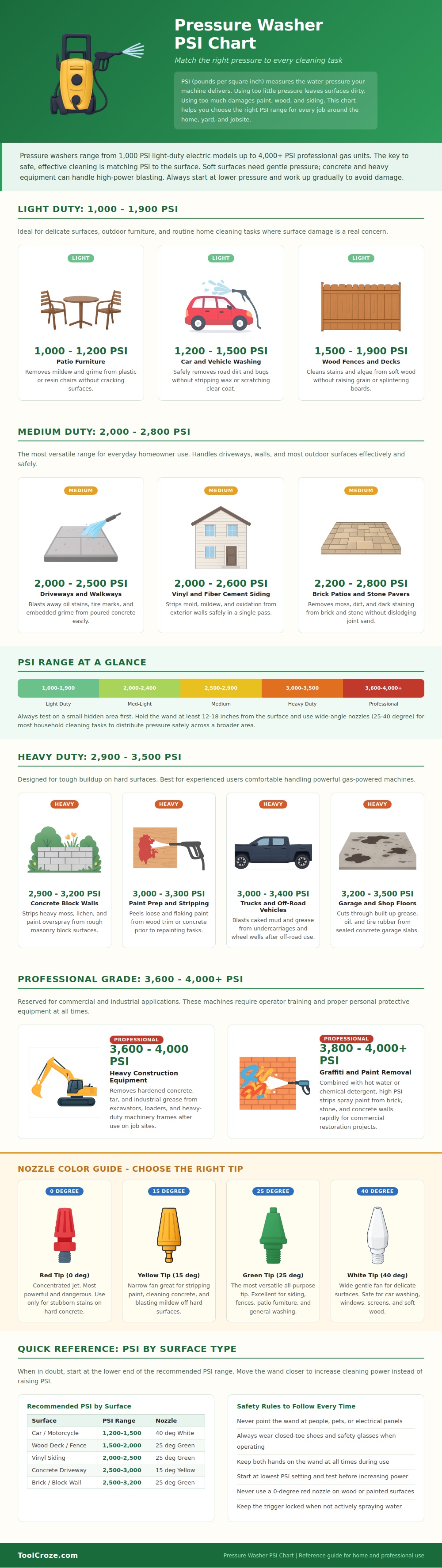
Pressure washing use high-pressure water to clean surfaces, but using too much water pressure with a pressure washer can cause permanent damage to the surface. The goal is to find a balance between the strength of the water pressure and the fragility of the surface being cleaned. Using too much pressure on a fragile surface can damage that surface as the water pressure work similarly to sandpaper that sands away at the surface.
Thus, understanding how to match the pressure of the water to the specific surface being cleaned will prevent any damage to that surface. Water pressure is measured in pounds per square inch, or PSI. The PSI of different types of pressure washers vary, as do the tasks that are best performed with each type of pressure washer.
Match Water Pressure to the Surface
For instance, electric pressure washers contains less PSI than gas-powered pressure washers. Knowing the PSI that different brands of pressure washers produce will allow an individual to purchase the model that is appropriate to there desired task. For the cleaning of delicate item, such as patio furniture or the clear coat of a car, you should use low water pressure.
Using high water pressure when cleaning a car can strip the wax off the paint of the car or even cause the paint to peel. The goal is to remove the salt and bug that accumulate on the car while preserving the finish of the car’s paint. Using the lower end of the water pressure scale will help to remove the dirt from the car while avoiding high water pressure that can damage the car’s paint.
Medium-duty tasks, such as cleaning oil-stained concrete sidewalks or mildewed vinyl siding, require medium water pressure. While the concrete can take high water pressure, the vinyl siding is more fragile and high water pressure can damage it. Use enough pressure to remove oxidation from the siding without pushing the water too far into the vinyl siding panels.
A mid-range pressure washer are useful for these types of medium-duty tasks. For the most heavy-duty tasks for professionals, such as cleaning industrial grease or stripping paint from old wooden deck, water pressure is high enough to actively erase the paint from the wooden surface. Using the professional setting of the pressure washer on a residential deck will raise the grain of the wood.
Raising the grain of the wood make the wood feel coarse and like sandpaper. While it may be beneficial to use the most power that the pressure washer can produce for a particuler dirty residential area, it is more likely that the increased power will damage the wood. The nozzle tip that you use for the pressure washer will alter the impact of the high-pressure water from the washer.
Using the red nozzle tip concentrate the water from the washer to erode wood or sandpaper skin, making it a dangerous tool. Instead, using the green or white nozzle tips for most yard tasks will spread the water pressure over a wider area. Use the widest spray pattern nozzle tip when performing tasks to reduce the risk of inadvertently using too high of a water pressure on some fragile surface.
Move the wand of the pressure washer closer to the task to which the high-pressure water will be applied. Always wear safety gear while using a pressure washer. Goggles and shoe should always be worn when pressure washing.
Test the water pressure on a small section of the surface to be cleaned that isnt visible to confirm that the water pressure will not damage that surface. Should water pressure cause a surface to splinter or the paint to begin to peel, immediately halt the use of the pressure washer. It is far easier to spend the additional time to clean a driveway than to replace siding that too high of a water pressure has ruined.
Finding the proper balance between water pressure and the fragility of the items to be cleaned is the most important part of the pressure washing process.
