Cabinet Painting Calculator
Estimate cabinet paint, primer, and labor for cabinet boxes, doors, drawers, and trim with a practical surface-area workflow.
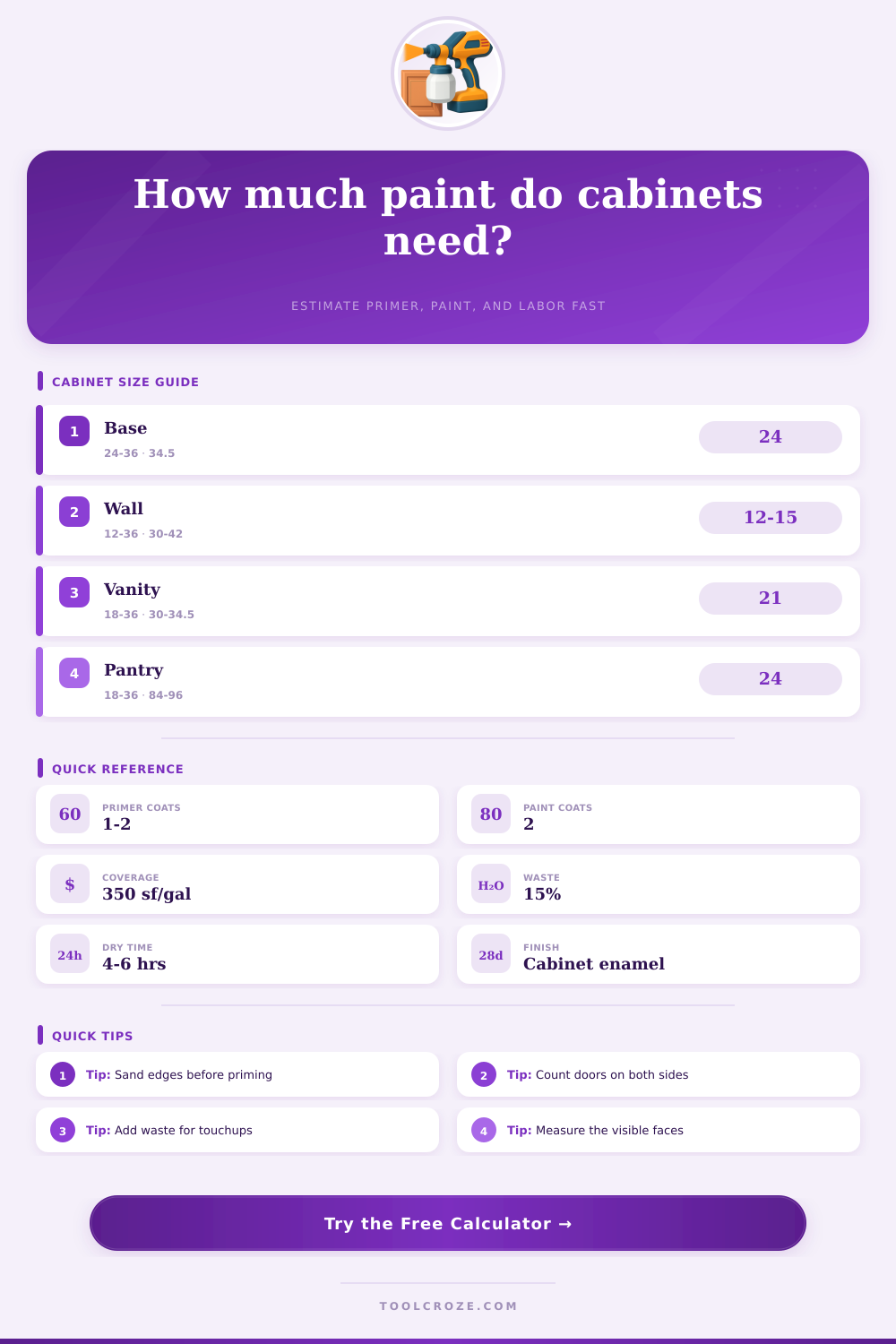
Cabinet paint size guide
| Type | Width | Depth | Height |
|---|---|---|---|
| Base | 18-48 in | 24 in | 34.5 in |
| Wall | 12-36 in | 12-15 in | 30-42 in |
| Tall | 18-36 in | 24 in | 84-96 in |
| Sink | 30-36 in | 24 in | 34.5 in |
Paint prep and filler guide
| Item | Face frame | Frameless | Note |
|---|---|---|---|
| Side reveal | 1/8 in | 1/16 in | Keep even |
| Center gap | 1/8 in | 1/8 in | Match hinges |
| Filler strip | 1-3 in | 1-3 in | Wall scribe |
| Toe kick | 4.5 in | 4.5 in | Standard base |
Paint coverage guide
| Material | Sheet | Thickness | Use |
|---|---|---|---|
| Cabinet ply | 4x8 ft | 3/4 in | Carcass |
| Backer ply | 4x8 ft | 1/4 in | Backs |
| MDF | 4x8 ft | 3/4 in | Painted fronts |
| Melamine | 4x8 ft | 3/4 in | Clean boxes |
Finish system guide
| Layout | Width math | Height math | Use |
|---|---|---|---|
| 2 doors | Panel span | Front height | Base runs |
| Drawer stack | Panel span | Stack height | Storage base |
| Single door | Panel span | Full height | Sink or pantry |
| Tray pull | Face width | 6 to 10 in | Tall cabinets |
Cabinet painting gives a great look to kitchen or bathroom fresh look without spending on a whole refill. It refreshes the colour and the finish of the space. You need good tools and materials, whether dealing with solid wood, laminate or metal cabinets
Remove all doors, handles and drawers. To take them off you need a screwdriver or drill. Set the doors up on tabletops or use saw horses with wood for a flat work surface.
How to Paint Your Kitchen or Bathroom Cabinets
The preparation is the most important stage. Clean the cabinets well using strong spray degreaser, because home stuff often does not suffice.
Using an orbital sander with various grits until 220, you well sand massive wooden surfaces. Sand the doors befor, and between all coats. Complex profiles require more time for sanding and accuracy during painting, especially in little cracks (so you need good brushes and tools).
At the end of sanding, prime one side and lay the doors on dryers. Wait some hours, later prime the other. When both sides are ready, sand with 320 grit and wipe with a damp cloth for a clean surface.
Some coats of primer stop bleed from real timbers. One coat of primer and two paints give a good result, but two coats of primer and two paints worked best for honey oak cabinets.
Sherwin Williams Emerald Urethane Trim Enamel and Benjamin Moore Advance both are great paints that last long and give nice results. The Emerald Urethane finish can seem a bit less bright than expected, like this semi-gloss feels like satin. Satin and semi-gloss finishes are the most liked for cabinets.
Rollers quickly cover big areas, so ideal for fronts and backs of cabinets. For flat parts use a microfiber roller, while a brush handles interiors. An airless sprayer with a good tip works well for doors, for instance Graco Magnum X7. It gives a uniform smooth finish.
Painting the bases, mask carefully, otherwise the overspray pollutes the whole inside. Leave doors between coats and avoid too thick coats, which extends dryingtime in days.