
The Hercules HCB92B 20V brushless hammer drill is easy to set up. It’s not a complex process and you’ll be able to get right to work.
In general.
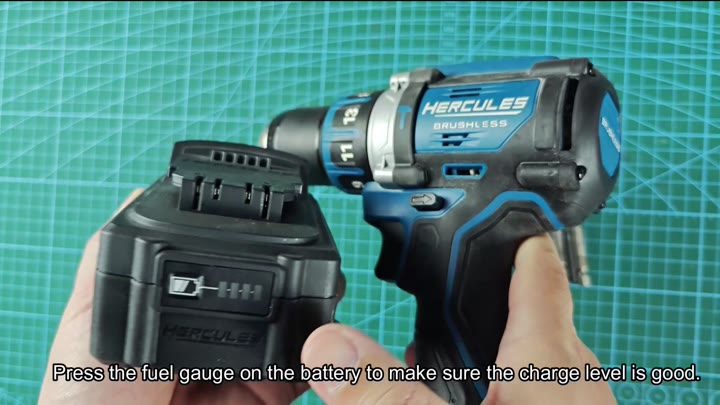
Before starting, you’ll want to check out the power source. There is a fuel gauge built into the 20V battery pack. Just push button located on the side of the battery and it will tell you how much charge remain.
Performance and Power Analysis
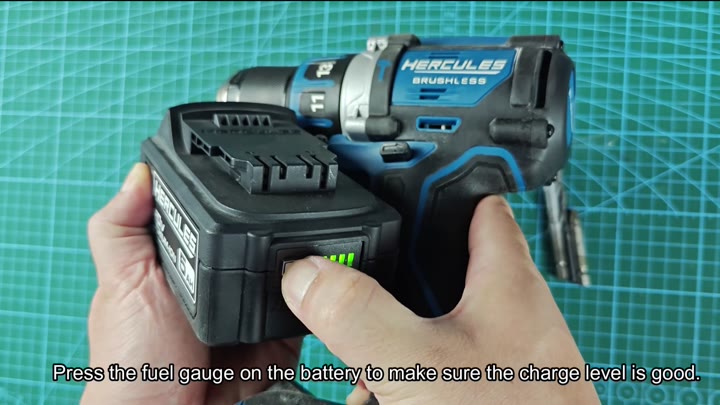
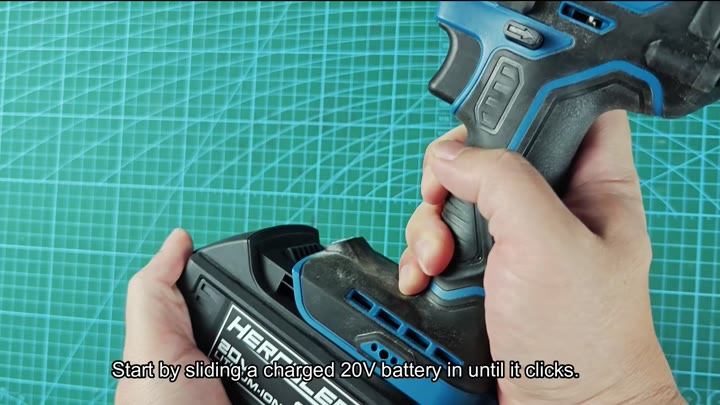
The battery slide into place and clicks into the drill. Immediately, you add the side handle. With this, you get a firmer grasp of the drill.
The handle can come in handy when you apply downward pressure. Having that extra surface area to hold onto seems to make the drill more comfortabley to use.
The next feature to check out is the modes available on the collar. For screw driving precision, you have 14 clutch positions available. These range from low-torque settings to high-torque settings.
Additionally, there is dedicated modes for both hammer-only and drill-only functions. Hammer mode is used when working on masonry and concrete applications. Drill mode work when you just need to bore a hole through metal or wood.
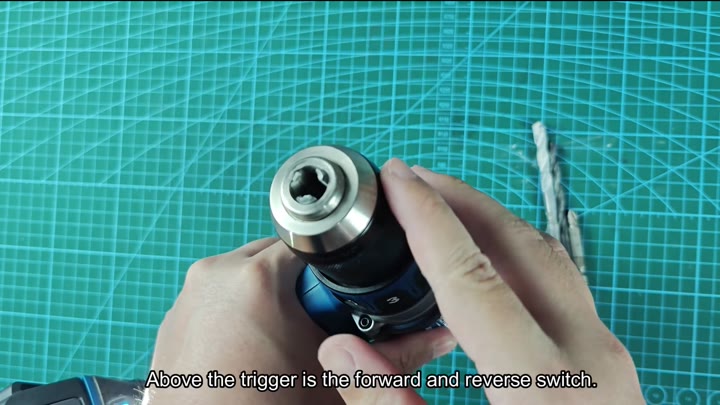
It features a two-speed selector: one for high torque, like with driving screws; one for higher speed, such as with drilling. Forward and reverse are controlled by a switch above the trigger.
There’s also a soft-start adjustment that eliminates a jolt when starting a cut. The middle trigger lock lets it run without holding your fingers on it constantly.
It’s also a nice feature for extended drives.
Then there’s the screw driving. Set it on the low torque and you’ll see how well it drive screws into material. Clutch engages, like it should. You won’t overtighten your screws anymore.
Switch it to reverse to back out the screw. That two-way control comes in handy when working with delicate assembly.
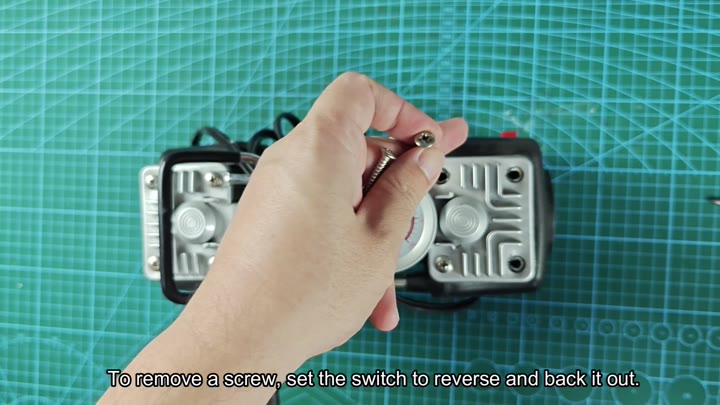
Next, you try it on wood. You put it into drilling mode again and pick out your normal twist bit. It rips right through the wood with power of the brushless motor. It doesn’t bind or vibrate too much. Straight hole and intact on the other end.
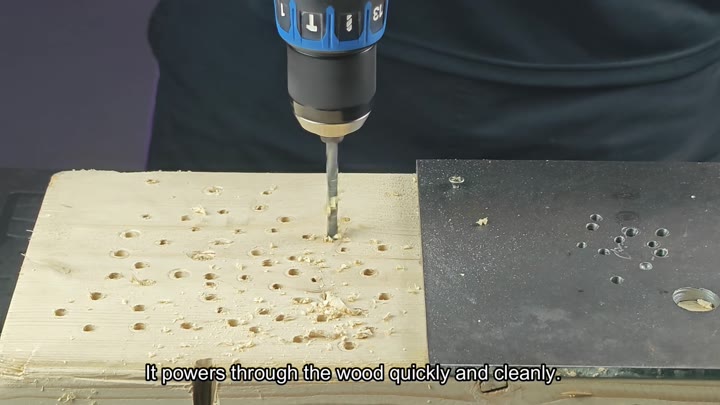
It works effortlessly on wood. Then there’s the ultimate test.
You remove the wood bit, replacing it with a carbide masonry bit. This bit can resists the rough nature of concrete and stone. You set the drill to hammer mode and hold it up to a concrete wall.
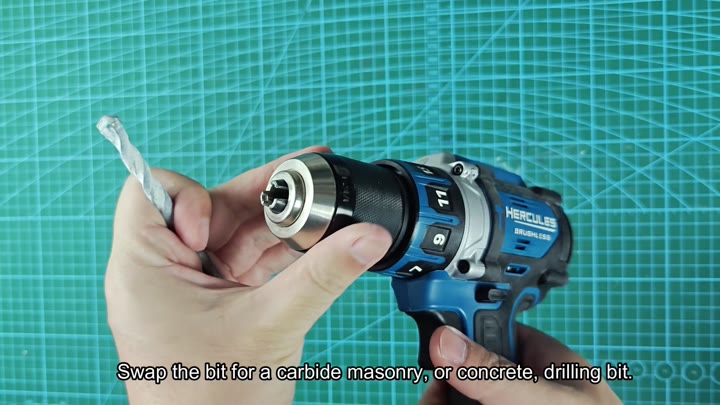
This is where things change with the operation.
The torque is impressive.
At 32,000 BPM, the drill pounds like crazy. That’s a pretty high frequency for an impact tool and it breaks up the stone material fast.
You’ll notice the hammer mode drills through concrete quicker then standard just rotating alone. It doesn’t bog down or stall when encountering resistance.
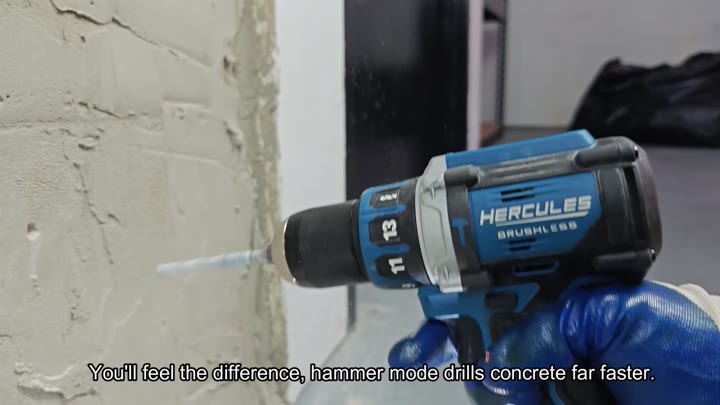
It has great penetration on a hard surface.
The motor is brushless, powerful, and efficient.
The source does not mention if the tool is well-balanced.
It do a good job with concrete.
