
You are standing in hardware aisle staring at piles of wood sheets that appear to be similar. These wood sheets differs in cost and strength. Choosing the incorrect sheet will result in a failed project.
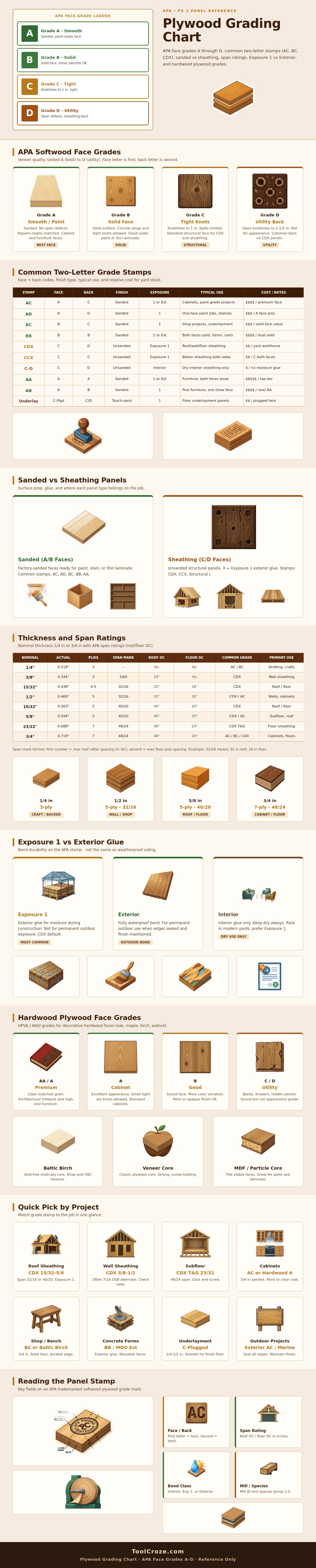
What you are purchasing is explained through grading system. It serves as a standard language of wood quality. The grade is from A, D. The A is smooth. The D is rough, for structure. But this isn’t by accident. This determines whether or not you need to paint the wood or just stain it.
How to Read Wood Grades
An A-grade face is a smooth face. No large defects. Good for cabinets. The D-grade are just for function. More knots. Often, you won’t even see this side. You might use it for sheathing. Because you don’t want to pay for an A- face on a piece of wood that will never be seen.
The two-letter stamp on most of the sheet explain what it is. The first letter is a description of the front side. The second letter are a description of the back side. From here you can make your decision fast. You want to order AA or AB if you need to see both sides.
For house framing you need CDX. That X stands for Exposure 1. That’s because the panel can absorbs some moisture when used in building a house. Do not confuse it with exterior grade. Exterior grade has a water proof bond for outdoor use.
Use Exposure 1 on roofs where they get wet prior to addition of shingles. Use Exterior grade on decks exposed to elements for years to come.
It’s also good to know about thickness and span ratings. You can see from the chart that thickness correspond to joist spacing. Sixteen inches apart will support a half-inch sheet. Twenty inches apart supports a five-eighths inch sheet.
Why? Because those numbers corresponds to the structure’s strength. Too-thin sheeting lead to bouncy flooring. Roofing sags. These are small details, but they impact comfort and safety.
There is different grades of plywood. Plywood can be made from hardwood. This is typically reserved for fine furnitures. The grading ladder ranges from A to D and covers various sheet types, though hardwood grades specifically focus on the appearance of the veneer. AA, for example, means clear grain. B means it’s a face that takes paint well.
The core also vary. For some boards, the core have no holes (birch). This core hold screws well. It’s good if you plan to CNC machine.
Knowing this helps you choose what is best for your application and prevents you from having to pay for something you don’t want. You should of known this. The stamp’s like a food label; it tells you the quality, the intended use, and the limitations. And when you understand what the letters mean, you go from being a guesser to an informed buyer.
You choose confidently. You know about the grading for houses or shelves. That way your project holds up. It lasts through time and inspection. Actualy, it stays strong. Better than cheap wood.
