
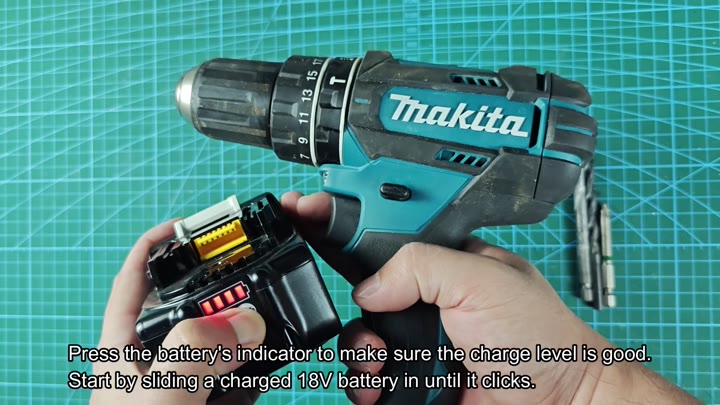
Pop the 18V battery into the Makita DHP482 until it clicks into place. Press the indicator button on pack to see how much charge remains. When it’s full, you’ll see four bars which means it’s ready for work.
There’s no point in starting out with a dead tool so first off check the battery.
Using The Drill Mode
Then set the torque collar next to chuck
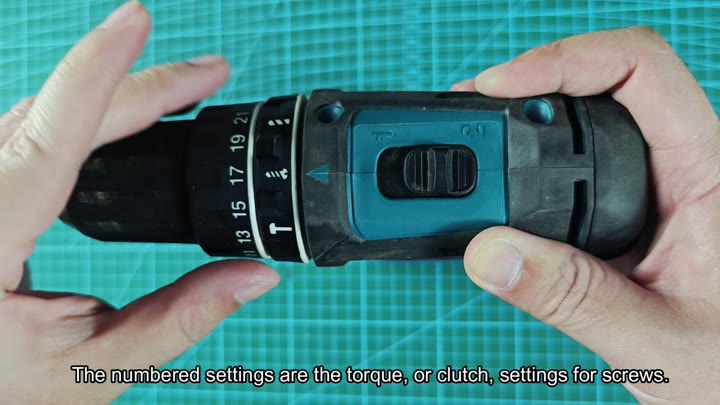
These is the numbered settings of the drive strength (clutch) to drive in screws. The higher the number, the harder it clutches before slipping and thus protects materials from damage and screw heads from being stripped out. For delicate applications, keep setting lower.
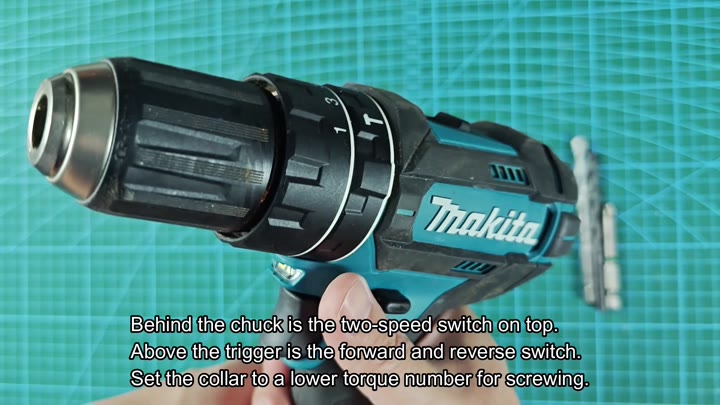
Set it to rotate in forward direction by switching the forward and reverse lever above the trigger. Then install a test piece on your bench and turn it on with low torque setting.
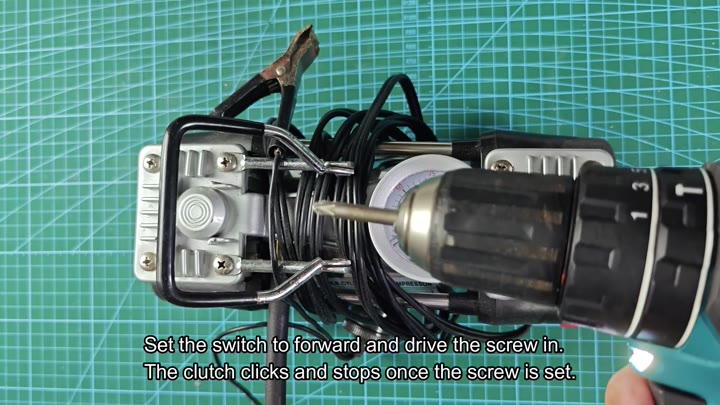
A regular wood screw turns easily until it is seated; then you’ll hear a click as the clutch grabs and stops, no guesswork needed about letting go. Reverse that lever to back it out later.
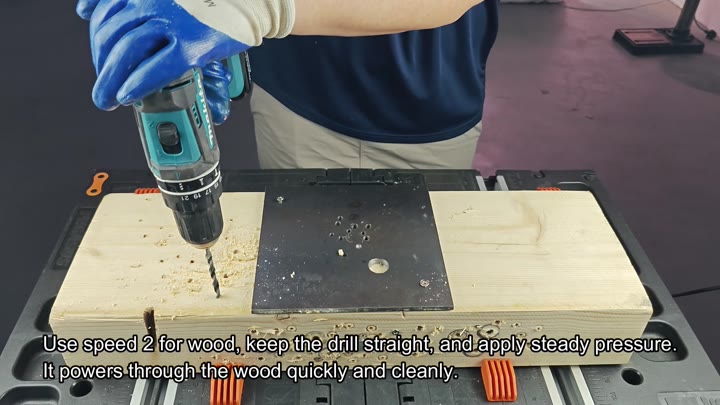
Switch the torque collar away from numbers to bore a hole. That’ll switch your drill to standard rotation with no clutch slipping and maximum power. Use side switch behind the chuck to select speed 2, as you’ll want the highest speed you can use with wood.
Squeeze the trigger and hold it down steadily on piece of wood with the drill directly perpendicular to the wood. Without any wandering or binding, the bit cleanly rips into the wood and makes quick work of cutting through it. This is one of the forgiving aspects of working with wood, everything goes smoothly.
Hold the drill straight against a wooden board and apply steady even pressure while squeezing trigger
.
Swap out previous bit for a dedicated masonry tip to punch through concrete.
The bits also feature a diamond tipped head for use on brick and stone. Be careful to tighten down the bit into the chuck.
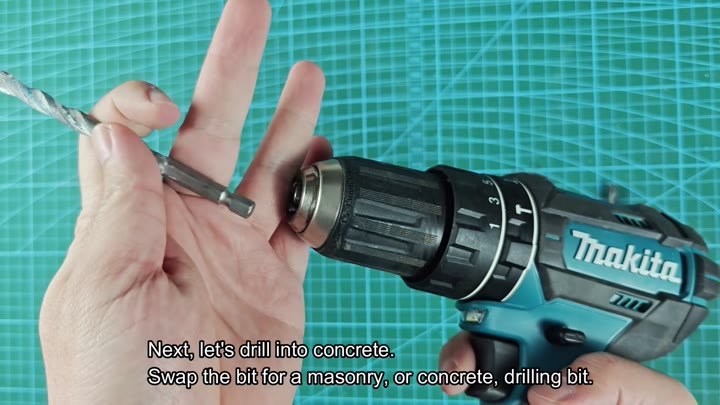
Bits that come loose aren’t any good, either.
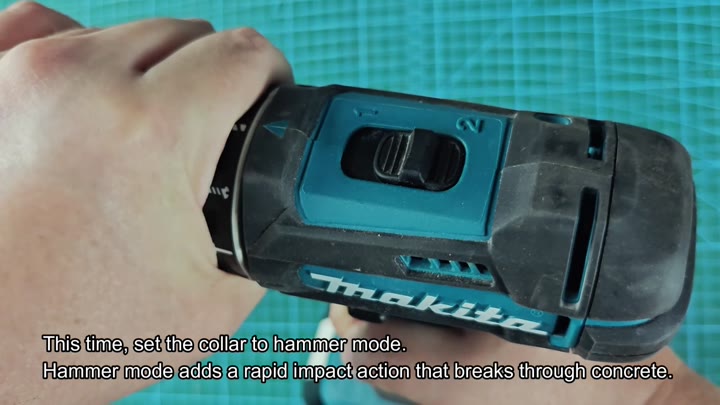
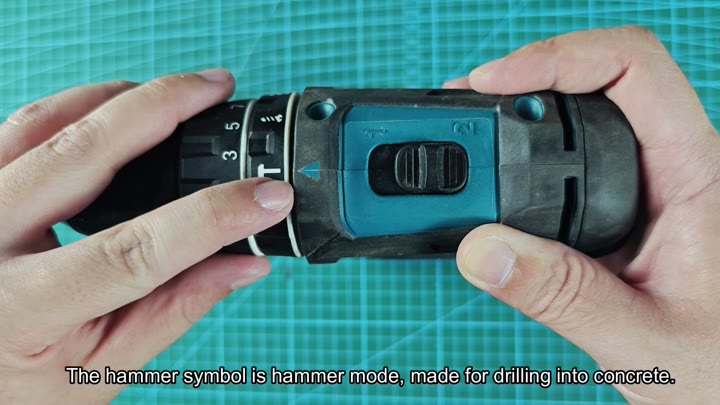
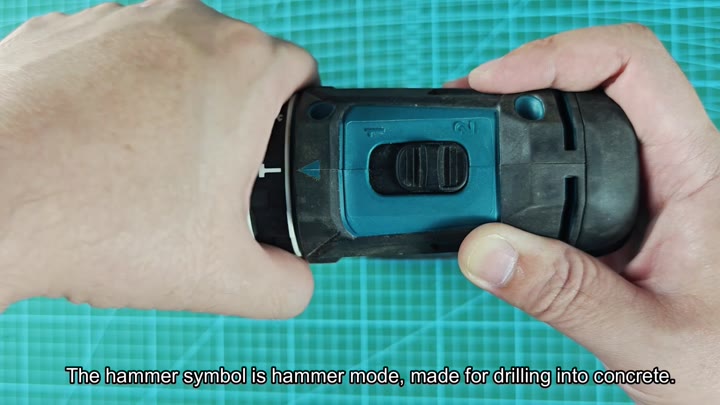
Now, twist the mode collar again until you have the indicator line lined up with hammer symbol. That turns on what’s called the impact mechanism within the gear train that provides both the quick pounding and rotating action. It adds a little oomph for busting through hard materials such as concrete effectivly.
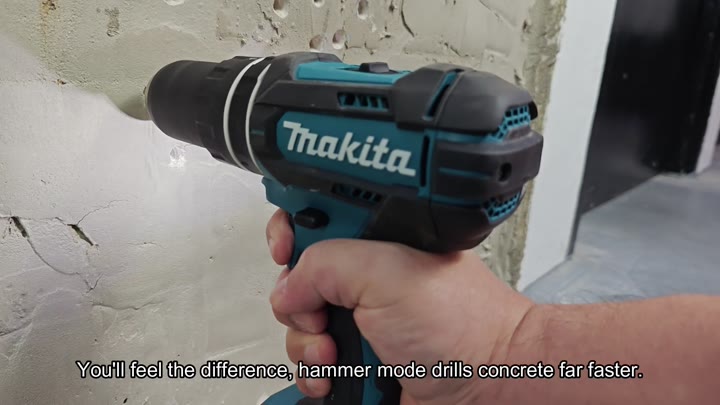
To demonstrate how much different hammer mode is different than regular rotation, hold trigger on a concrete surface. It will bite into the concrete with no noticeable slow-down. You feel it in your arm but you’re drilling much quicker.
